Flexibility is not a gift reserved for a lucky few. It is a skill — trained, refined, and strengthened over time. Whether you practice gymnastics, yoga, dance, or general fitness, improving your splits can unlock cleaner lines, higher kicks, smoother transitions, and stronger overall movement.
Training with Penelope brings a deeper philosophy to the process. For her, splits are not simply about lowering to the floor. They are about building strength inside flexibility, control inside range, and confidence inside vulnerability.
This is not a passive stretching routine. This is an active splits system designed for real progress.
Why Splits Matter Across Disciplines

4
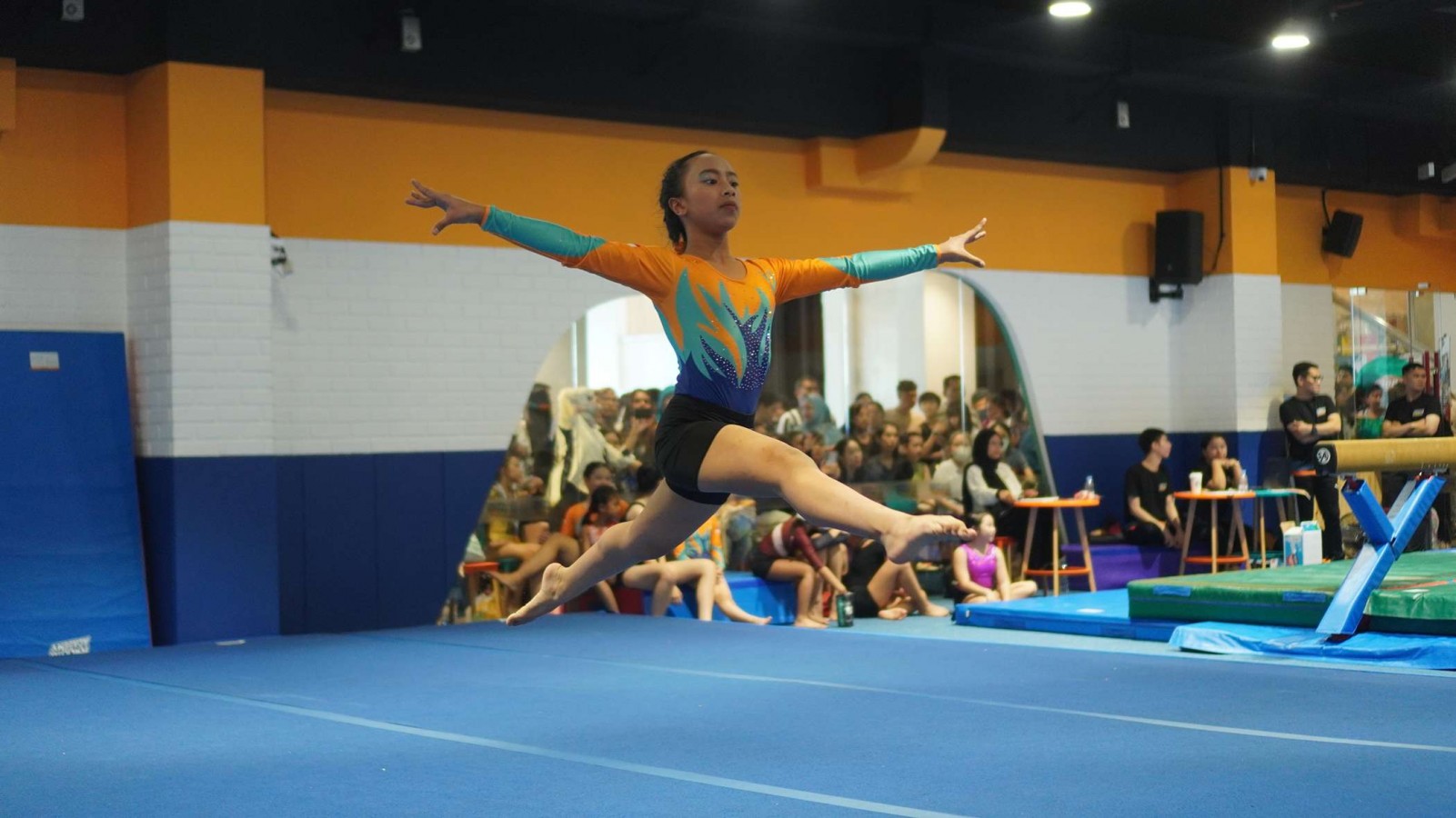
In gymnastics, splits improve leaps, jumps, and acrobatic lines.
In dance, they create elegance and height in extensions.
In yoga, they deepen poses like Hanumanasana and standing splits.
In fitness, they enhance hip mobility, reduce tightness, and improve posture.
But Penelope always reminds her students:
“If you can’t control the split, you don’t own the split.”
Active flexibility is the goal.
Step 1: Intelligent Warm-Up (10 Minutes)
Never attempt deep splits with cold muscles.
Penelope begins every session with mobility-based preparation.
1. Leg Swings (Front & Side)
- 20 controlled swings each direction
- Keep torso tall
- Avoid momentum
This lubricates the hip joint and activates dynamic flexibility.
2. Deep Lunges with Rotation
- Step into long lunge
- Rotate torso toward front leg
- 8 reps each side
Opens hip flexors while engaging the core.
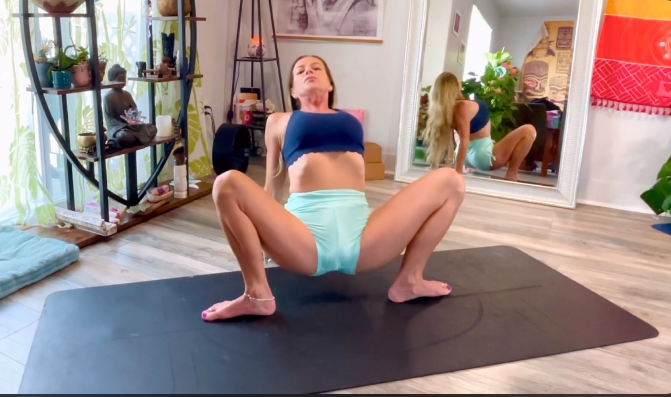
3. Cossack Squats
- Wide stance
- Shift side to side
- Heel grounded
10 reps per side.
This builds inner thigh strength for middle splits.
4. Glute Bridges
- 15 slow reps
- Squeeze at the top
Strong glutes protect the lower back during deep splits.
Penelope insists: warm muscles move better, safer, and deeper.
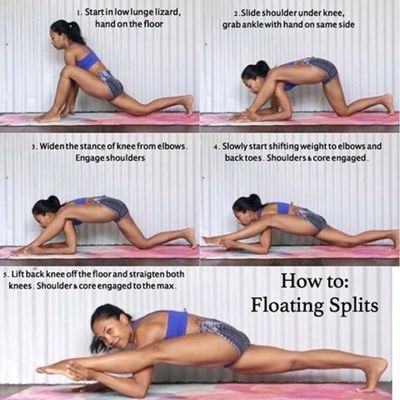
Step 2: Front Split Progressions

4
Front splits require:
- Front leg hamstring flexibility
- Back leg hip flexor length
- Core stability
1. Low Lunge Pulses
Drop into deep lunge.
Tuck pelvis slightly.
Pulse forward 15 times.
Hold final stretch for 20 seconds.
Engage back glute. Never collapse.
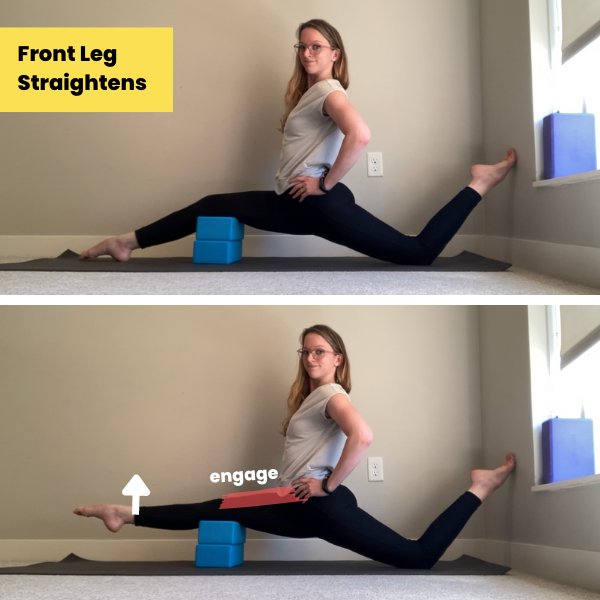
2. Half Split Active Fold
Shift hips back.
Front leg straight.
Flex toes toward ceiling.
Lean forward with flat back.
Hold 30 seconds while pressing heel gently into floor.
This builds active hamstring strength.
3. Controlled Split Slides
Using sliders or smooth surface:
- Slide into split slowly
- Stop before discomfort becomes pain
- Hold 5 seconds
- Slide back up
5 reps per side.
Eccentric control builds safe depth.
4. Upright Front Split Hold
Once lower to the ground:
Lift hands off floor.
Keep torso upright.
Hold 15–20 seconds.
If you cannot lift hands, reduce depth slightly.
Ownership matters more than depth.
Step 3: Middle Split Routine


4
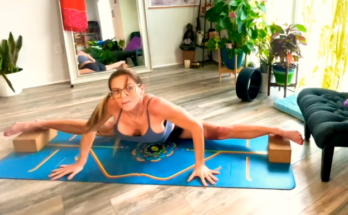
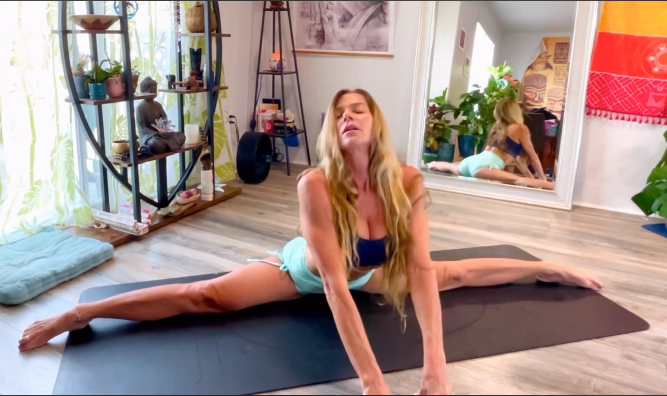
Middle splits target adductors (inner thighs).
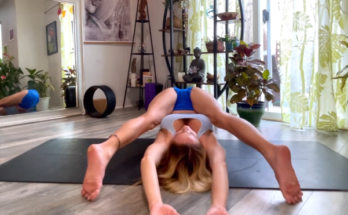
1. Wide Straddle Good Mornings
Sit tall in straddle.
Lean forward slowly.
Return upright.
10 slow reps.
This builds compression strength used in dance and gymnastics.
2. Frog Stretch (Active)
Knees wide.
Feet aligned with knees.
Rock hips gently back and forth.
10 small pulses.
Hold final position 30 seconds.
3. Middle Split Slides
From wide stance:
Slide feet outward slowly.
Engage quads.
Stop before strain.
Repeat 5 times.
4. Upright Middle Split Hold
Hands off floor.
Engage glutes.
Slight posterior pelvic tilt.
Hold 15–20 seconds.
Active control prevents overstretch injuries.
Step 4: Oversplits & Advanced Options (For Experienced Practitioners)


4
Only attempt after full comfortable splits.
Elevated Front Oversplit
Front foot on block.
Lower slowly.
Keep hips square.
Hold 20 seconds.
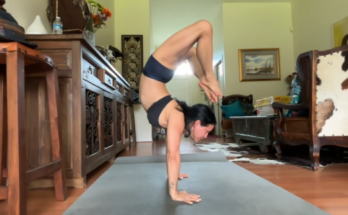
Needle Scale
Standing:
Grab ankle.
Extend leg upward.
Lower chest forward.
Balance + flexibility + strength.
Wall-Assisted Oversplit
Back leg elevated behind you.
Focus on hip alignment.
Never force depth.
Penelope emphasizes gradual adaptation over ego-driven depth.
Step 5: Strength Integration
Flexibility without strength is unstable.
Penelope includes:
• Split Squats
Strengthens glutes and hip flexors.
• Romanian Deadlifts (Light Weight)
Strengthens hamstrings safely.
• L-Sit Compression Holds
Improves hip flexion control for dance and gymnastics.
Mobility becomes usable only when strength supports it.
Weekly Programming
For noticeable progress:
3–4 sessions per week
20–30 minutes dedicated splits work.
Structure:
- Warm-up (10 min)
- Front split drills (8–10 min)
- Middle split drills (8–10 min)
- Active holds (5 min)
Progress gradually over 8–12 weeks.
The Role of Yoga, Gymnastics & Dance
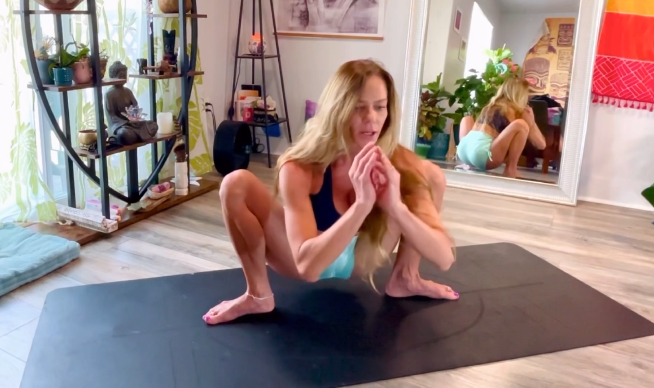
Yoga contributes breath control and joint awareness.
Gymnastics contributes explosive active flexibility.
Dance contributes grace and line extension.
Fitness training contributes strength and resilience.
Penelope blends all four.
The result is not just deeper splits — but stronger, controlled, beautiful movement.
Common Mistakes to Avoid
- Forcing depth aggressively
- Ignoring hip alignment
- Relaxing completely in end range
- Skipping strength work
- Comparing progress to others
Flexibility is individual.
Progress is personal.
Recovery & Nervous System Reset
After deep stretching:
- Lie on back
- Practice slow breathing
- 4-second inhale
- 6-second exhale
Relaxed nervous system allows muscles to lengthen safely over time.
Hydrate well.
Rest at least one full day between intense sessions.
Signs of Safe Progress
You’ll notice:
- Increased range without sharp pain
- Less shaking in active holds
- Stronger upright torso in splits
- Better hip mobility in squats and lunges
- Improved posture
Splits training improves overall movement efficiency.
Mental Strength & Patience
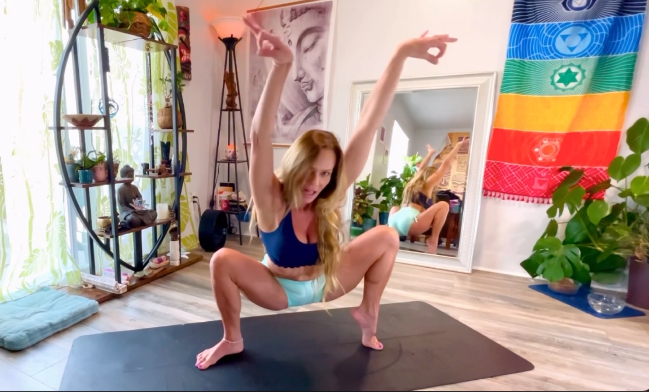
Penelope often says:
“Flexibility rewards consistency, not intensity.”
Some weeks you may feel stuck.
Some days you may feel tight.
That’s normal.
Progress happens in layers.
Measure improvements monthly — not daily.
Celebrate small wins.
One inch lower.
Five seconds longer hold.
Better alignment.
These details build mastery.
A Complete 25-Minute Sample Routine
Warm-Up
• Leg swings – 2 sets
• Lunges – 2 sets
• Cossack squats – 2 sets
Front Split
• Lunge pulses – 2 sets
• Half split hold – 30 seconds
• Split slides – 5 reps
• Active hold – 20 seconds
Middle Split
• Straddle good mornings – 10 reps
• Frog pulses – 10 reps
• Middle split slide – 5 reps
• Upright hold – 20 seconds
Cooldown
• Deep breathing – 3 minutes
Consistency is key.
Final Thoughts
Splits are not about impressing others.
They are about expanding your body’s potential.
Through contortion principles, gymnastics strength, yoga breathwork, dance elegance, and fitness conditioning, you build something powerful:
Active flexibility.
Control inside depth.
Strength inside range.
Training with Penelope is not about rushing to the floor.
It’s about mastering every inch along the way.
Because true flexibility isn’t measured by how low you go.
It’s measured by how strong you are when you get there.
Stay patient.
Train smart.
Move with intention.
And your splits will follow.