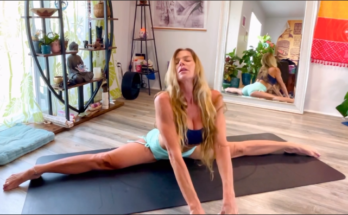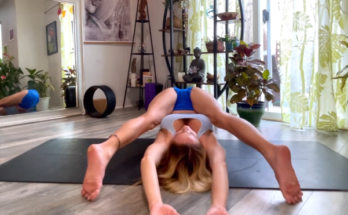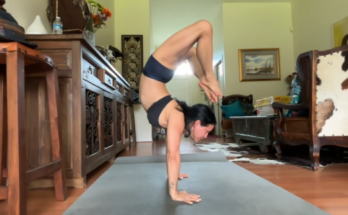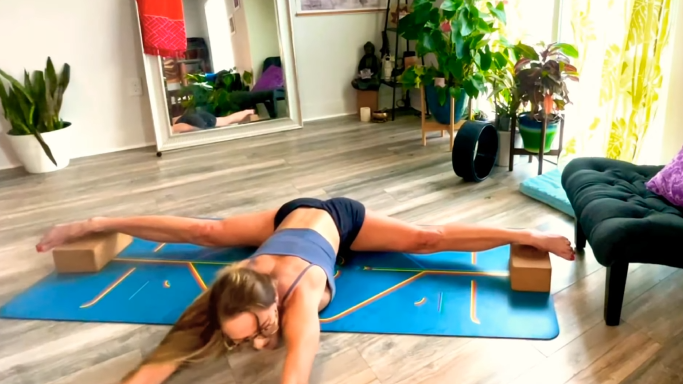
The splits are more than a flexibility trick. They are a true test of strength, control, mobility, and patience. In both calisthenics and gymnastics, achieving clean front splits or middle splits shows that the athlete has developed balanced hips, strong hamstrings, flexible hip flexors, and resilient inner thighs.
Many people think splits are only about stretching. But that’s only half the story.
If you want powerful, safe, and consistent progress in your splits — especially for calisthenics and gymnastics — you must train strength, flexibility, and mobility together.
Let’s break it down step by step.
Why Splits Matter in Calisthenics & Gymnastics


4
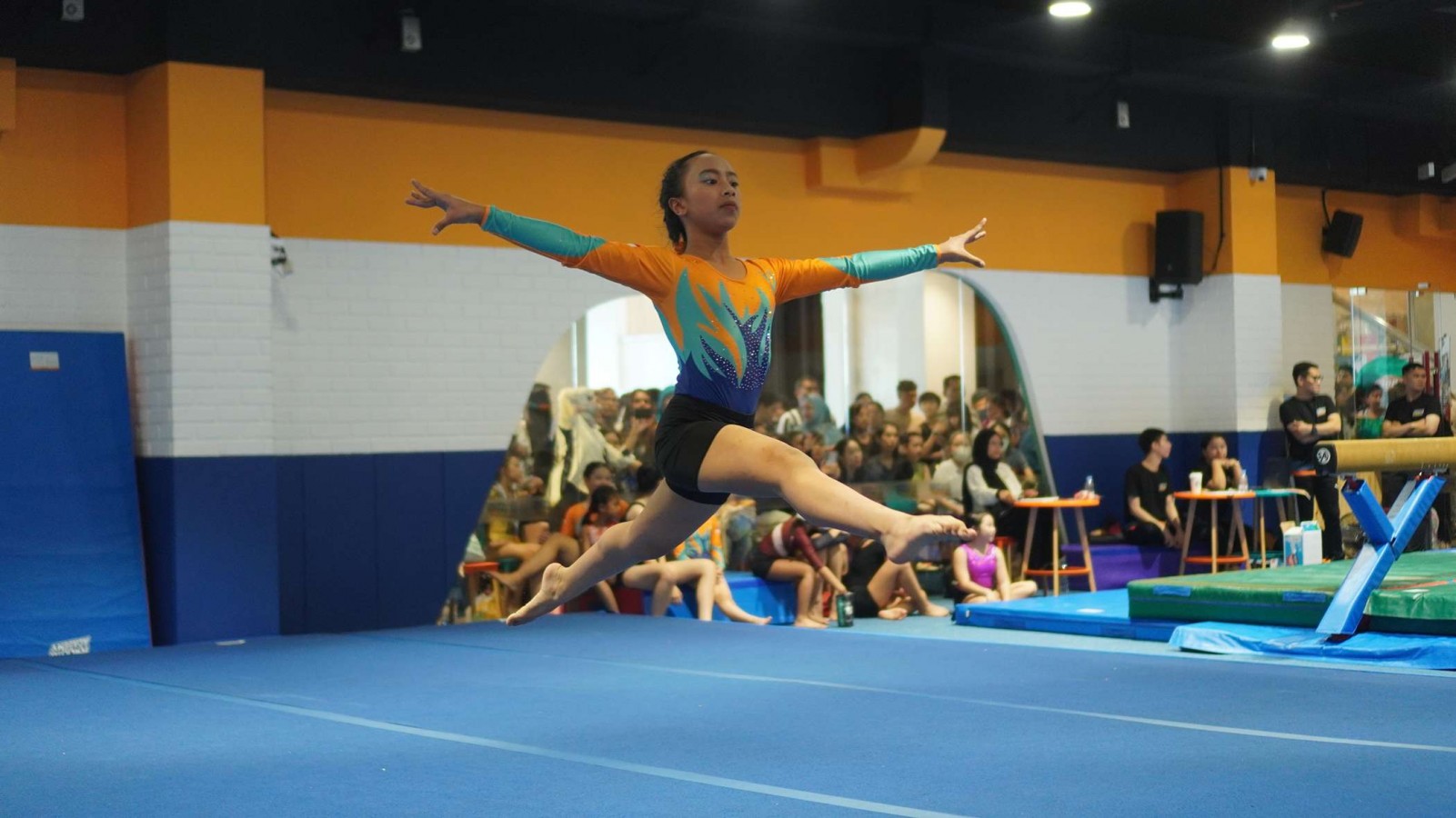
In gymnastics, splits are foundational. Skills like leaps, jumps, and certain floor transitions require open hips and flexible hamstrings. Without proper split mobility, movements look restricted and lack amplitude.
In calisthenics, hip mobility improves:
- Pistol squats
- L-sits
- Handstand lines
- Straddle press to handstand
- Dragon flags
Tight hips limit power output and increase injury risk. Strong, mobile splits unlock better movement efficiency.
So instead of chasing passive flexibility alone, we train active flexibility — strength through full range of motion.
Part 1: Understanding the Two Main Splits
Before drilling, understand what you’re training.
1. Front Split
- Front leg: hamstring flexibility
- Back leg: hip flexor and quad flexibility
- Core stability required
2. Middle Split (Straddle Split)
- Inner thighs (adductors)
- Glutes
- Hip capsule mobility
Each split requires a different strength approach.
Part 2: Warm-Up for Safe Split Training
Never jump directly into deep stretching.
Here’s a 5–8 minute mobility prep:
1. Leg Swings (Front & Side)
- 15–20 reps each leg
- Controlled, not wild
2. Deep Lunges with Arm Reach
- Open hip flexors
- Engage glutes
3. Cossack Squats
- Shift side to side
- Keep heel grounded
- 8–10 reps per side
4. Glute Bridges
- 15 slow reps
- Activate posterior chain
Warm muscles respond better and reduce strain risk.
Part 3: Front Split Drills (Strength + Flexibility)
4
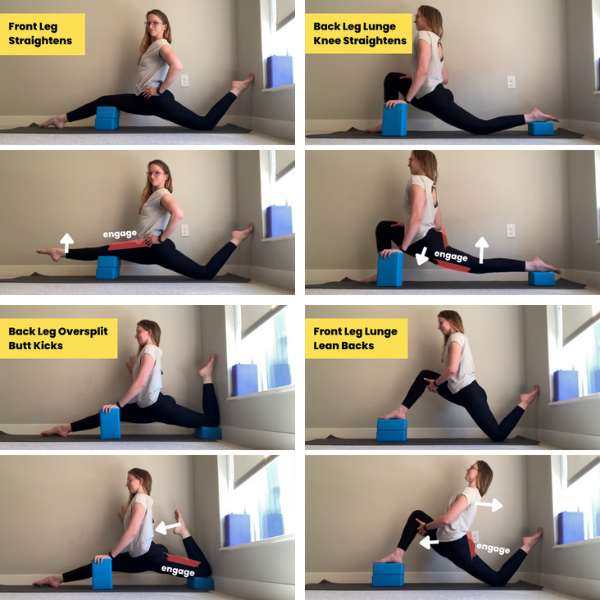
1. Low Lunge Pulse (Hip Flexor Strength)
- Drop into deep lunge
- Slight posterior pelvic tilt
- Pulse gently forward 10–15 reps
- Hold final position 20 seconds
Engage the glute of the back leg. Don’t relax into the joint.
2. Hamstring Active Stretch
Instead of passive reaching:
- Front leg straight
- Lift torso upright
- Flex toes upward
- Lean forward with flat back
Hold 20–30 seconds while actively pressing heel into floor.
This builds hamstring strength at long lengths.
3. Split Slides (Controlled Descent)
Use sliders or socks on smooth floor.
- Start in lunge
- Slowly slide into split
- Stop before pain
- Hold 5 seconds
- Slide back up
5–8 reps each side.
This builds eccentric control — critical for gymnasts.
4. Active Front Split Hold
Once deeper:
- Enter split
- Remove hands from floor
- Stay upright
Hold 10–20 seconds.
If you can’t lift hands, you’re not ready for full depth yet — and that’s okay.
Part 4: Middle Split Drills (Adductor Strength)

4
1. Cossack Squats (Again — but deeper)
These are gold.
- Wide stance
- Shift fully to one side
- Other leg straight
- Chest tall
8–12 reps per side.
This strengthens inner thighs while improving mobility.
2. Straddle Good Mornings
Sit in wide straddle:
- Straight back
- Lean forward slowly
- Engage core
Do 10 slow reps.
Active compression builds strength for straddle presses.
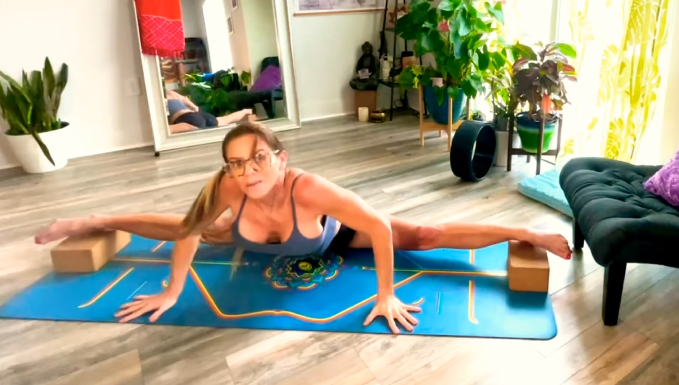
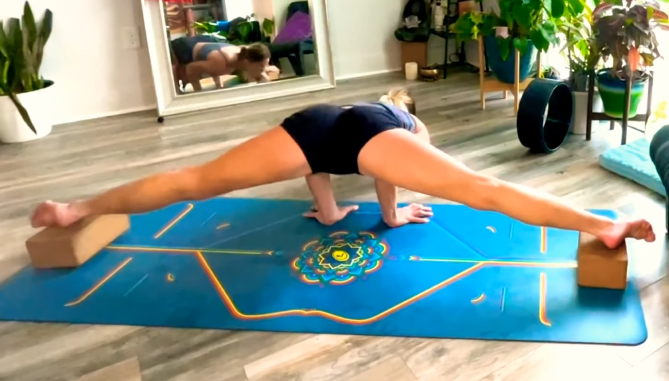
3. Middle Split Pulses
- Slide into wide stance
- Hands lightly on floor
- Pulse gently deeper
10–15 small pulses
Hold final position 20–30 seconds.
4. Upright Middle Split Hold
When deeper:
- Hands off floor
- Engage glutes
- Slight posterior pelvic tilt
This trains active adductor strength.
Passive splits don’t carry over to gymnastics power. Active ones do.
Part 5: Mobility for Advanced Athletes
If you practice calisthenics or gymnastics seriously, add:
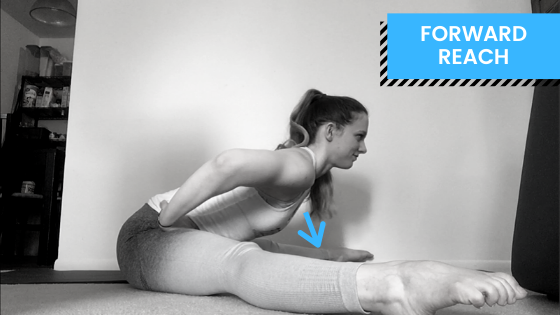
• Pancake Stretch (Seated Forward Fold in Straddle)
Improves compression strength for:
- L-sits
- V-sits
- Press handstands
• Jefferson Curls (Light Weight)
Build hamstring strength through spinal flexion.
Slow. Controlled. Light weight only.
• Elevated Split Holds
Front foot on block.
Increase hip flexion range safely.
Programming for Progress
Train splits 3–4 times per week.
Beginner:
- 15–20 minutes after workout
Intermediate:
- Dedicated 25–30 minute session
Advanced:
- Active drills + end-range holds
Consistency beats intensity.
Common Mistakes
- Forcing depth too early
- Ignoring glute engagement
- Training only passive stretching
- Skipping warm-up
- Rounding spine excessively
Pain in joints? Stop immediately. Stretching discomfort is okay. Sharp pain is not.
Strength + Mobility = Performance
4
When splits improve, you’ll notice:
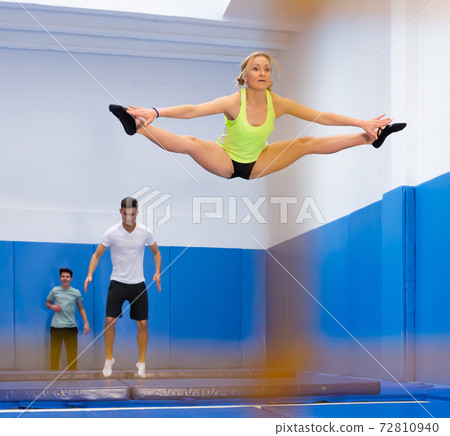
- Higher split jumps
- Cleaner straddle presses
- Stronger pistol squats
- More fluid handstand entries
- Better hip control
Flexibility without strength is unstable.
Strength without flexibility is restrictive.
Mobility is the bridge between the two.
Sample 25-Minute Split Routine
- Warm-Up – 5 minutes
- Cossack Squats – 3×10
- Low Lunge Pulses – 2×15
- Hamstring Active Hold – 2x30s
- Split Slides – 5 reps
- Middle Split Pulses – 2×15
- Active Split Hold – 2x20s
Finish with relaxed breathing in deepest safe range.
Mental Discipline for Splits
Splits demand patience.
Progress may feel slow. Some weeks you won’t see change. But the nervous system adapts gradually.
Stay consistent.
Measure progress monthly — not daily.
Celebrate small improvements like:
- 1 inch deeper
- More upright torso
- Hands off floor
- Less shaking
Gymnastics-level splits take months, sometimes years.
But the strength gained along the way transforms your entire movement system.
Final Thoughts
Splits are not just about flexibility.
They are about:
- Hip strength
- Core control
- Active mobility
- Nervous system adaptation
- Discipline
In calisthenics and gymnastics, splits are not optional decorations. They are performance tools.
Train them smart.
Train them strong.
Train them consistently.
And over time, your body will open — not just into deeper splits — but into better movement, greater control, and powerful athletic freedom.
Strength.
Flexibility.
Mobility.
All in one line.
And that line begins with patience.