Balance and mobilisation are two of the most essential components of a healthy and functional body. Balance allows us to move with control, stability, and confidence, while mobilisation ensures that our joints, muscles, and connective tissues move freely, efficiently, and without restriction. Together, they enhance performance, prevent injuries, and improve overall wellbeing. Incorporating exercises that combine both balance and mobilisation can be empowering, providing motivation to stay active and mindful of the body. Here are five step-by-step exercises designed to cultivate balance and mobilisation, along with the motivation to continue developing your physical potential.
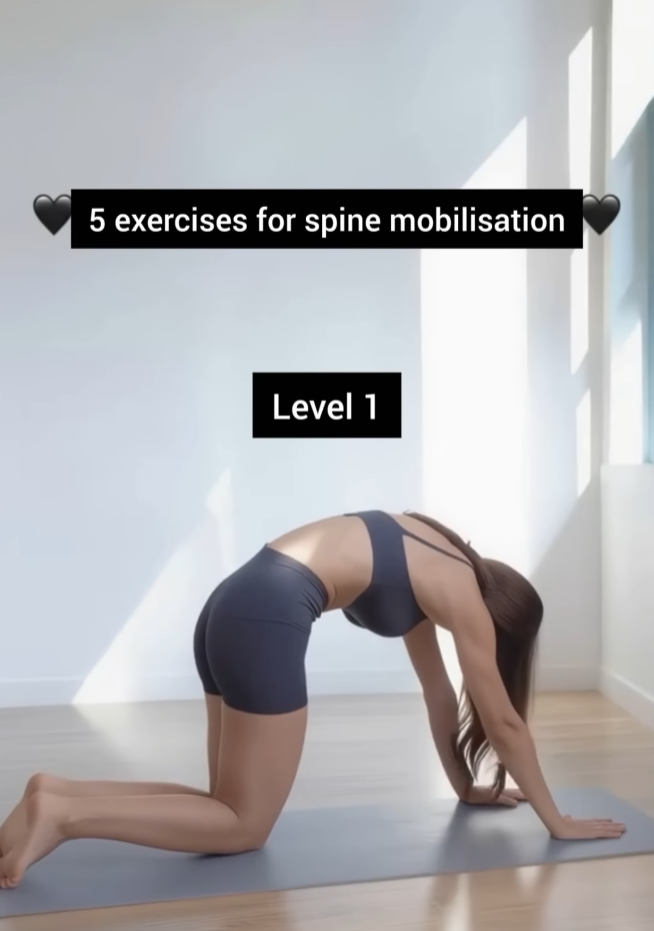
1. Single-Leg Stand with Arm Reach
Purpose: This exercise strengthens the lower body, improves core stability, and engages the proprioceptive system (your sense of body position), all while enhancing coordination.
Step-by-Step:
- Stand upright with your feet hip-width apart.
- Shift your weight onto your right foot, lifting your left foot slightly off the ground.
- Extend your arms slowly forward, to the sides, or overhead to create additional challenge.
- Hold the position for 20–30 seconds while keeping your core engaged.
- Switch legs and repeat the exercise.
Why It Works:
Standing on one leg challenges your body to find stability. The arm movements add a layer of complexity, forcing your muscles to adjust and your nervous system to coordinate multiple points of motion simultaneously.
Motivation Factor:
Seeing improvement in your ability to maintain balance over time provides immediate motivation. Each successful repetition reinforces confidence in your body’s control and stability.
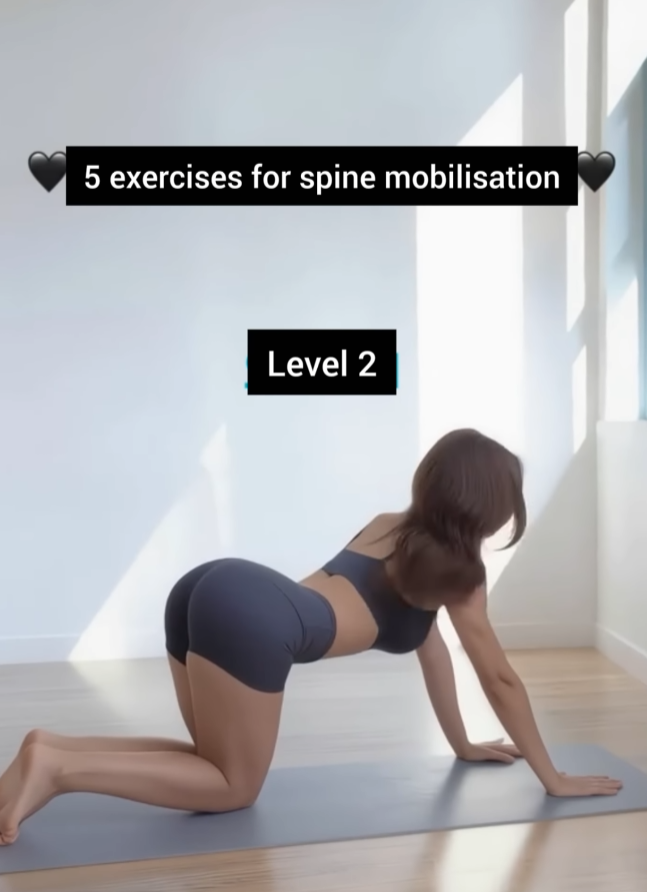
2. Cat–Cow Spine Mobilisation
Purpose: This flowing movement enhances spinal mobility, loosens tight muscles, and activates the core, while encouraging mindfulness and focus.
Step-by-Step:
- Begin on your hands and knees with wrists aligned under shoulders and knees under hips.
- Inhale deeply, dropping your belly toward the floor, lifting your head and tailbone upward (Cow position).
- Exhale, rounding your spine, tucking your chin, and drawing your belly in (Cat position).
- Repeat this cycle 8–12 times, moving slowly and with control.
Why It Works:
A mobile spine improves posture, relieves tension, and facilitates smoother movements throughout the body. The rhythmic breathing reinforces mind-body connection and prepares your body for more complex balance exercises.
Motivation Factor:
Feeling your spine loosen and your body awaken through controlled motion is a powerful motivator. Cat–Cow reminds you that small, intentional movements can lead to significant improvements in comfort, flexibility, and stability.
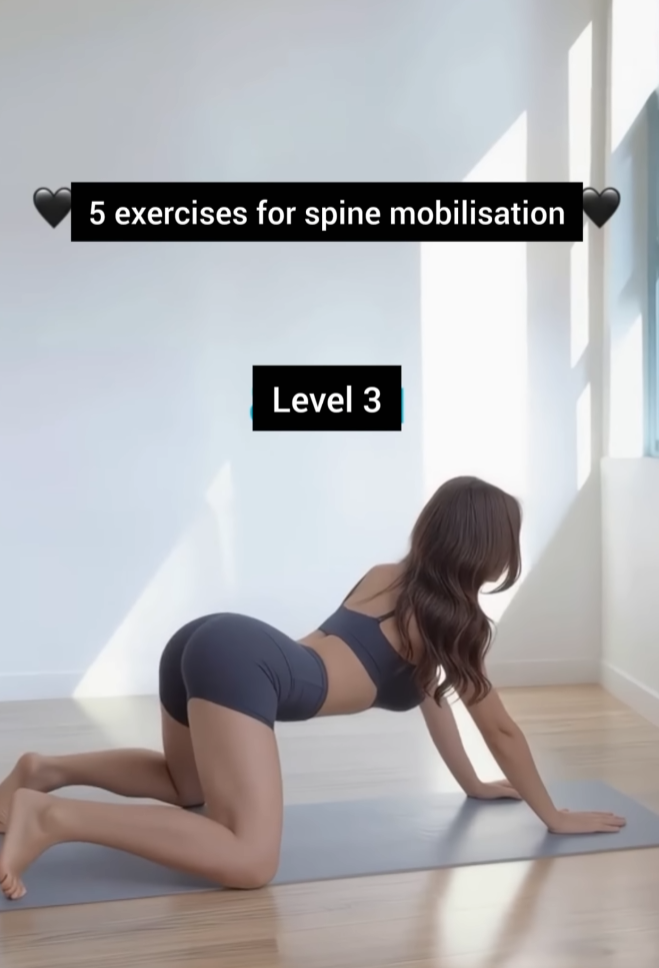
3. Heel-to-Toe Walk
Purpose: This exercise challenges lower-body balance, ankle stability, and coordination, while enhancing proprioception.
Step-by-Step:
- Stand tall with your feet together and arms relaxed at your sides.
- Take a step forward, placing the heel of your front foot directly in front of the toes of your back foot.
- Continue walking slowly in a straight line, maintaining steady gaze and posture.
- After 10–15 steps, turn around and walk back using the same heel-to-toe technique.
Why It Works:
Narrowing your base of support forces the core and leg muscles to work harder to maintain stability. The slow, precise steps improve ankle and foot mobility while reinforcing body control.
Motivation Factor:
Each successful step demonstrates progress in balance and stability. Over time, heel-to-toe walking increases confidence in your movements, encouraging you to try more challenging exercises.
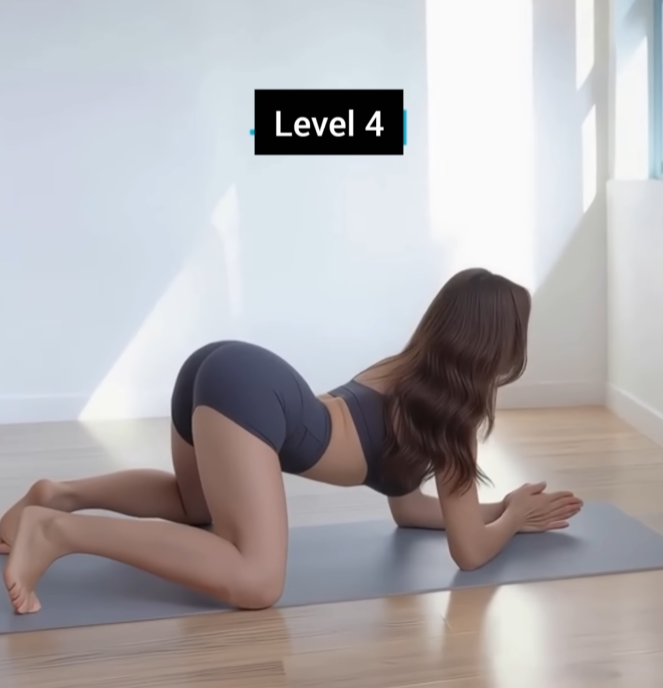
4. Standing Hip Circles
Purpose: This exercise promotes hip joint mobility, pelvic stability, and overall lower-body flexibility, which are key to balance and smooth movement.
Step-by-Step:
- Stand with your feet hip-width apart and hands placed on your hips.
- Shift your weight slightly to your left leg and begin to draw slow, controlled circles with your hips.
- Complete 6–8 circles in one direction, then reverse.
- Repeat with the opposite leg supporting your weight.
Why It Works:
Hip mobility is essential for balance, walking, and bending. Circular motion challenges stability while simultaneously mobilising the joint through its full range of motion.
Motivation Factor:
The fluidity of this exercise creates a sense of ease and control in the body. Feeling your hips loosen and your movements become smoother provides instant feedback and encourages continued practice.
5. Squat with Arm Reach
Purpose: This full-body exercise strengthens the legs, core, and shoulders while enhancing coordination, mobility, and balance.
Step-by-Step:
- Stand with your feet slightly wider than hip-width apart, toes pointing slightly outward.
- Lower into a squat by bending your knees and pushing your hips back, keeping your chest lifted.
- As you rise from the squat, extend your arms overhead or forward, reaching gently.
- Repeat for 8–12 controlled repetitions.
Why It Works:
Squats improve lower-body strength and stability, while reaching with the arms adds a dynamic balance challenge and mobilises the shoulders and upper back. Coordinating movement across multiple joints trains the nervous system and promotes full-body awareness.
Motivation Factor:
Squats with an arm reach provide a visible sense of accomplishment. Feeling your muscles work in unison builds confidence and reinforces the importance of consistency in your practice.
Integrating the Five Exercises into Your Routine
These five exercises can be combined into a simple, effective routine for balance, mobilisation, and motivation. Start with the Cat–Cow to awaken the spine, then progress to single-leg stands and heel-to-toe walking for lower-body balance. Include standing hip circles to loosen joints and finish with squats with arm reach to strengthen and stabilise the entire body.
Performing this sequence 3–4 times per week can lead to noticeable improvements in flexibility, coordination, and stability. Each session reinforces the mind-body connection, ensuring that your balance and mobilisation skills transfer to everyday movements.
The Motivation Factor
Consistency is key to developing balance and mobilisation. Motivation often comes from visible progress, but it also comes from how exercises make you feel. These five exercises encourage mindfulness, body awareness, and confidence. Each movement demonstrates that you are capable, strong, and adaptable.
In addition, practicing these exercises regularly reduces the risk of falls and injuries, which is itself a powerful motivator. The more stable and mobile your body becomes, the more confident you feel in daily activities, from walking on uneven ground to lifting objects or climbing stairs.
Tips for Success
- Focus on Quality, Not Quantity: Proper form ensures maximum benefit and reduces risk of injury.
- Use Support if Needed: A chair or wall can provide stability until your balance improves.
- Breathe Mindfully: Coordinating breath with movement enhances both balance and mobility.
- Progress Gradually: Increase hold times, repetitions, or range of motion as your body adapts.
- Stay Consistent: Daily or regular practice ensures long-term benefits and strengthens motivation.
Conclusion
Balance and mobilisation are essential components of health that influence not only physical capability but also confidence and wellbeing. The five exercises—Single-Leg Stand with Arm Reach, Cat–Cow Spine Mobilisation, Heel-to-Toe Walk, Standing Hip Circles, and Squat with Arm Reach—provide a step-by-step approach to developing these abilities while creating motivation through movement.
By practicing these exercises regularly, you improve your stability, flexibility, coordination, and body awareness. You also cultivate a sense of accomplishment, reinforcing the desire to stay active. Balance is not about rigidity; mobilisation is not about chaos. Together, they create a harmonious, adaptable body capable of moving through life with confidence, energy, and purpose.
These five exercises are not just movements—they are a path to a healthier, more mobile, and motivated self.
If you want, I can also create a visually guided version with diagrams or illustrations for each exercise. This could turn it into a full step-by-step training guide for easier follow-along practice.
Do you want me to do that next?