Standing and wide-legged forward bending exercises are foundational movements shared across yoga, gymnastics, and modern fitness training. They may look simple from the outside, but when practiced with awareness and proper technique, they become powerful tools for increasing flexibility, improving posture, and calming the nervous system. These movements train not only the muscles of the legs and hips, but also the spine, breath, and mind.
This session focuses on standing and wide-legged forward bends, guiding the body gradually into deeper ranges of motion while maintaining safety and control. Whether your goal is enhanced flexibility for gymnastics, improved mobility for fitness, or a mindful yoga practice, forward bending offers benefits that reach far beyond physical stretching.
Begin by creating a supportive environment. Stand on a stable surface with enough space to move freely. Wear comfortable clothing that allows your hips and legs to move without restriction. Take a moment to stand tall with your feet hip-width apart, arms relaxed by your sides. Close your eyes briefly and bring attention to your breath. Inhale deeply through your nose, exhale slowly through your mouth. Let the body settle and prepare for movement.
Standing forward bending starts with alignment. Many people rush to fold down, but true flexibility develops when the movement begins from the hips rather than the lower back. To prepare, place your hands on your hips and gently tilt your pelvis forward and back a few times. This small movement helps you feel the hinge point of the hips, which is essential for safe forward bending.
On an inhale, lengthen your spine by lifting the chest slightly and drawing the crown of the head upward. On an exhale, hinge forward from the hips, keeping your back long. Allow your knees to bend softly. This is not a sign of weakness; bent knees protect the spine and allow the hamstrings to lengthen gradually.
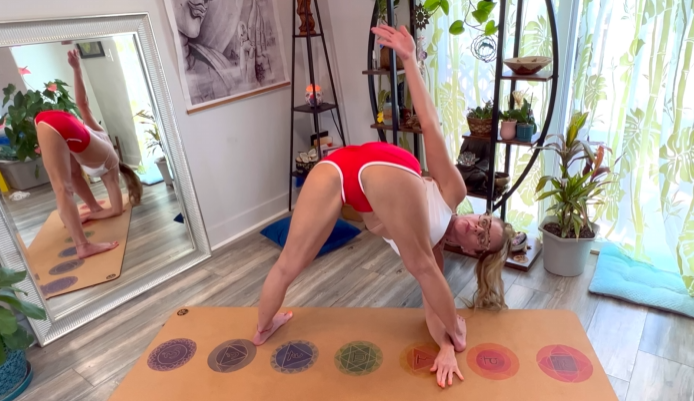
Let your torso fold forward naturally. Your hands may rest on your thighs, shins, or hang freely toward the floor. Release your head and neck completely. In standing forward bends, gravity becomes your ally. Each exhale encourages the body to soften a little more, without forcing.
Stay here for several breaths. Feel the stretch through the back of the legs, the hips, and along the spine. Notice how your breath flows. If it becomes strained, ease out slightly. Breath is a reliable guide—smooth breathing means you are within a safe range.
To increase flexibility dynamically, begin gentle movement. Inhale and lift halfway up, lengthening the spine with hands on your shins or thighs. Exhale and fold forward again. Repeat this flowing motion five to ten times. This dynamic approach is especially useful for fitness and gymnastics training, as it warms the muscles and improves range of motion without overstressing tissues.
Next, deepen the standing forward bend by gradually straightening the legs if your body allows. Do this slowly and only as far as you can maintain spinal length. Avoid locking the knees. Imagine your sit bones lifting upward as your torso drapes downward.
To target each leg individually, shift your weight slightly into one foot, keeping the other knee bent. Hold for a breath or two, then switch sides. This subtle variation helps balance flexibility between the left and right legs, which is crucial for both athletic performance and injury prevention.
Slowly roll up to standing, stacking the spine one vertebra at a time. Take a moment to notice the sensation of blood flow returning and the feeling of length through your back and legs.
Now transition into wide-legged forward bending, a powerful posture for opening the hips and inner thighs. Step your feet wide apart, wider than hip-width, with toes pointing forward or slightly outward. Place your hands on your hips and stand tall.
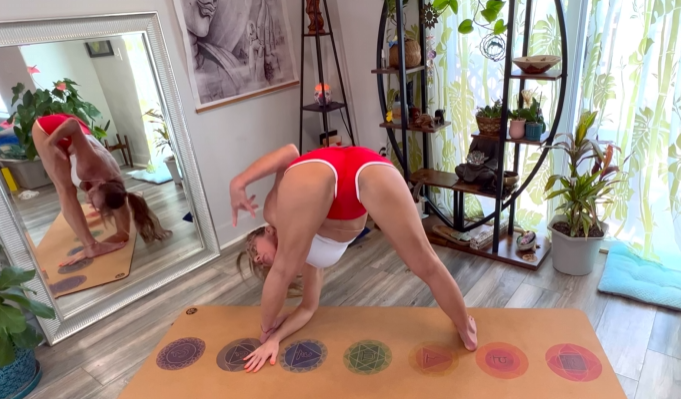
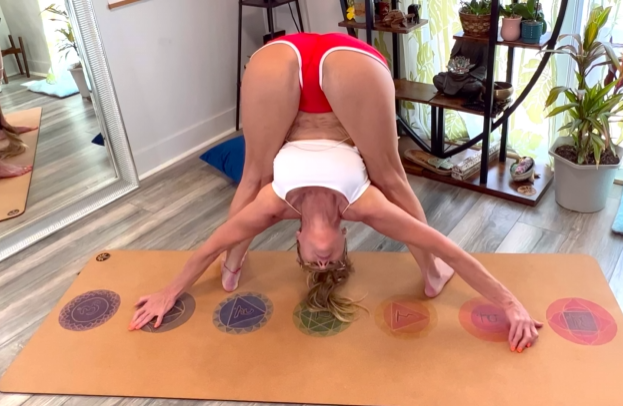
Inhale deeply, lengthening the spine. Exhale and hinge forward from the hips, keeping your back flat as you move. Stop when you feel a stretch through the inner thighs and hamstrings. At this stage, your torso may be parallel to the floor, which is perfectly acceptable and beneficial.
Rest your hands on the floor, yoga blocks, or a chair if needed. Support is not a limitation—it allows you to stay longer and stretch more effectively. Keep your weight evenly distributed between both feet.
Stay in this wide-legged forward bend for several breaths. Feel the opening across the hips and the gentle traction along the spine. With each exhale, allow the torso to lower a little more if it feels natural. Avoid forcing your chest downward or collapsing the spine.
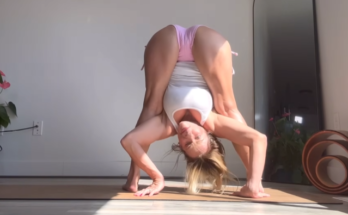
For deeper flexibility, you may bend your elbows and lower onto your forearms. If flexibility allows, the crown of the head may move toward the floor, but only if the neck remains relaxed and pain-free. Gymnasts often use this posture to build strong, flexible hips, while yogis value its grounding and calming effects.
To add strength and control, engage your thigh muscles gently by lifting the kneecaps. This engagement protects the hamstrings and creates a balanced stretch. Forward bending is not passive—it is a dialogue between strength and release.
After holding the posture, walk your hands back under your shoulders and inhale to lengthen the spine again. Place your hands on your hips and slowly rise back to standing, maintaining control throughout the movement.
To further enhance flexibility, incorporate side-to-side movement in the wide stance. From standing wide-legged, shift your weight toward one leg, bending that knee slightly while keeping the other leg straighter. Feel the stretch change through the inner thighs. Move slowly from side to side, syncing movement with breath. This variation is excellent for athletes and fitness practitioners who need multidirectional mobility.
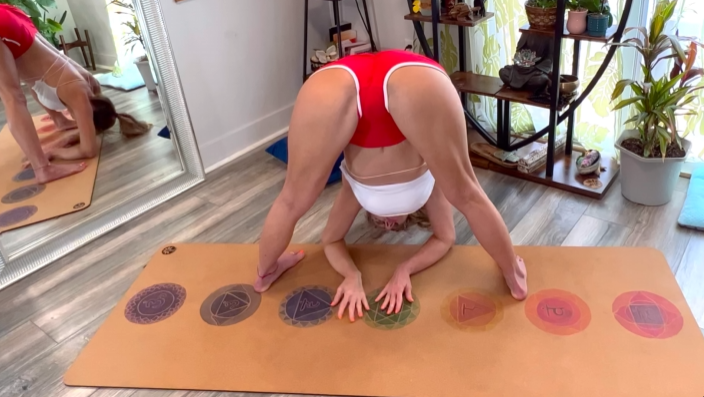
Return to the center and fold forward again, holding for a few breaths. Notice how the body feels more open compared to your first attempt.
Standing and wide-legged forward bends also offer benefits beyond flexibility. They stimulate circulation, improve digestion by gently compressing the abdominal organs, and calm the mind. Forward bending encourages introspection and relaxation, making it an effective counterbalance to intense training or a busy lifestyle.
To integrate the practice, lower yourself down to the floor and come into a gentle seated position. Sit quietly for a moment, observing the effects of the session. Many people notice a sense of grounding, mental clarity, and physical lightness.
Consistency is key when working with forward bends. Practicing these movements a few times a week—or even daily in short sessions—can significantly increase flexibility over time. Progress may be gradual, but it is lasting when built with patience and awareness.
Remember that flexibility is individual. Genetics, lifestyle, and past injuries all influence range of motion. Comparing your body to others can lead to frustration or injury. Instead, focus on your own progress and how your body feels after each session.
Standing and wide-legged forward bending form a bridge between yoga, gymnastics, and fitness. They develop mobility, strength, and body awareness simultaneously. When approached with respect and mindfulness, these simple yet profound movements help create a body that is not only more flexible, but also more resilient, balanced, and connected.
By returning to these forward bends again and again, you train your body to move with ease and your mind to remain calm under pressure—benefits that extend far beyond the mat, the gym, or the training floor.