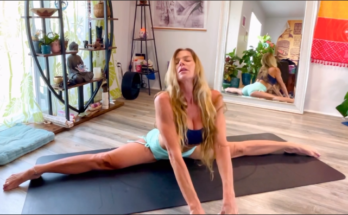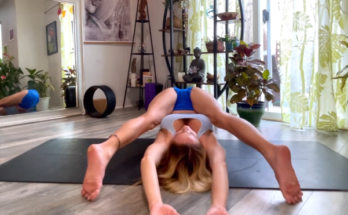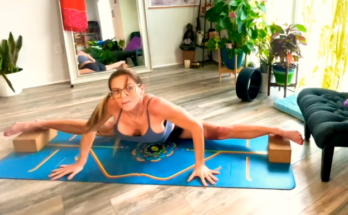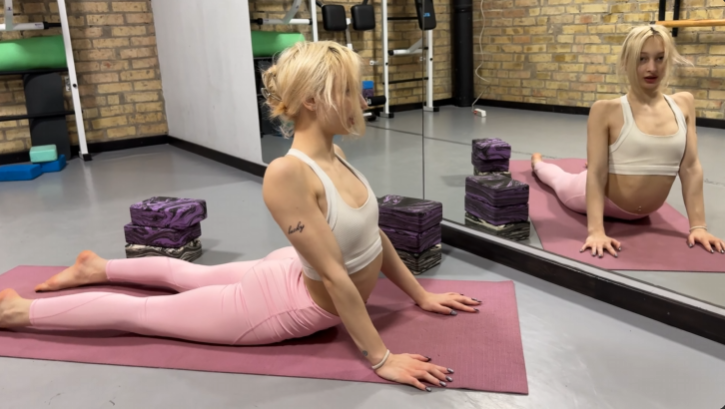
Flexible chest folds don’t come from forcing your spine into deep shapes. They are built slowly, intelligently, and safely—starting with proper back warm-up exercises. Before your body allows deep extension, it needs to feel warm, supported, and strong. That’s where the right warm-up makes all the difference.
Chest folds demand a unique balance of spinal mobility, shoulder openness, core strength, and nervous system trust. Without warming up correctly, the body will protect itself by tightening muscles, limiting range, and increasing injury risk. With the right preparation, however, your back becomes responsive, elastic, and ready to open.
Below are five of the best back warm-up exercises designed specifically to prepare your body for flexible chest folds. These movements wake up the spine segment by segment, activate supporting muscles, and gently increase extension—without strain.
Why Back Warm-Ups Matter for Chest Folds
Chest folds place the spine into deep extension, especially through the thoracic (upper back) and lumbar (lower back) regions. If these areas are cold or stiff, the pressure shifts into vulnerable joints instead of being distributed evenly.
A proper warm-up:
- Increases blood flow to spinal muscles
- Improves joint lubrication
- Activates stabilizing muscles
- Reduces fear response in the nervous system
- Creates smoother, safer backbends
Think of your warm-up as permission—you’re asking your body to open, not demanding it.
Exercise 1: Cat–Cow Spinal Waves (Foundation Opener)
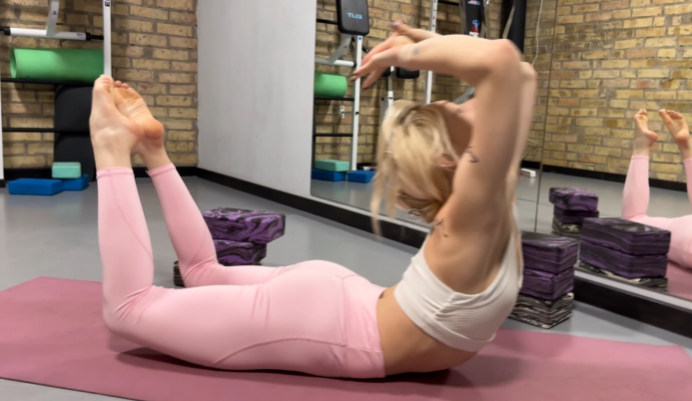
Cat–Cow is one of the most effective exercises for waking up the entire spine. It introduces flexion and extension gently, allowing each vertebra to move independently.
How to do it:
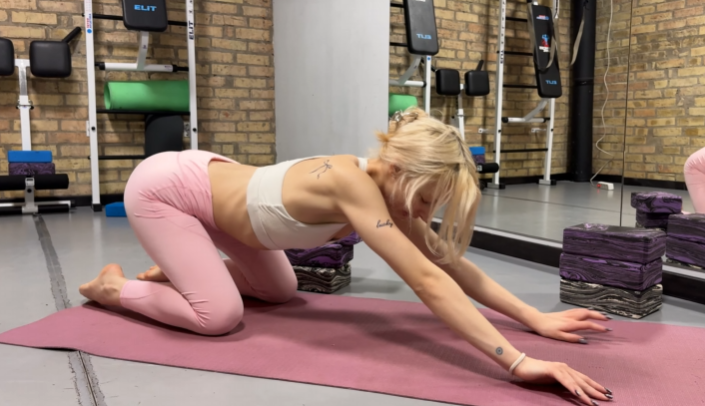
- Start on hands and knees in tabletop position
- Inhale, drop the belly, lift the chest, and look forward (Cow)
- Exhale, round the spine, tuck the chin, and engage the core (Cat)
- Move slowly with your breath
Why it helps chest folds:
Cat–Cow warms the spine evenly, reduces stiffness, and improves spinal awareness. It also prepares the nervous system for deeper back movements later.
Tip:
Focus on smooth motion, not range. Imagine your spine moving like a wave
Exercise 2: Shoulder & Chest Openers (Unlock the Upper Back)
Many people struggle with chest folds not because of the lower back, but because the shoulders and chest are tight. Opening this area is essential for safe spinal extension.
How to do it:
- Stand or kneel upright
- Interlace your fingers behind your back
- Straighten your arms and gently lift them away from your body
- Open the chest and breathe deeply
You can also perform wall-assisted shoulder stretches or arm circles.
Why it helps chest folds:
Tight shoulders force the spine to overcompensate. Opening the chest allows the backbend to distribute evenly, especially through the thoracic spine.
Tip:
Keep the ribs gently drawn in—avoid flaring excessively.
Exercise 3: Sphinx to Low Cobra Flow (Safe Spinal Extension)
This exercise introduces controlled back extension without compression. It’s perfect for preparing the lumbar spine for deeper chest folds.
How to do it:
- Lie on your stomach
- Place forearms under shoulders (Sphinx)
- Press lightly into the forearms and lift the chest
- For Low Cobra, place hands under shoulders and gently lift higher
- Keep elbows slightly bent and glutes engaged
Move between Sphinx and Cobra slowly with your breath.
Why it helps chest folds:
This flow strengthens the muscles that support backbends while gently increasing spinal extension.
Tip:
Think “length first, bend second.” Lift the chest upward before leaning back.
Exercise 4: Thoracic Spine Extensions (Upper Back Freedom)
The thoracic spine (mid-upper back) is often the stiffest area—and the most important for chest folds. This exercise targets that region directly.
How to do it:
- Sit or kneel upright
- Place hands behind your head or across your chest
- Inhale and lift the chest
- Gently arch backward from the upper spine
- Exhale and return to neutral
You can also use a yoga block or foam roller under the upper back for support.
Why it helps chest folds:
Chest folds rely heavily on thoracic extension. Freeing this area reduces pressure on the lower back and improves overall backbend quality.
Tip:
Avoid collapsing into the neck. Keep the back of the neck long.
Exercise 5: Bridge Preparation (Activation + Control)
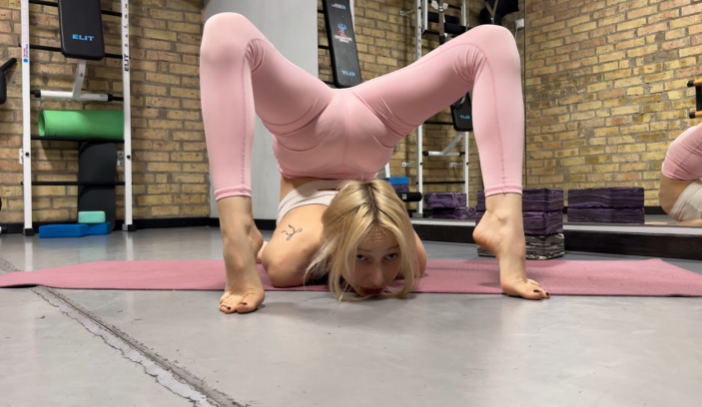
Before deep chest folds, your body needs to feel strong in back extension—not just flexible. Bridge preparation builds that confidence.
How to do it:
- Lie on your back with knees bent, feet hip-width apart
- Press into the feet and lift the hips
- Keep knees tracking forward and glutes engaged
- Hold for a few breaths, then lower slowly
For advanced prep, place a block under the sacrum for a supported bridge.
Why it helps chest folds:
This exercise activates the posterior chain (glutes, hamstrings, spinal muscles) and builds stability in extension.
Tip:
Avoid squeezing the lower back—think of lifting the chest upward and forward.
How to Combine These Exercises
For best results, perform these exercises in order as a warm-up sequence:
- Cat–Cow Spinal Waves – 1–2 minutes
- Shoulder & Chest Openers – 1 minute
- Sphinx to Low Cobra Flow – 1–2 minutes
- Thoracic Spine Extensions – 1 minute
- Bridge Preparation – 1 minute
This creates a progressive warm-up that moves from gentle mobility to controlled extension.
Common Mistakes to Avoid
- Skipping the warm-up: Cold backbends increase injury risk
- Holding breath: This triggers muscle guarding
- Forcing range: Pain is not progress
- Ignoring balance: Always counter backbends with gentle forward folds
Flexibility grows when the body feels safe.
Breathing for Better Chest Folds
Breath is your most powerful flexibility tool. During warm-ups:
- Inhale to create space
- Exhale to release tension
- Keep breathing slow and controlled
If your breath becomes shallow, ease back.
Final Thoughts
Flexible chest folds are built—not rushed. With these 5 best back warm-up exercises, you create the foundation your body needs to open safely and beautifully. Over time, your spine will feel stronger, lighter, and more responsive.
Remember:
✔ Warm muscles stretch better
✔ Strong muscles protect flexibility
✔ Patience leads to progress
Practice consistently, move with awareness, and allow your chest folds to deepen naturally. Your back will thank you—not just today, but for years to come.