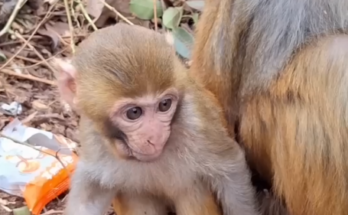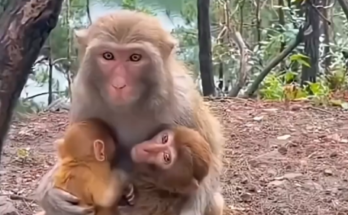
The jungle was alive with its usual morning sounds—birds calling from the treetops, insects humming in the warm air, and leaves rustling as monkeys leapt from branch to branch. High in a tall fig tree, a young mother monkey named Mira cradled her tiny baby close to her chest.
Her baby, only a few weeks old, was small and delicate. His fingers curled tightly into Mira’s fur as he slept. She groomed him gently, brushing away dust and tiny leaves. Like all mothers, Mira was protective. She kept him close wherever she went—whether climbing for fruit or resting in the shade.
That morning felt peaceful. The troop was relaxed. Sunlight filtered softly through the trees.
Then everything changed.
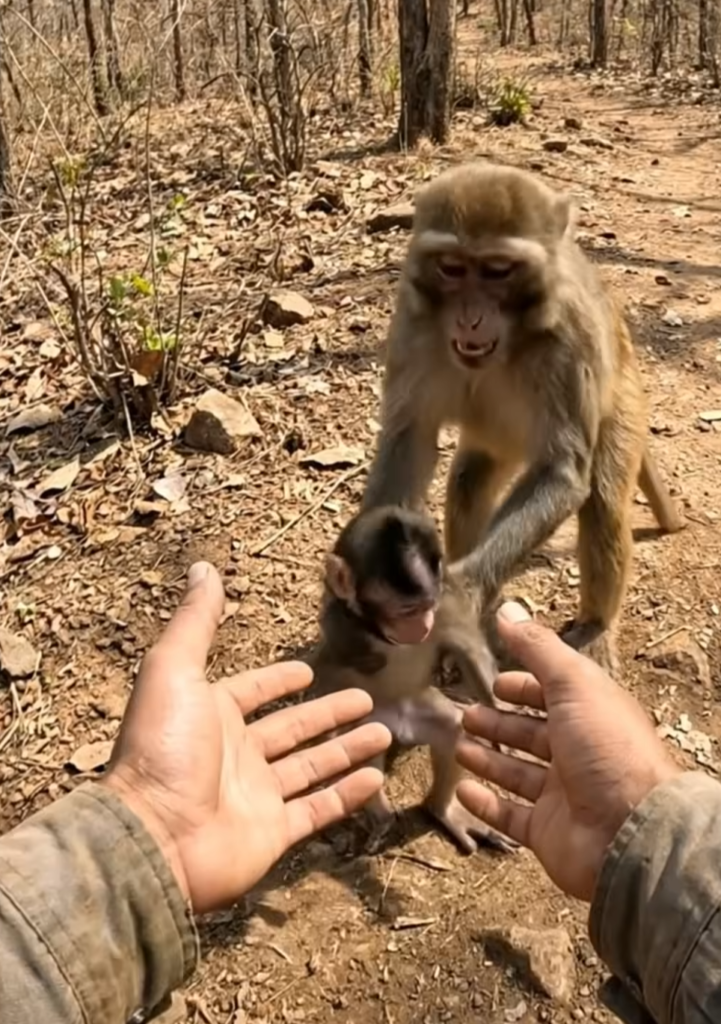
As Mira shifted to a higher branch, her baby suddenly loosened his grip. At first, she thought he was simply adjusting in his sleep. But when she looked down at his tiny face, something felt wrong. His chest was not moving the way it normally did. His body felt strangely still.
Mira froze.
She touched his face with her nose. No response.
She gently shook him. Nothing.
Panic surged through her like a bolt of lightning.
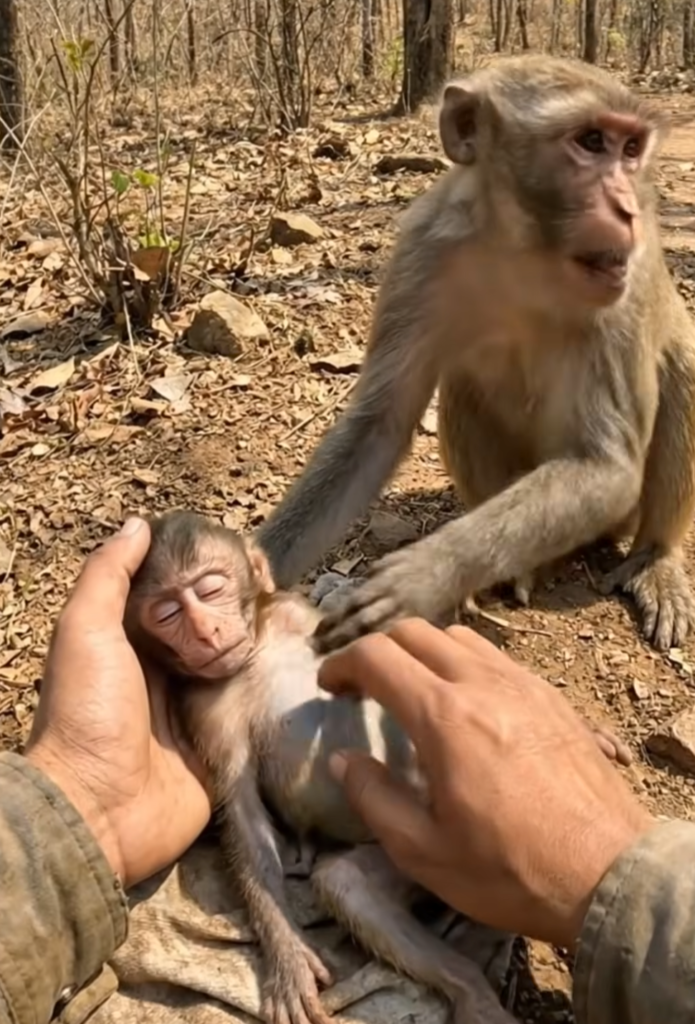
She let out a sharp, distressed call that echoed across the forest. Other monkeys stopped and turned. Mira clutched her baby tighter, her eyes wide with fear. She pressed her ear close to his chest, as if listening for the rhythm she knew so well.
There was no movement.
“My baby stopped breathing!” her cries seemed to say.
Animals may not use human words, but their emotions are powerful and clear. The fear in Mira’s voice brought members of the troop rushing closer. An older female approached cautiously, her face calm but concerned.
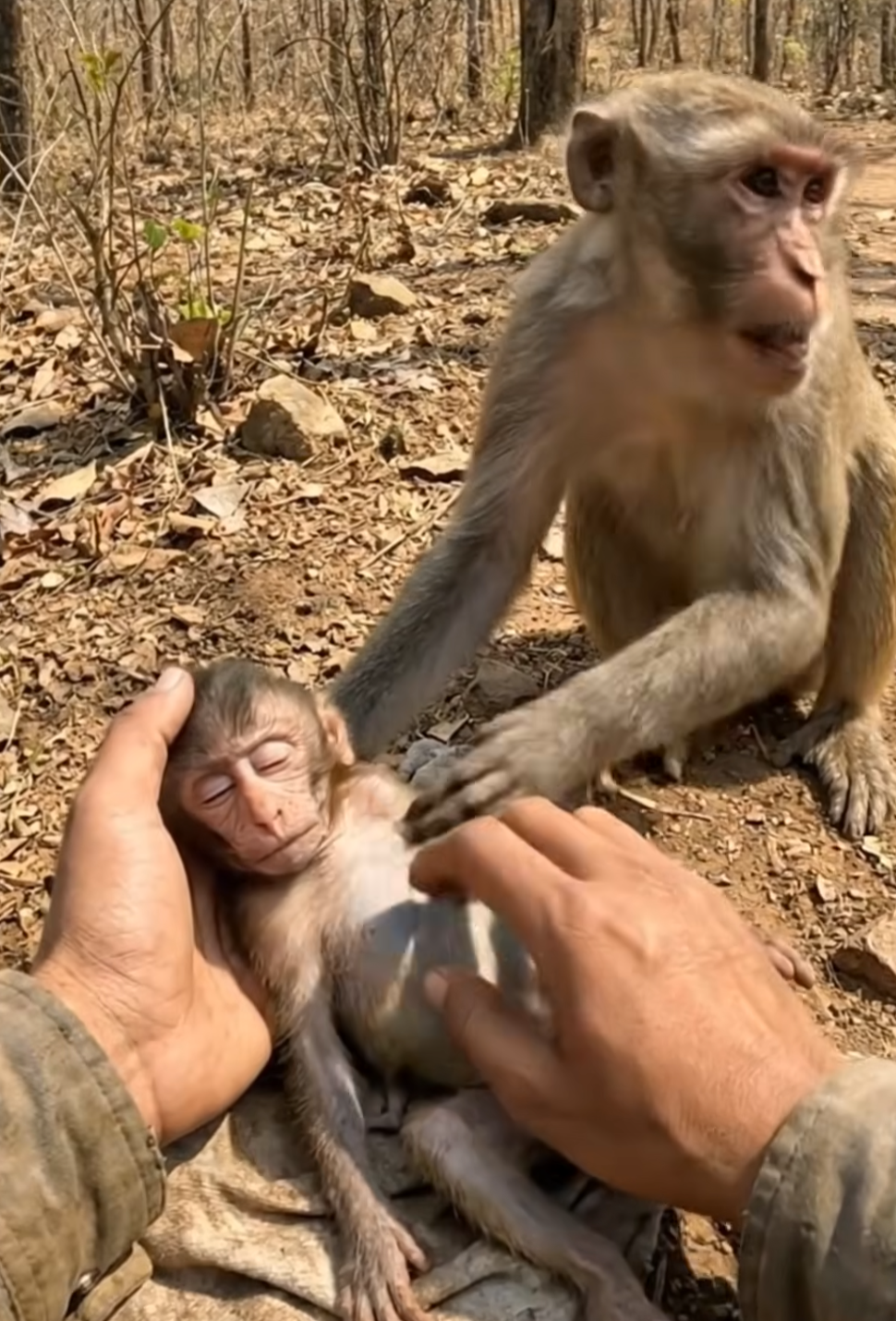
Mira rocked back and forth, making soft, urgent sounds. She nudged the baby again and again. She licked his face, grooming him rapidly as if trying to wake him through touch alone.
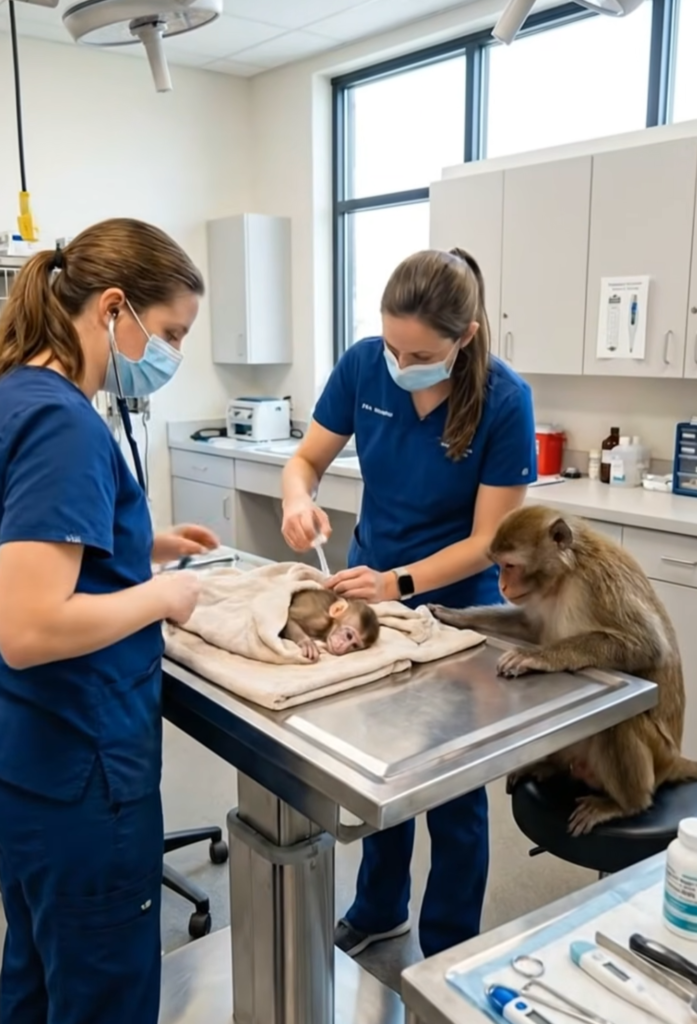
In the wild, baby monkeys can sometimes become weak from illness, dehydration, or a sudden chill. Their small bodies are fragile. A moment of weakness can quickly turn dangerous.
The older female leaned in and gently touched the baby’s arm. Mira hesitated but did not push her away. Desperation had replaced her usual protectiveness.
The troop grew quiet.
Mira shifted her baby into her hands and began rubbing his tiny chest with her fingers. Her movements were clumsy but determined. She nudged his mouth, grooming around his nose. She gave small, repeated calls, urging him to respond.
Seconds felt like hours.
Then, suddenly—a faint movement.
A tiny twitch of the baby’s fingers.
Mira froze again, this time with hope.
She leaned closer. There it was—a small, shallow breath. Weak, but real.
The baby made a soft, fragile squeak.
Relief exploded through Mira’s body. She pulled him tightly against her chest, wrapping her arms around him as if she could shield him from the entire world. She continued grooming him gently, slower now, more carefully.
The older female remained nearby, watching. The troop slowly began to relax, though they stayed close in case Mira needed support.
The baby’s breathing was still uneven. Mira adjusted her position, moving to a lower branch where the sunlight was warmer. She pressed the baby’s body against her chest, sharing her warmth. Heat is life for small infants; keeping them warm can help stabilize their breathing and energy.
For the next hour, Mira did not move far. She barely ate. Her entire focus was on her baby’s tiny chest, watching every rise and fall.
Gradually, his breathing became steadier.
He opened his eyes halfway and weakly reached for her fur. Mira responded instantly, guiding his small hand into a secure grip. She made soft, soothing sounds, the kind only mothers use.
The crisis had passed—but the memory would not fade quickly.
Mother monkeys form deep bonds with their babies. From the moment of birth, they remain in almost constant contact. They learn every small movement, every sound, every pattern of breathing. When something changes, they know immediately.
Mira had known.
Over the next few days, she stayed extra cautious. She avoided the highest, most unstable branches. She rested more frequently. She groomed her baby often, checking his face and body for any signs of weakness.
The troop also seemed more attentive. Younger monkeys gave her space. The older female occasionally checked in, offering silent support. In primate communities, social bonds can be strong, especially when a mother and infant are involved.
As the baby regained full strength, he became more active than ever. He clung tightly to Mira’s fur and even attempted small playful movements. His breathing returned to a normal rhythm. His eyes were bright again.
But sometimes, when he slept very still, Mira would gently touch his chest just to be sure.
The fear of losing a child—whether human or animal—is one of the deepest fears in nature. It is instinctive. It is immediate. It is overwhelming.
Mira’s panic that morning had not been weakness. It had been love.
Love pushed her to act quickly. Love made her call for help. Love kept her rubbing his tiny chest and warming him in the sunlight. Love refused to give up during those terrifying silent moments.
Weeks later, the baby was strong enough to explore short distances along the branches while still holding onto his mother. He climbed clumsily, occasionally slipping but always catching himself. Each time, Mira stayed close, ready to grab him if needed.
The memory of that day lingered like a shadow, but it also strengthened her bond with him.
Sometimes in the quiet afternoon, when the jungle grew calm again, Mira would sit on a wide branch and hold her baby close, listening carefully to his steady breathing. The simple sound brought her peace.
Life in the wild is uncertain. Dangers come without warning—storms, predators, illness. But what remains constant is a mother’s instinct to protect.
That morning when her baby stopped breathing, Mira’s world had nearly shattered.
But through quick action, warmth, and unbreakable determination, she brought him back from the edge.
And as the jungle continued its endless rhythm around them, one thing was clear:
A mother’s love does not pause in fear.
It fights.
It hopes.
And it holds on—no matter what.