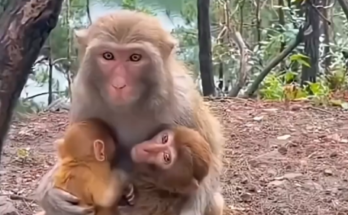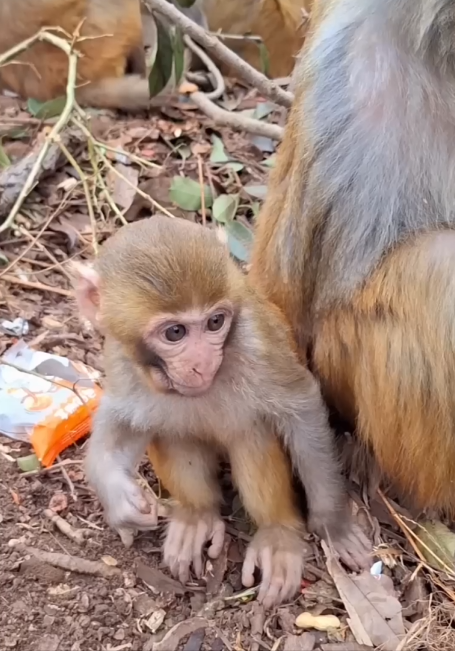
In the heart of a dense green forest where sunlight filtered through layers of leaves, a small troop of monkeys lived among twisting vines and towering trees. Their days were filled with movement — leaping from branch to branch, searching for fruit, grooming one another, and raising their young in a lively community.
Among them was a mother monkey known for her unusual behavior with her children. Some days she seemed incredibly gentle, holding her babies close and grooming them patiently. Other days she appeared strict, pulling them back from risky branches or scolding them with sharp calls when they wandered too far.
The younger monkeys often watched her with curiosity.
“Why does she act like that?” one juvenile wondered aloud. “Sometimes she’s so kind, and other times she’s so firm.”
The question echoed quietly through the troop: Why did the monkey behave like this with its children?
The answer lay not in a single moment, but in the rhythm of life in the forest.
One morning, as golden light touched the treetops, her youngest baby attempted to climb a thin branch for the first time. Its tiny hands gripped uncertainly, feet slipping as it tried to balance. The mother watched closely, ready to intervene.
When the baby reached too far, she quickly pulled it back, emitting a sharp warning call. The baby squeaked in surprise, clinging tightly to her fur.
To an observer, it might have looked harsh.
But in truth, she was teaching a lesson — not every branch was safe.
Later that day, she allowed the baby to explore a lower, sturdier branch on its own, watching silently as it practiced climbing. When the baby succeeded, she groomed it affectionately, reinforcing confidence.
Her behavior was a balance between protection and independence.
In the wild, every moment carried risks. Predators lurked in shadows, branches could break, and unfamiliar foods might be dangerous. A mother’s role was not only to comfort but also to prepare her young for survival.
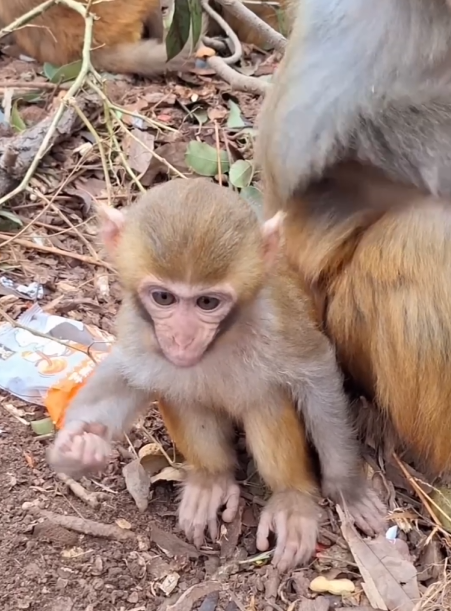
One afternoon, the troop encountered a sudden disturbance — a loud rustling in nearby bushes. Instantly, the mother gathered her children close, positioning herself between them and the unknown threat. Her body tensed, eyes alert, ready to defend if necessary.
The danger passed quickly, revealed to be only a passing deer. But the lesson remained clear: safety came first.
Her children learned that her strictness was not anger — it was vigilance.
As weeks went by, the young monkeys began to notice patterns. When they played too roughly near the edge of the canopy, she intervened. When they shared food or groomed one another gently, she allowed them freedom.
Through these interactions, she communicated boundaries.
One evening, as the sun dipped low and the forest glowed with warm light, the oldest juvenile sat beside her.
“Why do you sometimes scold and sometimes cuddle?” the young one seemed to ask through soft gestures and curious looks.
She responded by grooming the juvenile slowly, then guiding its hand toward a sturdy branch, as if demonstrating strength and safety.
Her message was simple: love includes guidance.
The troop’s elder, an old monkey with silver fur, observed quietly. Having raised many generations, he understood the complexity of parenting in the wild.
“Every mother carries memories,” he seemed to say through his calm presence. “She remembers storms, dangers, and losses. Her behavior is shaped by experience.”
Indeed, the mother monkey had faced hardships in the past. She had seen young ones fall, witnessed close encounters with predators, and endured harsh seasons when food was scarce. These memories influenced how she raised her children.
Her strict moments came from a desire to prevent harm.
Her gentle moments came from deep affection.
One day, a heavy rainstorm swept through the forest. Wind shook branches, and water poured relentlessly. The mother gathered her children under a thick canopy of leaves, holding them close until the storm passed.
Afterward, when the forest sparkled with droplets, she encouraged them to explore again, demonstrating resilience.
The young monkeys slowly began to understand.
Their mother’s behavior was not unpredictable — it was purposeful.
She taught them when to be cautious and when to be bold.
She showed them how to forage safely, which fruits to trust, and how to read warning calls from other animals. She allowed small mistakes so they could learn, stepping in only when necessary.
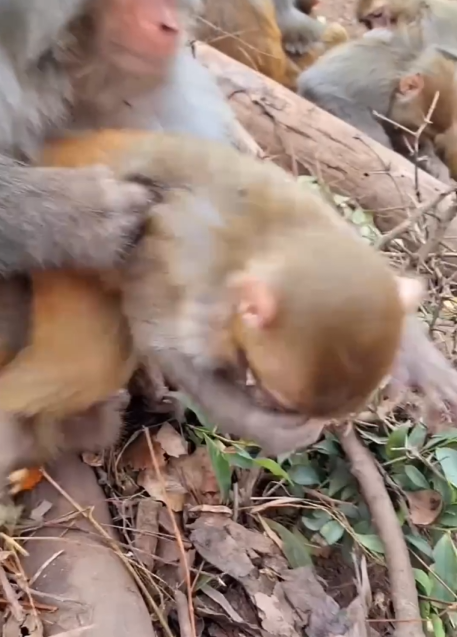
As they grew stronger, her scolding became less frequent, replaced by quiet observation.
One afternoon, a young monkey successfully navigated a challenging climb and returned proudly. The mother greeted it with soft grooming, acknowledging its progress.
The troop watched with appreciation.
Through her actions, she demonstrated that parenting was not only about protection but also about preparing the next generation.
The question — why did the monkey behave like this with its children? — gradually answered itself.
Because survival required both care and discipline.
Because love in the wild was expressed through teaching, guarding, and encouraging growth.
Because every lesson carried the hope that her children would thrive long after they left her side.
As night fell and the forest filled with the gentle sounds of insects and distant calls, the mother settled with her children nestled close. They slept peacefully, trusting in her presence.
And in the quiet darkness, her watchful eyes reflected a timeless truth: the balance of tenderness and firmness is the language of a parent’s love.
In the life of monkeys — as in many lives — behavior is shaped by instinct, experience, and the deep desire to see one’s young safe and strong.
So the answer was simple, yet profound.
She behaved this way because she cared.
And through every warning call, every gentle touch, and every watchful glance, she prepared her children for the world beyond the branches — a world where the lessons of today would become the strength of tomorrow.