Is the Monkey Abandoned or for Some Reason Alone? In That Case, the Most Similar Animal’s Milk Would Be Best
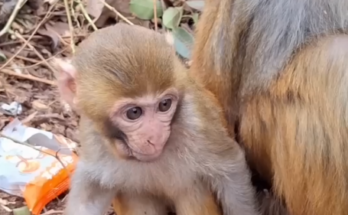
The forest was unusually quiet that morning. A thin mist floated between the trees, and the air felt heavy with unanswered questions. Near the base of a large fig tree, a tiny baby monkey sat alone. His eyes were wide, his body small and fragile, and his soft cries echoed through the leaves.
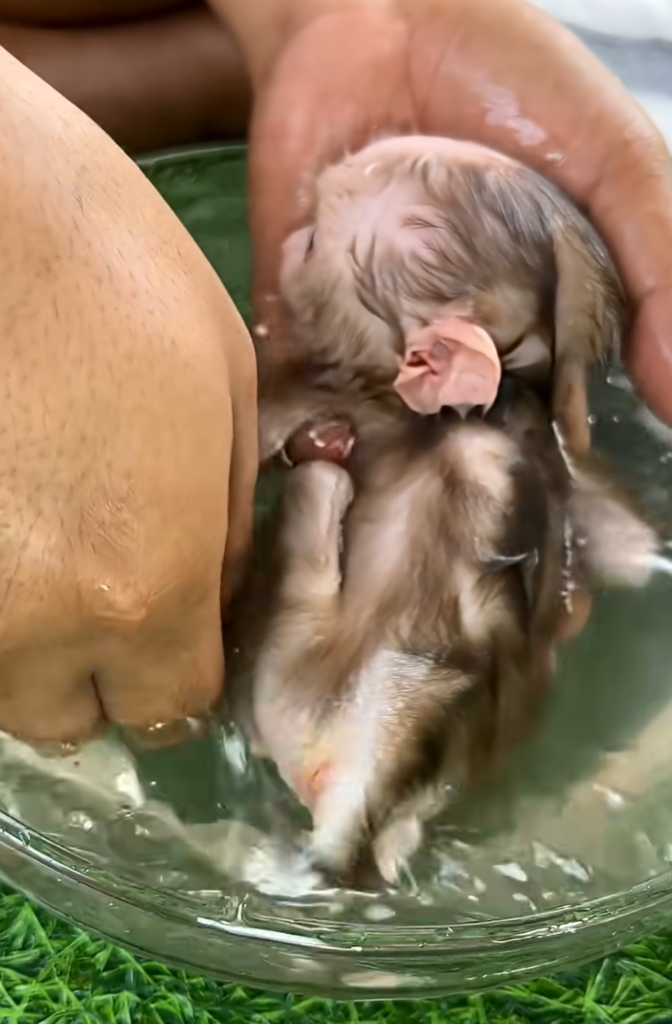
Was he abandoned? Or was he alone for some other reason?
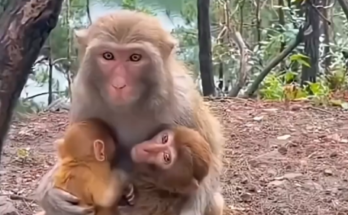
In the wild, baby monkeys are rarely left behind without cause. Mothers are deeply protective. They carry their babies close to their chest, grooming them, feeding them, and keeping them warm. Separation can happen if the mother is injured, captured, or frightened away. Sometimes a troop moves quickly to escape danger, and a weak baby may be left behind accidentally.
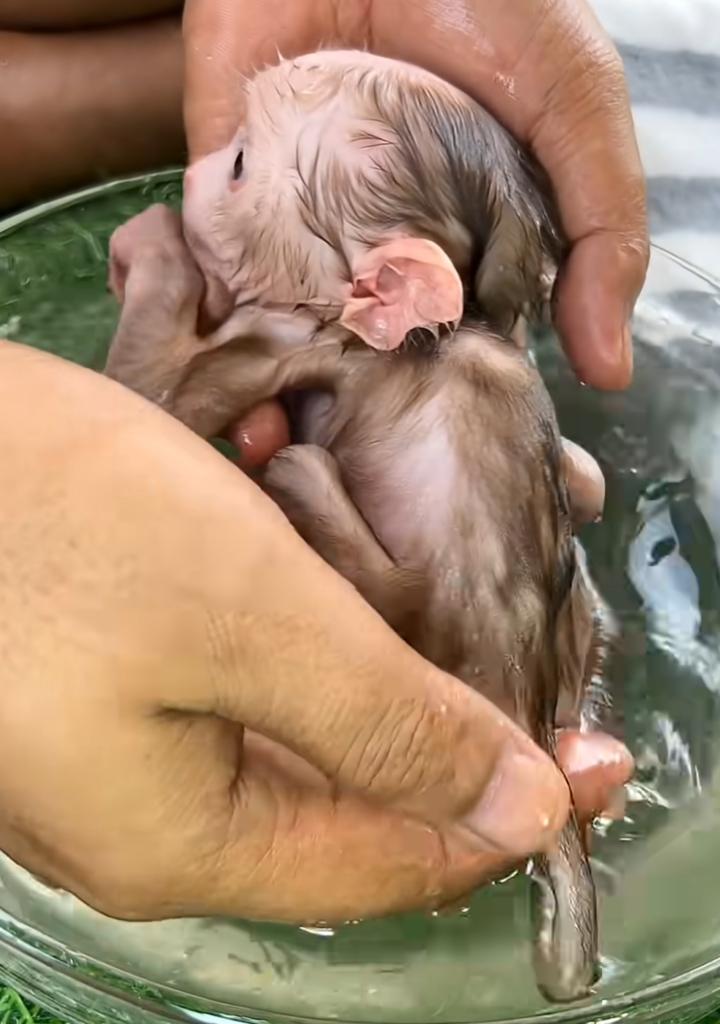
When villagers found the baby monkey that morning, they were unsure what to do. He was too young to climb properly. He could barely hold onto a branch. His thin arms trembled as he tried to move. Most importantly, he was crying from hunger.
One elderly man suggested giving him cow’s milk immediately. It seemed like a simple solution. After all, humans drink cow’s milk. Why not a baby monkey?
But another villager shook her head gently. “It’s not always that easy,” she said. “Not all milk is the same.”
Milk is more than just white liquid. It contains different levels of fat, protein, sugar, vitamins, and minerals depending on the species. A mother monkey’s milk is specially designed for her baby’s digestive system and growth needs. Giving the wrong type of milk can cause stomach pain, diarrhea, dehydration, or even serious health problems.
When caring for an orphaned wild animal, experts usually say that the best option is always the natural mother’s milk. If the biological mother cannot be found, sometimes a surrogate monkey from the same species can nurse the baby. This is the safest and healthiest solution.
But what if that is not possible?
In rescue situations, wildlife caregivers try to choose milk that is most similar in nutritional balance to the monkey’s natural milk. This does not mean simply pouring milk from the nearest animal. It often involves specially prepared formula designed for primates. These formulas are carefully measured to match the fat and protein levels that baby monkeys need.
If professional formula is unavailable, the next best alternative would be milk from an animal whose nutritional profile is closer to primate milk than cow’s milk. Some experts consider goat’s milk to be easier to digest than cow’s milk because it has smaller fat particles and slightly different protein structures. However, even goat’s milk alone is usually not a perfect match and may require adjustments.
The key idea is similarity.
The closer the milk is in composition to the monkey mother’s milk, the safer it will be for the baby’s fragile digestive system. Simply choosing milk based on convenience can do more harm than good.
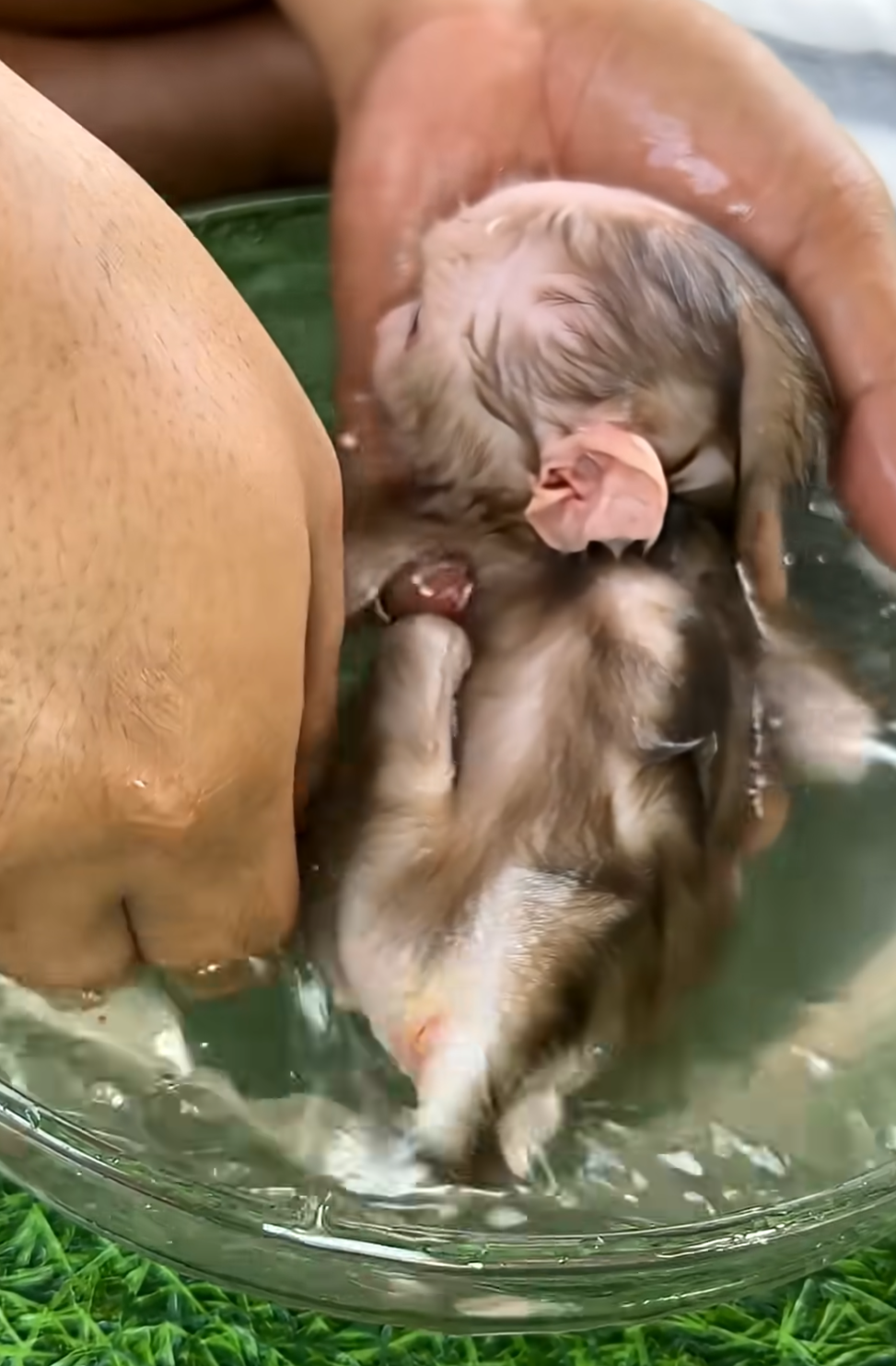
Back in the village, the baby monkey’s cries were growing weaker. The villagers decided to contact a local wildlife rescue center. Within a few hours, trained caregivers arrived. They carefully wrapped the baby in a soft cloth to keep him warm. One caregiver gently examined him, checking for injuries and signs of dehydration.
“He is very young,” she said softly. “He still depends completely on milk.”
They explained to the villagers that feeding must be done slowly and carefully. Overfeeding can cause bloating. Feeding too quickly can lead to choking. The temperature of the milk must also be correct—too hot can burn the mouth, too cold can upset the stomach.
The caregivers prepared a special primate milk formula they had brought with them. Using a small syringe designed for tiny animals, they slowly fed the baby monkey drop by drop. At first, he was weak. But after tasting the warm milk, his tiny fingers wrapped around the syringe. His swallowing became stronger.
Hope returned to his eyes.
Over the next few days, the baby monkey was kept in a warm, quiet space at the rescue center. He was fed small amounts of formula every few hours, just as his mother would have nursed him frequently throughout the day and night. Caregivers also gently stimulated his body with soft cloths to mimic the grooming and touch that a mother provides. Physical contact is important for emotional development and digestion.
Many people think feeding is the only challenge. But baby monkeys also need emotional comfort. In the wild, they cling to their mothers constantly. Without that closeness, they can become stressed, which affects their immune system and growth.
Gradually, the baby gained strength. His cries became louder. He began to grip branches placed in his enclosure. His eyes followed movements with curiosity instead of fear.
The villagers visited one day to see how he was doing. They were relieved to see him improving.
“Will he survive?” one child asked.
“Yes,” the caregiver replied with a smile. “Because we gave him the right care at the right time.”
The story spread through the village. People began to understand that helping wildlife requires knowledge, not just good intentions. Giving random food or milk without understanding the animal’s needs can cause suffering, even if the heart is kind.
As weeks passed, the baby monkey slowly transitioned from milk to soft fruits and mashed vegetables, appropriate for his species. The formula feedings were gradually reduced as his body became ready for solid food. He also began interacting with other rescued monkeys, learning social skills he would need if he were ever to return to the wild.
The question remained: was he abandoned or simply separated by accident?
No one knew for certain. But what mattered most was that when he was alone and vulnerable, humans chose to act responsibly.
In situations where a baby monkey is found alone, the first step should always be observation from a safe distance. Sometimes the mother is nearby and will return. Immediate interference can accidentally separate them permanently. Only when it is clear that the baby is truly orphaned should intervention begin.
And when intervention is necessary, the guiding principle should always be this: provide care that is as close as possible to what nature intended.
The most similar animal’s milk—or better yet, a properly prepared primate formula—can make the difference between life and death. But warmth, patience, and knowledge are just as important.
Months later, the once-weak baby monkey was climbing confidently in a large forest enclosure at the rescue center. His fur looked healthy. His eyes were bright. He no longer cried from hunger.
He had survived not because someone guessed what to feed him, but because they understood that similarity in nutrition, careful preparation, and proper timing matter deeply.
Sometimes, being alone does not mean being abandoned forever.
Sometimes, it simply means waiting for the right help to arrive.