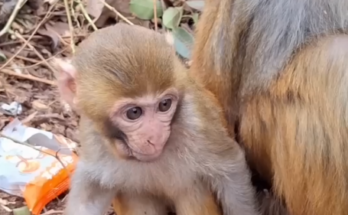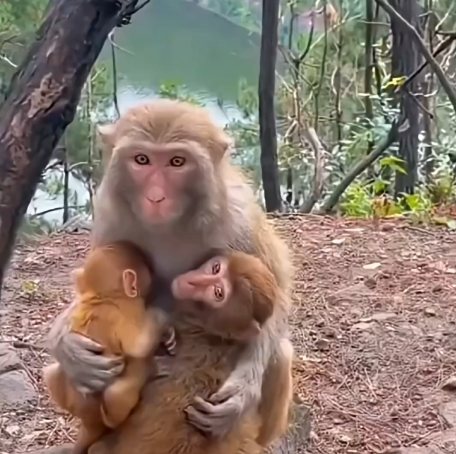
In a quiet corner of a small village near the edge of a lush forest, there lived a monkey who was known by everyone simply as Kiri. No one knew exactly where Kiri had come from. Some said he wandered down from the hills after losing his troop, while others believed he had always lived near the village, watching quietly from the trees.
What everyone agreed on, however, was this: Kiri had a special connection with the children.
Every afternoon, when school ended and the dusty paths filled with laughter, Kiri would appear — sometimes perched on a low branch, sometimes sitting on a fence post, his bright eyes observing the joyful chaos. The children were fascinated by him. They would wave, giggle, and occasionally bring small pieces of fruit to share.
At first, the adults were cautious. A wild animal, after all, could be unpredictable. But Kiri never showed aggression. He moved gently, accepted food politely, and kept a respectful distance.
Over time, curiosity turned into familiarity.
One day, a little girl named Lina dropped her scarf while playing. The wind carried it toward a bush, where it snagged on a thorn. Before she could reach it, Kiri leapt down, carefully untangled the cloth with nimble fingers, and placed it at her feet.
The children clapped with delight.
From that day on, stories of Kiri’s kindness spread through the village. Some said he understood human feelings. Others believed he simply enjoyed the company.
But a question quietly lingered in many minds: Did the monkey truly love the children, or was he simply drawn by curiosity and treats?
The answer seemed to unfold slowly, in small moments.
During the hot season, when the sun burned bright and the ground shimmered with heat, the children often played beneath a large mango tree. Kiri would sit above them, occasionally dropping ripe fruit within reach. He never fought over the food or snatched it back — he seemed to take pleasure in watching them share.
One afternoon, a sudden shout broke the calm. A toddler had wandered too close to a narrow ditch hidden by tall grass. Before anyone could react, Kiri bounded forward, placing himself between the child and the edge, chattering loudly until an adult rushed over.
The villagers were stunned.
“Perhaps he understands danger,” one elder murmured.
As weeks turned into months, Kiri’s presence became a comforting part of daily life. The children spoke to him as if he were a quiet friend, telling him about games, small worries, and dreams. He would tilt his head, listening attentively, sometimes responding with soft chirps.
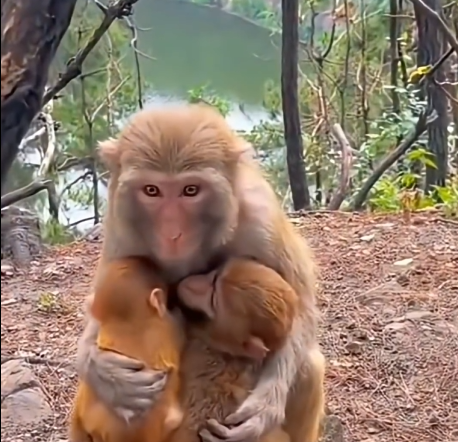
But not everyone was convinced.
One afternoon, a visiting traveler watched the scene with skepticism. “Animals act on instinct,” he said. “They do not love the way humans do.”
His words sparked debate among the villagers. Some agreed, while others felt that love could take many forms.
The children, however, needed no convincing.
To them, Kiri’s gentle eyes and patient presence spoke louder than any argument.
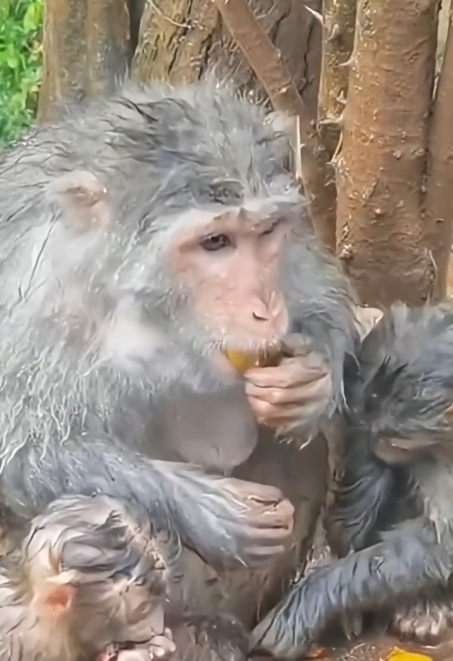
One evening, as golden light spread across the fields, a sudden storm rolled in unexpectedly. Wind howled through the trees, and rain fell in heavy sheets. The children who had been playing outside scrambled for shelter, but one boy slipped in the mud and fell behind.
Through the blur of rain, villagers saw a small figure leap down from a branch — Kiri.
He stayed beside the boy, chattering urgently until an adult reached them. Soaked and shivering, the boy clung to his rescuer, and Kiri remained nearby until everyone was safe.
That night, as thunder echoed in the distance, many people reflected quietly.
Perhaps love did not need words.
As seasons changed, Kiri grew older. His movements became slower, but his watchful habits remained. He still greeted the children each afternoon, sometimes simply sitting and observing as they played.
One day, Lina — now a little older — sat beside him on a low stone wall.
“Why do you stay with us?” she whispered, not expecting an answer.
Kiri blinked slowly, as if considering the question. He reached out gently and touched her hand with surprising softness.
In that simple gesture, she felt a warmth she could not explain.
Years later, when the children had grown taller and their games had changed, they would still remember the quiet monkey who had shared their childhood. They remembered how he watched over them, how he seemed to understand when someone was sad, and how his presence brought comfort.
One morning, Kiri did not appear.
The children searched the trees and paths, calling softly. Days passed, and though they looked often toward the forest, they knew deep down that he had returned to the wild places he came from — or perhaps simply found a quiet corner to rest.
In the village, stories of Kiri lived on.
Whenever parents spoke about kindness, they mentioned the monkey who protected children. Whenever friends talked about loyalty, they remembered the quiet companion who asked for nothing in return.
And the question — did the monkey truly love the children? — became less important than the memories he left behind.
Because love is not always measured by words or labels. Sometimes it is seen in small acts of care, in silent companionship, in the willingness to stay near when it matters most.
Whether Kiri understood love as humans do, no one could say for certain.
But the children knew how they felt when he was near — safe, seen, and quietly cherished.
And perhaps, in the gentle language shared between species, that was love enough.