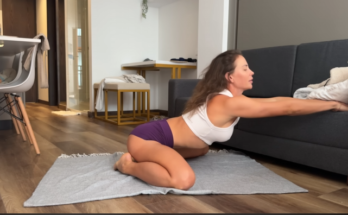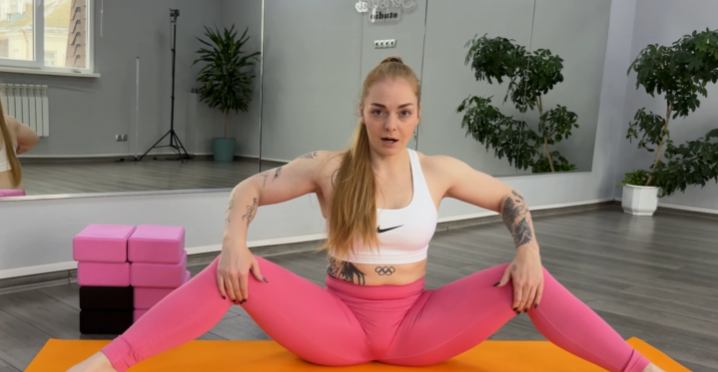
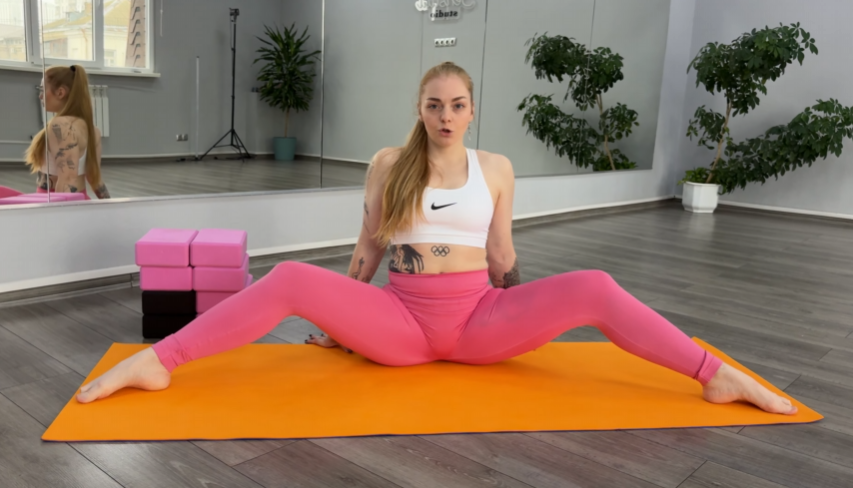
Middle split training is not about forcing your body into an extreme position. It is about patience, awareness, and intelligent preparation. True flexibility comes from consistency, breath control, and learning how to relax into sensation rather than fighting it. This deep flexibility yoga flow is designed to guide you step by step toward middle splits and oversplits safely, helping you build strength, mobility, and confidence along the way.
Whether you are a dancer, yogi, athlete, or simply someone curious about expanding your range of motion, this practice meets you where you are. Progress may be slow, but it will be real—and that is what matters most.
Before you begin, create a warm, comfortable space. A yoga mat, blocks, and optional sliders or folded towels will be helpful. Wear layers if needed, as deep stretching works best when the body stays warm. Remember: pain is not progress. Sensation is welcome, sharp pain is not.
Begin standing at the top of your mat. Feet hip-width apart, arms resting naturally by your sides. Close your eyes and take three slow breaths. Inhale through the nose, exhale through the mouth. Let your nervous system settle. Flexibility training begins with calm, not effort.
Start warming the body with gentle movement. Inhale, sweep your arms overhead, stretching tall through the spine. Exhale, fold forward, bending the knees as much as needed. Let the head hang heavy. Inhale into a half lift, lengthening the back. Exhale, fold again. Repeat this flow several times, gradually straightening the legs as the body warms.
Step your right foot back into a low lunge. Lower the back knee to the mat. Place your hands on your front thigh and gently press the hips forward, stretching the hip flexor. This area is critical for middle splits and oversplits. Stay here for several breaths, allowing the front of the hip to soften.
Raise your arms overhead and add a gentle side bend to the left, opening the side body. Return to center, then place your hands down and shift your hips back into a half split. Straighten the front leg and flex the foot. This stretch targets the hamstrings, another key muscle group for middle splits.
Move slowly between low lunge and half split, flowing with your breath. Each inhale lifts, each exhale deepens. Switch sides and repeat the sequence on the left, giving equal attention to both hips and legs.
Now step back into a wide-legged stance facing the long edge of your mat. Turn your toes slightly inward and place your hands on your hips. Inhale, lengthen the spine. Exhale, hinge forward from the hips, folding down. Hands can rest on the mat, blocks, or forearms depending on your flexibility.
This wide-legged forward fold begins to introduce the inner thighs to deeper stretch. Keep the spine long and avoid collapsing into the hips. Imagine the inner thighs gently spiraling open while the legs stay active.
Stay here for several breaths, then slowly walk your hands forward, lowering down onto forearms if available. This deepens the stretch while still allowing control. Breathe deeply into the inner thighs. Sensation is normal; panic is not. If your breath becomes shallow, ease out slightly.
From here, begin gentle pulses—tiny movements in and out of the stretch. This helps the muscles release without force. After a few pulses, hold still and breathe.
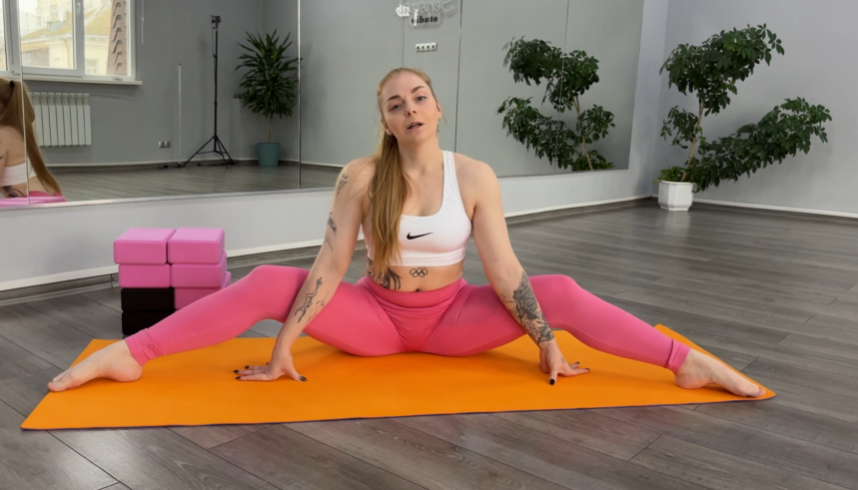
Now prepare to move toward middle split preparation. Place blocks or support under your hands. Begin sliding your feet wider apart, stopping well before your limit. Keep your toes pointing forward or slightly upward, knees and thighs rotating open naturally.
This is not yet the full middle split—this is where you train awareness. Stay upright if possible, or hinge slightly forward while maintaining a neutral spine. Engage the quadriceps lightly to protect the knees and inner thighs.
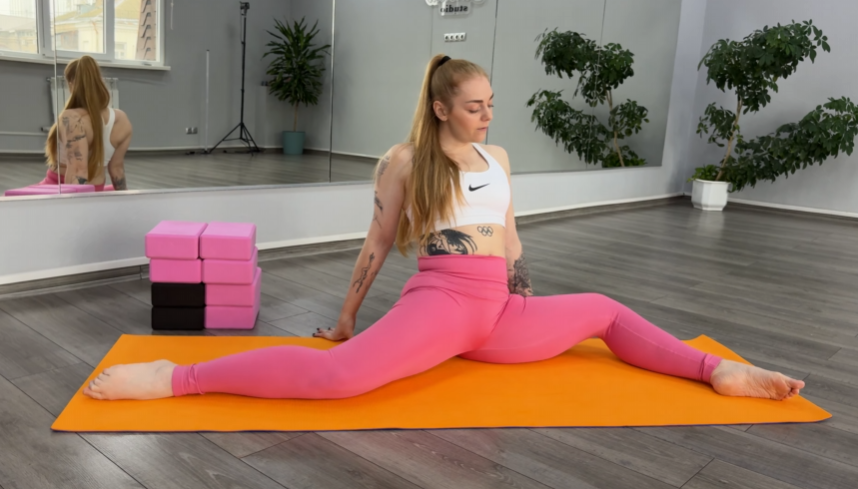
Hold this position for several breaths. With each exhale, allow the pelvis to sink a fraction lower—not by pushing, but by softening. If you feel strain in the knees or hips, back out immediately.
To train for oversplits safely, we must build strength alongside flexibility. Slowly slide the feet back together and come down to the mat. Lie on your back and extend your legs up the wall or into the air. Open the legs into a gentle straddle, supporting them with your hands or straps if needed.
This gravity-assisted position allows the inner thighs to release without compression. Stay here for one to two minutes, breathing slowly and evenly. Notice how different this feels compared to upright stretching.
Next, roll to your side and come back to the mat. Set up for frog pose. Knees wide, feet turned out, hips in line with knees. Lower down onto forearms or blocks. Frog pose deeply targets the inner thighs and prepares the body for deeper middle split work.
Stay in frog pose only as long as your breath remains calm. If you feel joint pressure, come out immediately. Flexibility training should always prioritize joint health.
From frog, press back gently into a seated position. Shake out the legs, circle the hips, and take a few moments of movement to release tension.
Now, for supported middle split and oversplit training. Place yoga blocks, bolsters, or folded blankets under your hips. Slowly slide your legs into middle split range, stopping where the support meets you. The goal here is to allow the nervous system to relax while the muscles adapt.
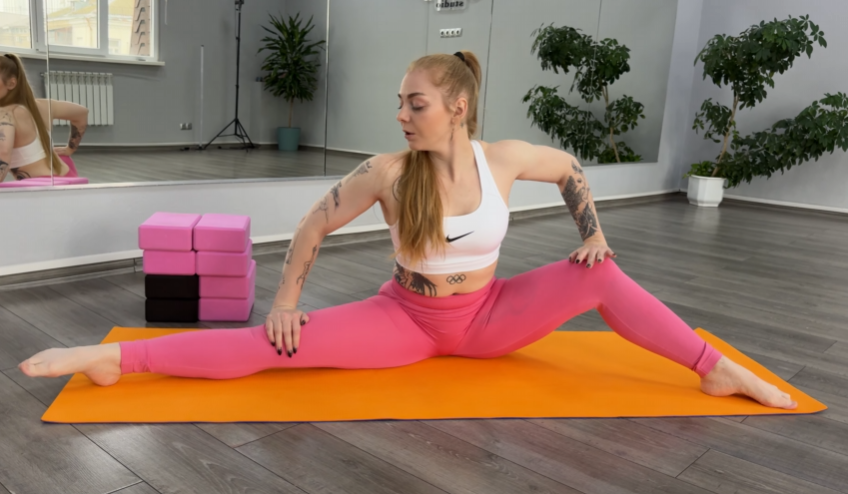
Support is not cheating—it is intelligent training.
Once settled, stay completely still. Close your eyes. Focus on long exhales. Each exhale tells the body it is safe to release. Stay here for one to three minutes, depending on experience level.
If you are working toward oversplits, you may add elevation under one or both feet while remaining supported under the hips. This creates an oversplit sensation without forcing the joints. Only attempt this if you are already comfortable in middle splits and feel no pain.
Come out of the pose slowly. Never rush the exit. Bring your hands down, slide the legs back together, and rest in a seated position. Take a moment to feel the aftereffects—warmth, openness, circulation.
Finish with gentle integration. Lie down on your back, hug your knees into your chest, and rock gently side to side. Allow the lower back and hips to relax completely.
End in savasana. Legs extended, arms relaxed, eyes closed. Let the body absorb the work. Deep flexibility gains happen during rest, not during effort.
As you lie still, remember this: mastering middle splits and oversplits is not about achieving a shape—it is about building a relationship with your body based on trust. Progress will come faster when you stop rushing it.
When you’re ready, slowly return to seated. Bring your hands to your heart and take one final breath.
This deep flexibility yoga flow is a powerful tool when practiced consistently. Respect your body, stay patient, and celebrate every small gain. With time, awareness, and intelligent training, middle splits—and even oversplits—become not just possible, but sustainable.