The foam roller rests quietly on the mat, simple and unassuming. At first glance, it looks like nothing more than a piece of fitness equipment, something designed for athletes and sore muscles. But in a slow, mindful yoga practice, it becomes something else entirely—a tool for release, awareness, and deep relaxation.
Today’s session is not about intensity or effort. It’s about listening. About allowing the body to soften, layer by layer, as the foam roller supports you in ways the floor alone cannot. Find a quiet space, dim the lights if you can, and let this time be yours.
Begin by sitting comfortably on your mat with the foam roller beside you. Take a moment to arrive. Close your eyes and place one hand on your heart, the other on your belly. Inhale slowly through the nose, feeling the chest expand. Exhale through the mouth, releasing the weight of the day. With each breath, invite calm into the body.
When you’re ready, place the foam roller lengthwise along the mat and carefully lower your spine onto it so it runs from your tailbone to the back of your head. Feet are planted on the mat, knees bent. Allow your arms to rest by your sides, palms facing up. This position alone can feel surprisingly opening, as the roller gently encourages the chest and shoulders to soften.
Stay here for several breaths. Notice how the back of your body makes contact with the roller. There may be areas that feel tight or tender—simply observe without judgment. Let gravity do the work.
On an inhale, gently open the arms out to the sides, forming a T-shape. Exhale and allow the arms to relax toward the floor. This stretch opens the chest and shoulders, counteracting the forward rounding that comes from long hours of sitting. Breathe into any sensation you feel, imagining space being created with each inhale.
Slowly bring the arms back in and roll carefully to one side, using your hands for support as you come up to a seated position. Place the foam roller horizontally behind you and slowly lower your upper back onto it, supporting your head with your hands. Feet remain grounded.
This gentle backbend encourages mobility through the spine. Inhale, lift the chest slightly. Exhale, allow the upper back to drape over the roller. Move slowly, exploring a small range of motion. This is not about forcing a deep arch—just inviting ease.
Pause in the position that feels most supportive and take a few slow breaths. With every exhale, feel the muscles around the spine soften.
Carefully move the roller a little lower or higher along the back, repeating the gentle movement. Take your time. Each pause is an opportunity to release stored tension.
When ready, roll onto your side and come back to sitting. Extend your legs out in front of you and place the foam roller under your calves. Hands rest on the mat beside your hips for support. Slowly lift your hips slightly and allow the calves to rest fully on the roller.
Gently roll back and forth, massaging the muscles of the lower legs. Move slowly and with awareness. If you find a tender spot, pause and breathe into it. Foam rolling doesn’t have to be aggressive to be effective—soft, mindful pressure can be just as powerful.
Lower your hips down and shift the roller under one calf at a time if you’d like to explore more deeply. Switch sides slowly, honoring your body’s signals.
Next, place the roller under the backs of your thighs. Support yourself with your hands and gently roll, releasing tension that often hides here. Keep the breath smooth and steady. The sensation may be intense at times—if so, soften the pressure or pause.
Transitioning slowly, place the roller under your hips and glutes. Cross one ankle over the opposite knee to access deeper layers. Roll gently, finding areas that feel dense or tight. Breathe through them, imagining warmth and softness spreading.
When you’re finished, lower yourself back down and hug your knees into your chest for a moment of integration.
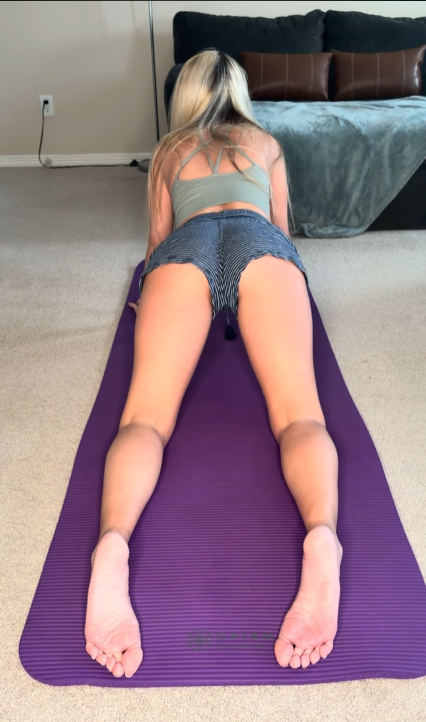
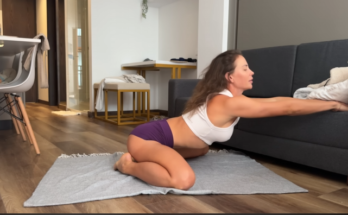
Roll onto your side and come onto hands and knees. Place the foam roller in front of you and rest your forearms on it. From here, gently move into a supported child’s pose, allowing the roller to cradle your arms and chest. Forehead lowers toward the mat.
This posture encourages deep relaxation through the shoulders and upper back. Stay here as long as you like, breathing slowly and deeply. The support of the roller invites a sense of surrender, as if the body is being held.
From child’s pose, slowly rise and sit back on your heels. Bring the roller behind you once more and lie down with it under the spine, as you did at the beginning. This time, extend one leg at a time, allowing the legs to rest long on the mat. Arms open wide, palms up.
This final supported pose is deeply calming. The front of the body opens gently, the breath becomes fuller, and the nervous system begins to settle. Notice how different this feels from when you first began.
Stay here, allowing the foam roller to support you completely. There is nothing to do, nowhere to go. Just breathe.
When you’re ready to come out, bend your knees, roll carefully to one side, and remove the foam roller. Lie flat on your mat in savasana. Let the body fully settle, absorbing the benefits of the practice.
Feel the difference—perhaps a sense of lightness in the spine, openness in the chest, or ease in the legs. Even subtle changes matter.
As you prepare to finish, deepen your breath once more. Gently wiggle your fingers and toes. Roll to one side and slowly come up to a seated position.
Bring your hands to your heart and take a moment of gratitude—for your body, for this time, and for the simple support that allowed you to relax more deeply.
Relaxing stretch foam roller yoga is a reminder that healing doesn’t always require effort. Sometimes, all it takes is patience, presence, and the willingness to let yourself be supported. Carry that softness with you as you move through the rest of your day.
please write me 1300 words with this title: Quick Full Body Stress Relief Yoga
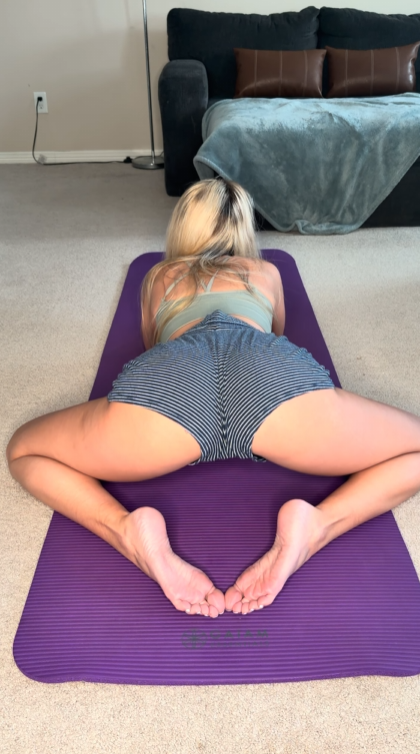
Quick Full Body Stress Relief Yoga
Stress has a way of creeping into the body quietly.
It settles into the shoulders after long hours of work, tightens the jaw during difficult conversations, and lingers in the lower back when we forget to pause and breathe. Even when the mind wants to relax, the body often holds on. That’s why a short, intentional yoga practice can be so powerful—especially one designed to release tension from head to toe in just a few mindful minutes.
This quick full body stress relief yoga session is about creating space, restoring balance, and reconnecting with your breath. You don’t need much time, special equipment, or perfect flexibility. All you need is a willingness to slow down and listen to your body.
Find a comfortable space where you can move freely. Step onto your mat or a soft surface and take a moment to arrive.
Begin standing tall at the top of the mat. Feet are hip-width apart, arms resting by your sides. Close your eyes if that feels comfortable. Take a deep inhale through the nose, filling the lungs completely. Exhale slowly through the mouth, releasing tension with a gentle sigh. Do this two more times, letting each breath draw you deeper into the present moment.
On your next inhale, roll the shoulders up toward the ears. Exhale and let them drop heavily. Repeat this movement a few times, syncing the motion with your breath. Notice how even small movements can begin to dissolve stress.
Gently bring the chin toward the chest and roll the head slowly from side to side. Keep the movement smooth and relaxed, as if you are massaging away the weight of the day. Return the head to center and open your eyes softly.
Inhale and sweep your arms overhead, reaching up through the fingertips. Exhale and fold forward, bending the knees generously as you drape the torso over the legs. Let the head hang heavy. Shake the head gently yes and no, releasing tension from the neck.
Place your hands on your shins or the mat and inhale to a half lift, lengthening the spine. Exhale and fold back down. Repeat this flow a few times, warming the back body and creating gentle movement.
From your forward fold, step your right foot back into a low lunge. Lower the back knee to the mat if needed. Inhale and lift the chest, arms reaching overhead. Exhale and soften into the hips. This posture opens the front of the body, where stress often hides.
Take a few steady breaths here, feeling the stretch across the hip and thigh. On your exhale, place your hands down and step back into a plank position. Knees can stay lifted or lower to the mat for support.
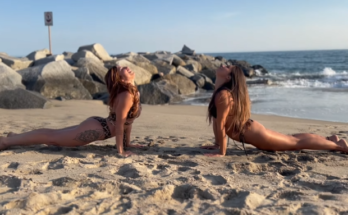
From plank, slowly lower down to the mat with control, then untuck the toes and press into a gentle cobra pose. Inhale as the chest lifts, shoulders draw back. Exhale and release back down. This movement encourages openness in the chest and helps counteract slouched posture.
Push back into a downward-facing dog, lifting the hips and lengthening the spine. Pedal the feet gently, bending one knee at a time. Let the head relax between the arms. Downward dog is a full-body pose that invites circulation and calm.
Hold here for a few breaths, allowing the body to settle. On your next inhale, step the right foot forward between the hands and return to a low lunge. Repeat the same sequence on the other side, opening the hips and grounding through the legs.
After completing both sides, step forward into a standing position. Roll up slowly, stacking the spine. Take a moment to notice how the body feels now—perhaps warmer, lighter, or more open.
Bring the feet wide and bend the knees slightly, folding forward into a wide-legged stretch. Let the arms hang or rest on the mat. Sway gently side to side, releasing tension from the inner thighs and lower back. This gentle movement helps calm the nervous system.
Slowly come back to center and lower down to a seated position on the mat. Extend the legs forward and take a moment to sit tall. Inhale and lift the arms overhead. Exhale and fold forward, reaching toward the legs. Keep the stretch comfortable and kind.
Bend the knees and lie back onto the mat. Hug the knees into the chest, rocking gently from side to side. This motion massages the lower back and releases lingering tension.
Place the feet on the mat and drop both knees to one side in a gentle spinal twist. Extend the arms out wide and turn the head in the opposite direction. Stay here for several breaths, allowing the spine to soften and unwind. Switch sides slowly.
Now, prepare for final relaxation. Extend the legs fully and let the feet fall open naturally. Rest the arms by your sides with palms facing up. Close your eyes.
Take a deep inhale, filling the body with fresh energy. Exhale slowly, imagining stress melting away from every muscle. Scan the body from head to toe, noticing areas of softness and ease.
Even in a short practice, this moment of stillness is powerful. It teaches the body how to rest, reminding the nervous system that it is safe to relax.
Stay here for a few breaths, enjoying the calm you’ve created.
When you’re ready, begin to deepen your breath. Gently move the fingers and toes. Roll to one side and slowly push yourself up to a seated position. Keep the sense of calm with you.
Bring your hands to your heart and take one final breath in and out.
This quick full body stress relief yoga practice shows that even a few minutes of mindful movement can shift your energy, clear your mind, and soften your body. Return to it whenever stress begins to build, knowing that peace is always just a breath away.