No one noticed her at first.
The street was busy, filled with honking motorbikes, shouting vendors, and people rushing through their own lives. Near a small food stall, beside a cracked wall stained by rain and time, she sat quietly. A thin, dirty dog with patchy fur and ribs showing through her skin. She didn’t bark. She didn’t run after people. She simply sat there, watching.
Waiting.
Most stray dogs beg in familiar ways—tail wagging, whining, following footsteps. But she did something no one expected.
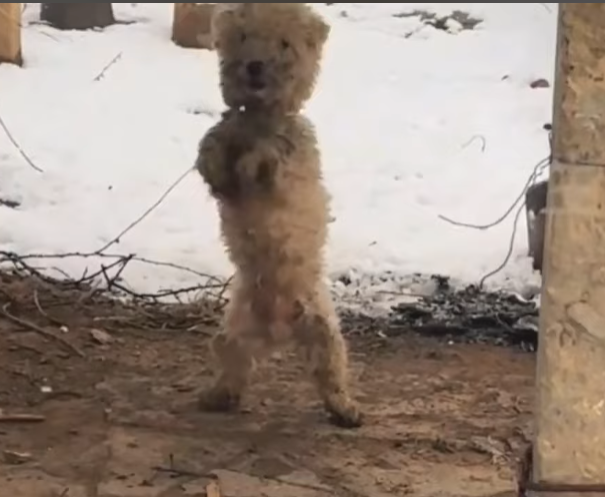
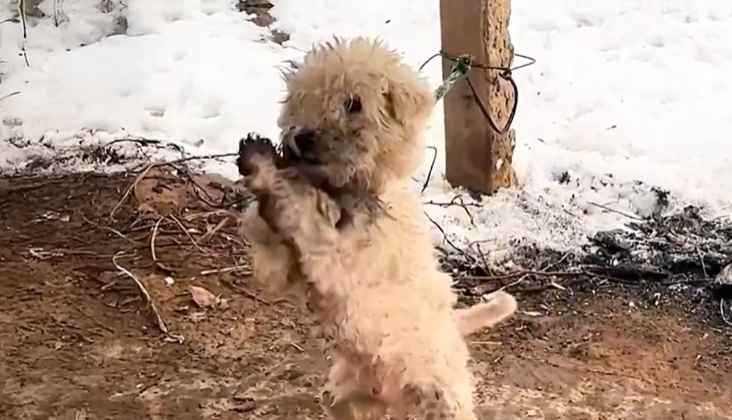
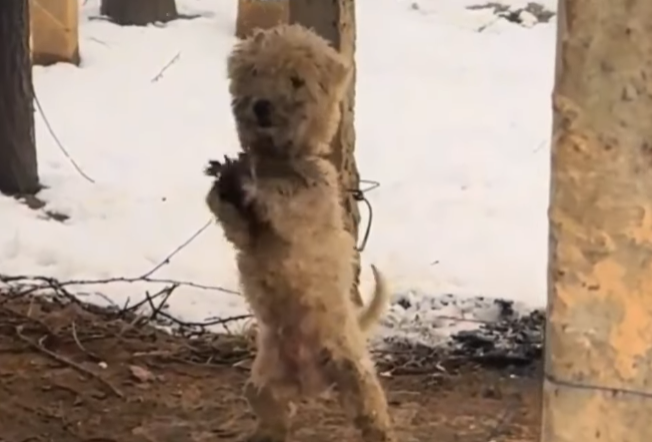
When people passed close enough, she lifted herself onto her hind legs and brought her front paws together, pressing them tightly as if she were praying. Her head bowed slightly. Her eyes—dark, desperate, and heartbreakingly intelligent—locked onto whoever stood in front of her.
It looked like pleading.
Not trained. Not playful. Not a trick.
It looked like a last resort.
Some people laughed nervously and walked away. Others paused, uncomfortable, unsure what to do with an animal that seemed to understand desperation so well. A few tossed scraps of food and moved on. But she kept doing it again and again—sitting up, clasping her paws, begging in silence.
That was how I saw her.
I was on my way home when the crowd slowed. Someone pointed and whispered, “Look at that dog.” I turned just in time to see her raise her paws toward a woman standing nearby. The woman gasped, covered her mouth, then shook her head and hurried away.
The dog stayed there.
Still pleading.
Something in my chest tightened painfully. I had seen suffering before, but this felt different. This wasn’t hunger alone. This was understanding. This was hope being used up piece by piece.
I crouched down a few steps away. The dog noticed me instantly. Her body trembled as she stood up again, slowly, carefully, like moving too fast might ruin everything. She clasped her paws together and held them out toward me.
I froze.
For a moment, the street disappeared. It felt like the world narrowed down to just us—the noise fading, time stretching thin. Her paws shook. Her eyes never left mine.
“Hey…” I whispered.
She didn’t move closer. She didn’t run away. She just stayed there, holding that impossible pose, as if she had learned that this was the only language humans understood.
I reached into my bag and pulled out some food. The smell reached her nose immediately. She swallowed hard but didn’t break her position. Only when I set the food down on the ground did she lower herself, cautiously, and eat.
She ate slowly.
Too slowly for a starving dog.
That’s when I noticed her body more closely. The scars along her back. The raw patch near her neck where fur refused to grow. One of her front paws—the one she used to “plead”—was swollen and slightly twisted. It must have hurt her to hold them together like that.
Yet she did it anyway.
After she finished eating, she looked up at me again and—unbelievably—clasped her paws once more.
This time, closer.
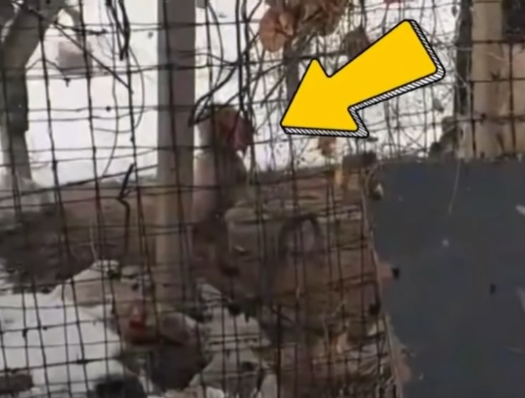
I felt tears sting my eyes. “You’re asking for help,” I said, my voice shaking. “You really are.”
I didn’t plan anything after that. My hands just moved. I took off my jacket and gently draped it over her shoulders. She flinched but didn’t run. I reached out slowly and touched her head. She leaned into my hand with a soft sound that barely escaped her throat.
It felt like a decision had already been made—for both of us.
The trip to the vet was urgent. She sat quietly in the back seat, curled tightly, her head resting against the door. She didn’t cry. She didn’t panic. It was as if she knew this was the moment everything balanced on.
The vet’s face grew serious as soon as the examination began.
Severe malnutrition. Infection. An old fracture that had healed improperly. Signs of long-term neglect. The vet gently touched the swollen paw and shook her head. “She’s been using that injury to beg,” she said quietly. “It must cause her pain every time.”
I had to look away.
“She’s lucky you found her,” the vet continued. “Another few weeks like this… she wouldn’t have survived.”
Lucky.
The word felt strange. How unlucky did a life have to be before being rescued counted as luck?
I took her home that same day.
At first, she didn’t understand doors. She hesitated at every threshold, unsure whether she was allowed to pass. She startled at sudden noises. When I reached out too quickly, she flinched and dropped her head, paws coming together again in that familiar gesture.
That hurt more than anything.
“No,” I whispered, kneeling beside her. “You don’t have to beg anymore.”
It took time for those words to become real.
The first night, she didn’t sleep. She sat upright near the corner of the room, watching me as if afraid the world might disappear if she closed her eyes. I lay on the floor nearby so she wouldn’t feel alone. Around dawn, she finally lowered herself and rested her head on my arm.
Her breathing slowed.
Day by day, her body healed. Food became regular. Medicine eased the pain in her paw. Her fur began to grow back in soft patches. But the biggest change wasn’t physical.
It was her behavior.
The pleading stopped—slowly.
At first, she still clasped her paws when she wanted something. Food. Attention. Reassurance. Each time, I gently took her paws in my hands and set them down.
“You don’t need to ask like that,” I told her. “You’re safe.”
One morning, something incredible happened.
I was making breakfast when I felt a gentle nudge at my leg. I looked down. She was sitting there, tail wagging hesitantly, eyes bright. No clasped paws. No bowing head.
Just trust.
I dropped to my knees and laughed through tears, wrapping my arms around her. She licked my face awkwardly, then pressed her forehead against my chest.
From that moment on, she blossomed.
She learned how to play—awkwardly at first, then with growing enthusiasm. She discovered sunbeams and slept stretched out like she owned them. She learned that hands could scratch ears instead of hurt them. That voices could soothe instead of threaten.
She still had habits that reminded me of her past. When strangers approached, she stayed close. When food fell, she waited for permission. And sometimes, when she was very tired or very scared, her paws twitched toward each other before she caught herself.
Each time, I held her gently and reminded her she was home.
People who met her were stunned by her story. “She really did that?” they asked. “She begged like a human?”
I just nodded.
They couldn’t understand what I had learned: animals don’t need words to communicate despair. They adapt. They learn. They survive in ways that break your heart if you stop long enough to see them.
Months later, we returned to that same street.
She walked confidently at my side, head held high. When we passed the spot near the wall, she paused and looked at it for a long moment. Then she looked up at me and wagged her tail.
She didn’t sit.
She didn’t beg.
She walked on.
What happened next truly was unbelievable—not because she learned to plead like a human, but because she learned she never had to again.
And every time she curls up beside me now, warm and safe, I know one thing for certain:
That day, she didn’t just ask for help.
She chose to trust the world one last time—and somehow, against all odds, the world answered.