When I walked into the shelter, I told myself I was “just looking.”
That’s the lie everyone tells themselves when they’re not ready to admit they’re about to change their life.
The building smelled like disinfectant and wet fur, a strange mix of cleanliness and sadness. Dogs barked from every direction—sharp, desperate sounds that echoed off the concrete walls. Some jumped at the front of their kennels, tails wagging furiously, eyes bright with hope. Volunteers moved quickly between rows, offering treats, soft words, and apologetic smiles.
I followed the main path, glancing from cage to cage. Puppies always gathered crowds. Small, fluffy dogs were already wearing “Reserved” tags. Even the energetic young adults had people kneeling in front of their kennels, laughing as paws pressed against metal doors.
Then I noticed a kennel at the very end of the hallway.
It was quiet.
Inside lay a large, older dog with graying fur around her muzzle. She didn’t bark. She didn’t stand up. She didn’t even lift her head when I stopped in front of her cage. Her body was turned slightly away, as if she had already accepted that the world had moved on without her.
A small sign hung on the door.
Name: Daisy
Age: 9 years
Notes: Shy. Senior. Best as only pet.
I felt a tight pull in my chest.
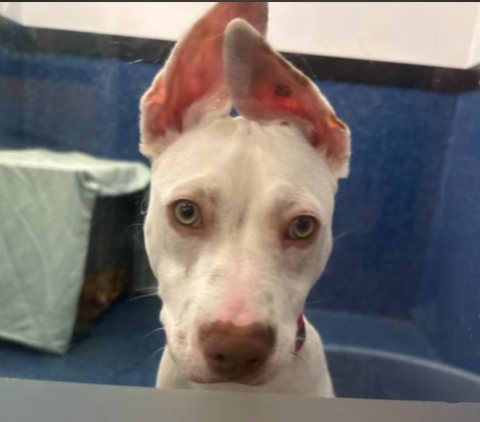
A volunteer noticed me staring and walked over. “That’s Daisy,” she said gently. “She’s been here the longest.”
“How long?” I asked.
She hesitated. “Almost eleven months.”
Eleven months.
Nearly a year of watching other dogs leave while she stayed behind.
“She doesn’t do well in the kennel environment,” the volunteer continued. “She used to have a home. Her owner passed away, and the family didn’t want her. She’s… kind, really. Just quiet. People usually want younger dogs. Or dogs that show excitement.”
I knelt down, bringing myself to Daisy’s level. “Hi,” I whispered.
Slowly, she turned her head. Her eyes met mine—cloudy with age, heavy with something that looked like resignation. She didn’t wag her tail. She didn’t scoot closer. She just watched me, calm and cautious, like she was measuring whether hope was worth the effort anymore.
Something in me broke.
“Can I take her out?” I asked.
The volunteer smiled, surprised. “Of course.”
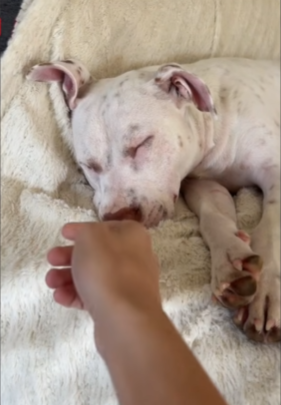
In the small visiting yard, Daisy walked beside me on a loose leash. She didn’t pull. She didn’t jump. She simply stayed close, occasionally glancing up to make sure I was still there. When I sat on the bench, she lowered herself carefully and leaned her body against my leg, resting her head on my knee like it was the most natural thing in the world.
I stroked her fur, feeling how thin she was beneath it.
Right then, I knew.
I filled out the paperwork that afternoon. As I signed the final form, the volunteer’s eyes shone. “You’re giving her a chance,” she said softly. “Thank you.”
When I brought Daisy home, she stepped inside slowly, nose working overtime. Every sound made her pause. She stood in the doorway for a long moment, unsure whether she was allowed to go further.
“It’s okay,” I said, holding the door open. “This is yours now.”
That first night, she refused the dog bed I’d bought and instead curled up on the floor beside my bed. I woke up to the sound of her breathing, steady and peaceful, and realized it was probably the first time in months she had slept without barking echoing around her.
The first week was quiet.
Daisy didn’t play with toys. She didn’t ask for attention. She followed me from room to room, stopping whenever I stopped, as if afraid to lose sight of me. When I left for work, she waited by the door until I came back. The guilt of that image stayed with me all day.
But slowly, changes began to happen.
One morning, I dropped a piece of toast, and Daisy startled—then wagged her tail, just once, uncertainly. I laughed, and she wagged it again. That afternoon, she carried one of her toys into the living room and set it near my feet, as if offering it to me.
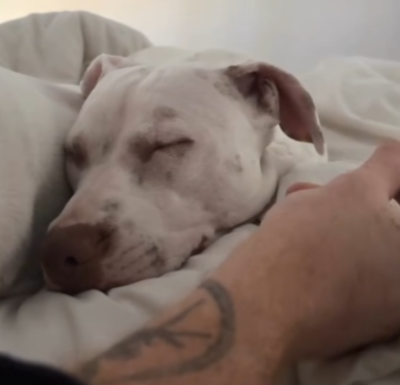
At night, she started sleeping on the bed. She climbed up carefully, curled into a tight circle, and let out a long sigh. The kind of sigh that comes from finally feeling safe.
The real transformation came on our walks.
At first, Daisy kept her head low, moving like she didn’t want to be seen. But as days turned into weeks, her steps grew lighter. She began to stop and sniff flowers. She greeted neighbors politely, tail swaying slowly. One day, a child asked if they could pet her, and Daisy leaned into the small hand with a softness that brought tears to my eyes.
“She’s so gentle,” the child’s mother said.
I wanted to tell her how close this dog had come to being forgotten.
Daisy started doing little things that showed her personality. She liked sleeping in sunbeams. She hated rain but loved watching it from the window. She barked exactly once at the vacuum cleaner, then decided it wasn’t worth the energy. When I was sick, she stayed pressed against my side all day, lifting her head only to make sure I was still breathing.
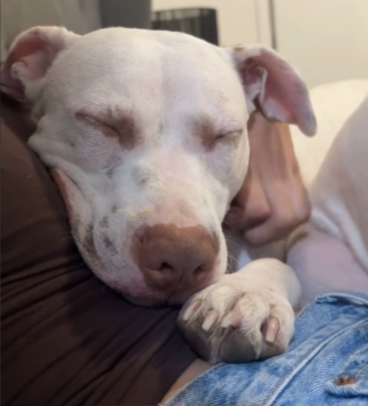
One evening, as I sat on the couch, Daisy climbed up beside me and rested her head on my chest. I felt her heartbeat, slow and steady, and realized she trusted me completely.
That trust felt like a responsibility—and a gift.
Months passed. The gray on her muzzle didn’t disappear, but her eyes changed. They sparkled. They followed me with curiosity instead of caution. She greeted me at the door now, tail wagging freely, her whole body swaying with joy.
People often asked why I chose her.
“She’s old,” some said gently.
“You won’t have much time,” others warned.
But time, I learned, isn’t measured in years.
It’s measured in mornings she waits for me to wake up. In evenings spent curled together on the couch. In quiet moments where her presence fills the room with peace.
Daisy didn’t become a different dog.
She became herself.
And in doing so, she changed me too.
I went to the shelter thinking I might save a dog. Instead, I brought home the least popular one—and discovered that the ones no one chooses often have the most love left to give.
If I had walked past that last kennel, Daisy would still be waiting.
Instead, she’s here.
And every single day, she reminds me that sometimes the greatest joy comes from choosing the one everyone else overlooked.