My grandfather had lived on the same quiet street for more than forty years. Every crack in the pavement, every tree leaning slightly toward the road, every sound at dawn was familiar to him. He was a man of habits—morning tea on the porch, a slow walk to the corner shop, a pause at the old banyan tree before turning back home. Life, for him, was predictable and peaceful.
That morning began no differently.
The air was cool, and the street was unusually quiet. Grandfather walked slowly, hands clasped behind his back, lost in his thoughts. That was when he heard it—a faint sound, almost swallowed by the early breeze.
A whimper.
He stopped.
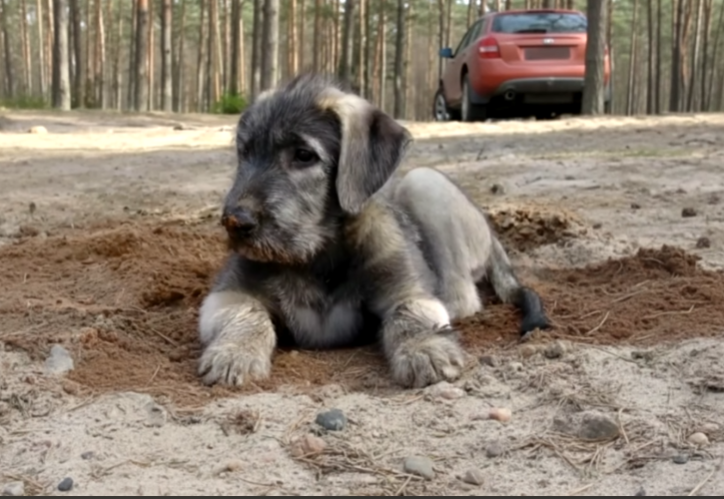
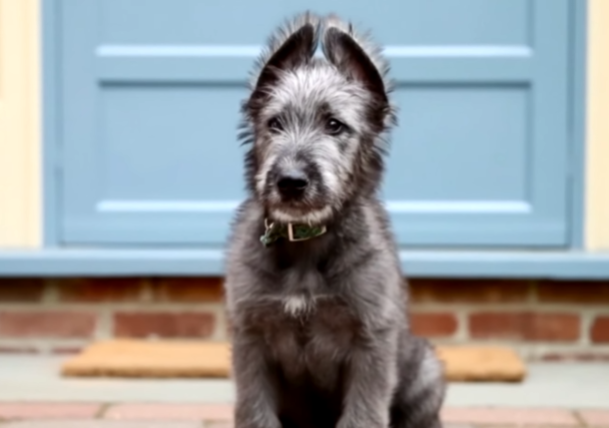
At first, he thought it was a kitten. But then the sound came again, soft and shaky. He followed it toward the side of the road, where weeds grew between broken stones. There, curled beside a drain, was a small grey puppy.
The puppy was thin, its fur dusty and dull, its body trembling slightly. One ear flopped forward while the other stuck up awkwardly. Its eyes were striking—clear, intelligent, and far too serious for something so young. When it saw my grandfather, it didn’t run. It didn’t bark. It simply looked up at him, as if it had been waiting.
“Well now,” Grandfather murmured, kneeling slowly. “Where did you come from?”
The puppy tilted its head, studying him carefully. Then, with great effort, it stood and took a few unsteady steps toward him. It sat down politely, tail barely moving, and let out another small whine.
Grandfather smiled. He had raised animals all his life—dogs, goats, even a stubborn old donkey once. This puppy felt… different, though he couldn’t say why. There was something in the way it held itself, something alert and thoughtful.
“You’re lost, aren’t you?” he said gently.
The puppy blinked.
That alone should have warned him.
He looked around, expecting an owner to appear, but the street remained empty. After a long moment, he sighed, took off his scarf, and carefully wrapped the puppy in it.
“Alright then,” he said. “Let’s get you home. At least for now.”
The puppy didn’t resist. In fact, it seemed to relax instantly, pressing its small head against his chest as if it trusted him completely. Grandfather felt a strange warmth spread through him, something he hadn’t felt since my grandmother passed away years before.
At home, he set the puppy down in the yard and brought out some water and leftover rice mixed with broth. The puppy sniffed it, then looked up at him first—as if asking permission—before eating slowly and neatly.
That was the second strange thing.
Most hungry strays devoured food desperately. This puppy ate like it understood patience.
Grandfather chuckled. “You’re a polite one, aren’t you?”
After eating, the puppy followed him everywhere. If Grandfather sat, the puppy sat beside him. If he stood, the puppy stood too. When Grandfather worked in the garden, the puppy watched closely, tilting its head as if memorizing every movement.
That night, when the wind rattled the windows, the puppy padded quietly into the bedroom and lay beside Grandfather’s bed. It didn’t whine or fuss. It simply stayed there, alert, facing the door.
As if guarding him.
The next morning, neighbors began to notice.
“New dog?” one asked.
“Found it on the street,” Grandfather replied. “Just a pup.”
The puppy sat at his feet, calm and watchful.
One neighbor frowned. “That doesn’t look like a normal stray.”
Grandfather laughed. “A dog is a dog.”
But the days that followed made that statement harder to believe.
The puppy learned quickly—too quickly. It understood commands without being taught. It responded to gestures Grandfather hadn’t realized he made. It anticipated things before they happened. When Grandfather felt dizzy one afternoon and had to sit down suddenly, the puppy barked loudly for the first time, alerting a passerby who rushed over to help.
Another day, a stranger approached the gate with bad intentions. Before the man could step inside, the puppy stood between him and Grandfather, growling low and deep, its small body suddenly looking much larger. The stranger backed away without a word.
“Good dog,” Grandfather whispered, his heart racing.
The puppy looked up at him, eyes steady, as if to say: Of course.
At night, the dreams began.
Grandfather dreamed of running through fields, of standing watch under moonlight, of ancient paths and silent promises. He would wake up to find the puppy staring at him, tail wagging softly, as if it knew exactly what he had seen.
“You’re a strange little one,” Grandfather said one morning, stroking its head.
The puppy closed its eyes and leaned into his hand.
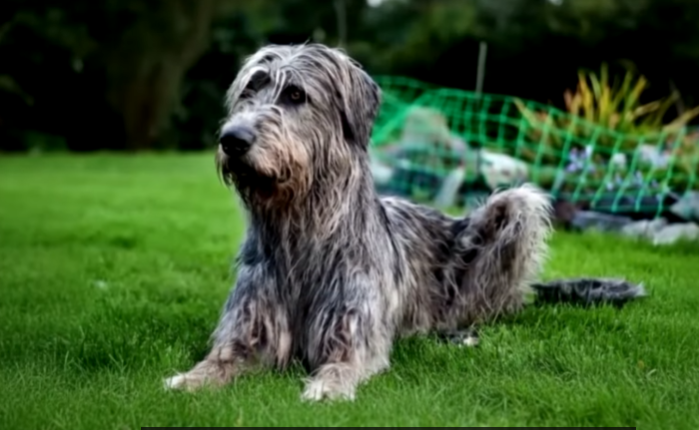
Weeks passed. The puppy grew stronger, its grey coat thickening, its posture proud. People began to comment on how unusual it looked—its sharp gaze, its calm confidence, the faint marking on its chest shaped like a crescent.
Then one afternoon, an old man from the nearby village stopped at the gate.
He stared at the puppy for a long time.
“Where did you find this dog?” the man asked quietly.
“On the street,” Grandfather replied. “Why?”
The man swallowed. “This is no ordinary dog.”
Grandfather felt a chill. “What do you mean?”
The man crouched carefully, lowering his head slightly in respect—not fear, but something close to it. The puppy watched him closely but did not growl.
“In old stories,” the man said, “there are guardian dogs. Not pets. Not strays. Protectors. They appear when someone is alone… or when someone is needed.”
Grandfather scoffed gently. “Stories.”
The man shook his head. “Look at it. The way it watches. The way it understands. These dogs don’t belong to anyone. They choose.”
The puppy walked over to Grandfather and sat firmly beside him.
The man smiled sadly. “It has chosen you.”
That night, something happened that erased all doubt.
Grandfather woke to the sound of breaking glass. Before he could move, the puppy was already at the door, barking fiercely. A shadow fled from the yard, tripping as it ran. The puppy did not chase—it simply stood guard until the danger passed.
When the police arrived later, they said someone had been targeting elderly people in the area.
“You’re lucky,” one officer said. “Very lucky.”
Grandfather looked down at the puppy, who wagged its tail once, calmly.
Lucky.
From that day on, Grandfather’s health improved. He laughed more. He walked farther. The loneliness that once sat heavily in the house seemed to vanish, replaced by warmth and quiet companionship.
Sometimes, when the moon was full, the puppy would sit in the yard and stare at the sky, completely still. Grandfather would watch from the porch, feeling a deep peace settle in his chest.
“You’ll leave someday, won’t you?” he asked softly once.
The puppy looked back at him, eyes gentle, and padded over to rest its head on his foot.
Not yet.
Years later, people would still talk about the grey dog that never aged quite like other dogs, the one that appeared wherever Grandfather went, the one that vanished the same week Grandfather passed peacefully in his sleep.
On the morning after the funeral, the dog was gone.
But those who knew the story understood.
Grandfather hadn’t just found a puppy on the street.
He had been given a guardian when he needed one most—and in return, he had given it something just as rare: a home, kindness, and a reason to stay.