Hip mobility is the foundation of powerful movement, graceful transitions, and long-term joint health in both gymnastics and fitness training. Among the most effective positions for opening the hips is Frog Pose, a deep stretch that targets the inner thighs, hip flexors, and groin. When combined with dynamic swim-through movements and split variations, Frog Pose becomes part of a complete routine that builds flexibility, strength, and control. This approach transforms stretching into an active, athletic practice rather than passive discomfort.
The Frog Pose swim-through routine is designed to prepare the hips for advanced skills while improving overall movement quality. It emphasizes active mobility—moving through ranges of motion with awareness and control. This is especially important for gymnasts and fitness athletes who need both flexibility and strength to perform safely.
The routine begins with a gentle warm-up to increase circulation and protect the joints. Light cardio, such as jumping jacks or dynamic leg swings, helps raise body temperature. Warm muscles respond better to stretching and are less prone to injury. From there, the focus shifts to activating the core and stabilizing muscles around the hips.
Starting on all fours, slow hip circles and cat-cow movements awaken the spine and pelvis. These movements encourage coordination between the hips and core, which is essential for stability during deep stretches. Breath awareness is key here—slow, controlled breathing calms the nervous system and signals the muscles to relax.
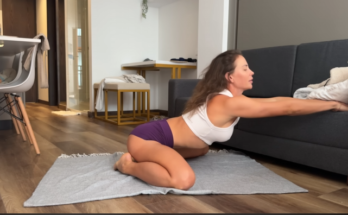
Frog Pose is introduced gradually. From a tabletop position, the knees widen and the feet turn outward. The hips sink back slowly, supported by the forearms or hands. This pose targets the adductors and groin muscles, areas that often limit split flexibility. Instead of forcing the stretch, the focus is on breathing into the hips and maintaining a neutral spine.
Once settled in Frog Pose, gentle rocking motions begin. Rocking forward and back helps the hips explore the stretch dynamically. This movement increases blood flow and reduces stiffness, making the pose more accessible and effective. The goal is not depth, but ease and control.
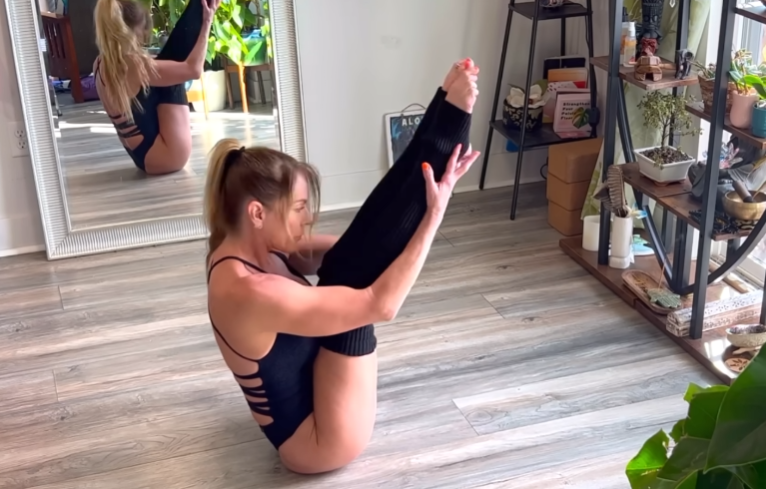
From Frog Pose, the swim-through sequence begins. A swim-through is a dynamic transition where the body moves fluidly through the arms and hips, similar to a breakdance-style movement. One leg threads through the arms while the torso rotates, creating a circular flow. This movement challenges hip mobility, shoulder stability, and core coordination simultaneously.

Swim-throughs are especially valuable for gymnasts because they teach the hips to move independently while the upper body remains stable. The core must stay engaged to control the rotation and protect the lower back. Performing these transitions slowly builds strength in deep stabilizing muscles that are often neglected in static stretching.
After several controlled swim-throughs, the routine transitions into split preparation. Front split variations begin from a low lunge position. The back knee lowers while the hips gently shift forward, opening the hip flexor. This is a critical step, as tight hip flexors often prevent safe progress in splits.
From the lunge, the hips shift backward into a half split, straightening the front leg. This stretches the hamstrings while maintaining control through the core. Moving between lunge and half split dynamically creates balance between strength and flexibility, preparing the body for deeper ranges.
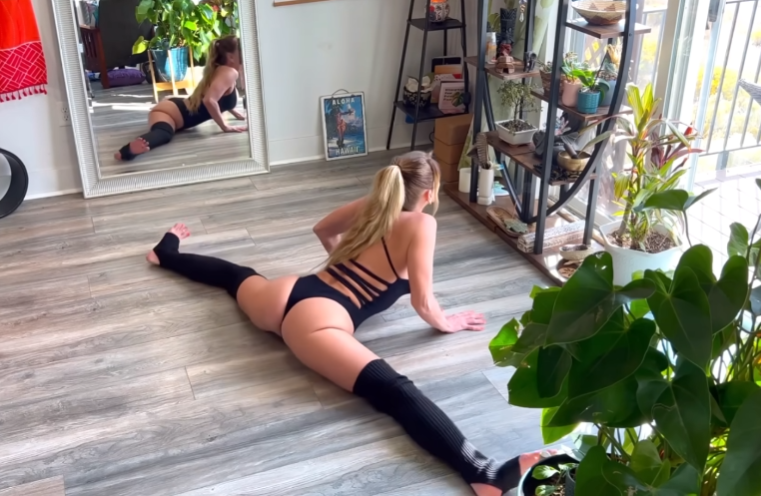
Side splits are then introduced, connecting back to Frog Pose. From Frog, the legs gradually extend outward into a wider stance. Hands stay on the floor for support, and the torso remains upright. This variation challenges the inner thighs while encouraging active engagement. Unlike passive stretching, the muscles remain slightly engaged to protect the joints.
Gymnastics training emphasizes active flexibility—the ability to control the body at the end range of motion. This routine supports that principle by integrating strength with mobility. Holding split positions briefly while engaging the legs teaches the body to be strong, not just flexible.
Breathing plays a vital role throughout the routine. Slow exhales encourage muscle relaxation, while steady inhales support posture and alignment. Holding the breath creates tension, which limits progress. Conscious breathing allows the hips to open naturally.

After working through splits, the routine returns to Frog Pose for integration. The hips are already warm and open, allowing for deeper but more comfortable stretches. Gentle pulses or side-to-side movements help release any remaining tension.
The routine concludes with restorative movements. Seated forward folds and gentle twists soothe the nervous system and rebalance the spine. Ending with a short relaxation period allows the body to absorb the benefits of the practice.
Consistency is key to improving hip mobility and flexibility. Practicing this Frog Pose swim-through routine two to three times per week can lead to noticeable improvements in range of motion, strength, and comfort in deep positions. Over time, movements become smoother, and splits feel more accessible.
This routine is suitable for gymnasts, fitness enthusiasts, and anyone seeking improved hip health. It supports athletic performance while reducing the risk of injury. Strong, mobile hips enhance power, balance, and coordination in all forms of movement.
Frog Pose, swim-throughs, and splits are not goals in themselves—they are tools. When used together in a mindful, active routine, they create a powerful system for building flexibility with control. The result is not only deeper stretches, but greater confidence and freedom in movement.
By approaching hip mobility with patience, strength, and consistency, the body adapts safely. This Frog Pose swim-through routine offers a balanced path toward flexible, resilient hips—supporting both gymnastics performance and lifelong fitness.