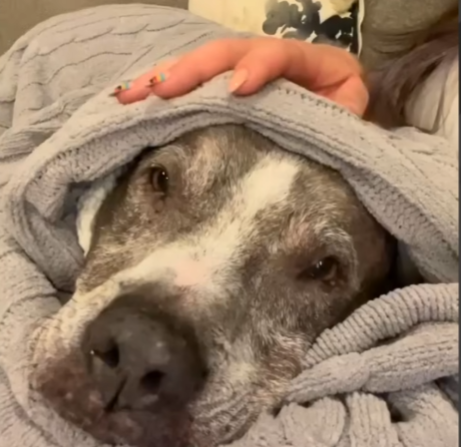
At the far end of the shelter, beyond the rows of barking dogs and wagging tails, there was a kennel that most visitors passed without stopping. Inside lay a dog who did not greet people with excitement or hopeful jumps. He did not press his nose against the bars or wag his tail wildly. He simply lay there, quiet and still, as if he had already learned the painful lesson that no one was coming for him.
His appearance made people uncomfortable. His fur was patchy, his ears uneven, and his face carried the marks of a hard life—scars that told stories no one bothered to ask about. Some whispered that he looked “strange.” Others said he was “too ugly” or “too broken.” In a place where adoption often depends on first impressions, this dog was invisible.
Day after day, families walked past his kennel. Children pointed at puppies with bright eyes. Couples stopped in front of friendly, fluffy dogs. Volunteers tried to draw attention to him, but visitors rarely asked his name. To them, he was not what they imagined when they thought of bringing a dog home. He did not match the picture in their minds of the perfect companion.
But then one day, a woman stopped.
She did not stop because he was cute. She did not stop because he wagged his tail or barked for attention. She stopped because she noticed something others had missed—his eyes. They were tired, yes, but they were gentle. There was no aggression in them, no anger. Only quiet sadness and a longing that words could not express.
She knelt down in front of the kennel and spoke softly. The dog did not move at first. He had learned that hope often leads to disappointment. But when she stayed, when she did not walk away, he slowly lifted his head. Their eyes met, and in that moment, something shifted.
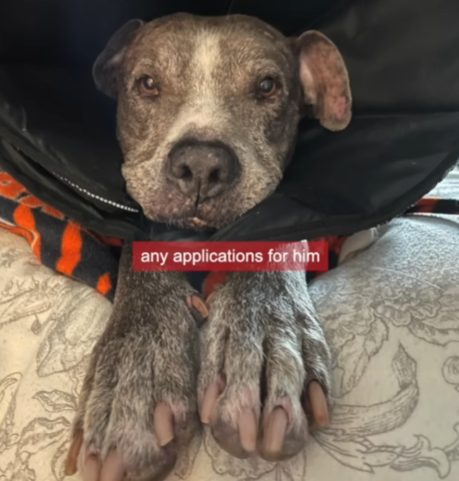
The woman asked the shelter staff about him. They told her the truth. He had been there for a long time. No one wanted him because of his looks. He had been overlooked again and again. There were no applications, no inquiries. Staff worried that he would spend the rest of his life in that kennel.
She did not hesitate.
“I’ll take him home,” she said.
The staff were surprised. Some smiled, others looked relieved. They warned her that he might take time to adjust, that he was shy, that he carried emotional scars. She nodded. She did not need perfection. She needed connection.
The day she brought him home, the dog was nervous. The world outside the shelter was unfamiliar. Every sound made him flinch. The car ride was silent, except for his shaky breathing. He curled into the corner of the back seat, unsure of what awaited him. Yet for the first time in a long while, there was no cage, no cold floor, no endless waiting.
At home, the woman moved slowly, giving him space. She showed him a soft bed, placed food nearby, and sat quietly on the floor. She did not demand affection. She did not rush him. She understood that trust must be earned, not forced.
The first night, he barely slept. He expected to be taken back, to be abandoned again. But morning came, and she was still there. She spoke gently, filled his bowl, and opened the door to let sunlight in. Slowly, the dog began to realize this place was different.
Days turned into weeks, and small changes began to appear. His posture softened. He started eating regularly. His eyes, once dull and distant, grew brighter. He followed her from room to room, always at a safe distance, as if afraid that getting too close might make her disappear.
One day, something unexpected happened. She sat on the couch, and without thinking, the dog jumped up beside her. The movement startled them both. For a moment, he froze, unsure if he had made a mistake. She gently placed her hand on his back. He did not pull away.
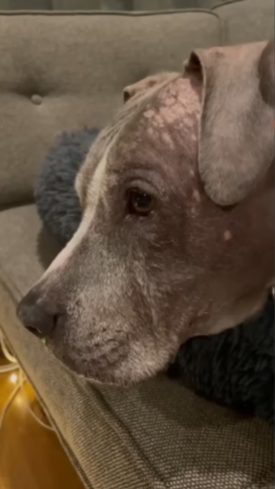
That was the moment everything changed.
From then on, his confidence grew. He learned the sound of her laughter, the routine of walks, the comfort of being spoken to with kindness. His tail wagged more often. He began to greet her at the door. He even started to play, clumsily at first, as if rediscovering how joy felt.
People who met him were surprised. “He’s actually very sweet,” they said. Some commented on his looks, still unable to look past the scars. But the woman only smiled. She saw beauty where others saw flaws. She saw resilience where others saw damage.
The dog, once unwanted, had become deeply loyal. He watched over her quietly, always nearby. He sensed her moods, offering silent comfort when she was tired or sad. He had learned what love was, and he gave it back without hesitation.
What many people failed to understand was that his looks were never the problem. The problem was how quickly people judged, how easily they turned away from anything imperfect. This dog had survived neglect, rejection, and loneliness, yet he still had the capacity to trust again. That alone made him extraordinary.
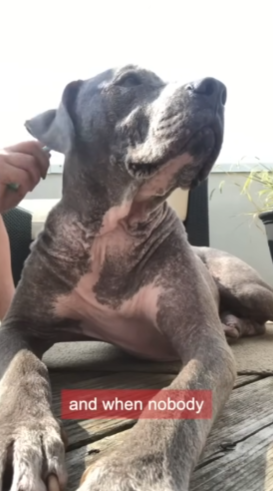
The woman often thought about how close he had come to being forgotten. If she had not stopped that day, if she had followed the crowd, his life might have been very different. That thought stayed with her, a reminder of how much power a single choice can hold.
Over time, his scars faded, covered by new fur. His body grew stronger. But even if they had not, it would not have mattered. He had found what he needed most—a home where he was seen, valued, and loved.
This story is not just about one dog. It is about countless animals waiting in shelters, judged by appearances rather than hearts. It is about the quiet ones, the shy ones, the “unattractive” ones who are passed over again and again. They are not broken. They are simply waiting for someone willing to look deeper.
The woman never claimed to have saved him. She often said that he saved her too. His presence brought calm, routine, and a sense of purpose into her life. Together, they healed in ways neither had expected.
In the end, no one wanted this dog because of his looks. And that is exactly why he ended up where he belonged. In a home that saw his worth. In the hands of a woman who understood that love does not require perfection—only an open heart.