The New Year is often imagined as a clean slate, a moment wrapped in fireworks, laughter, and hopeful resolutions. It is supposed to arrive with warmth, celebration, and the promise of better days ahead. But for Wallace, the New Year did not begin with joy or comfort. It began on the cold streets of St. Louis, with hunger gnawing at his body and exhaustion weighing down every step. This was not how anyone wanted to ring in the new year—but for Wallace, it became the turning point between survival and salvation.
Wallace was first noticed in the final days of December. As the city prepared for celebrations, he wandered quietly through empty streets and alleys, avoiding attention yet clearly struggling. His body told a story before anyone ever touched him. His frame was painfully thin, ribs pressing against skin stretched too tightly over bone. His coat was dull and dirty, offering little protection from the winter air. He moved slowly, cautiously, as if even standing required effort he barely had left.
Unlike many strays, Wallace did not bark, growl, or run. He seemed resigned to his fate, conserving energy in the only way he knew how. That quiet acceptance was what caught the attention of those who saw him. Something was wrong. This was not a dog simply roaming—this was a dog fading.
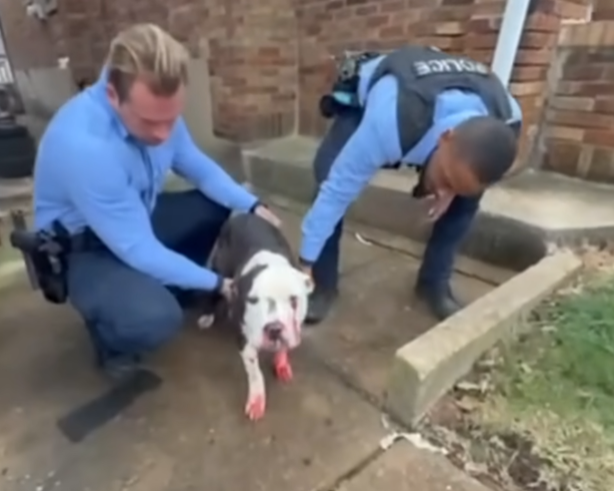
When rescuers from Stray Rescue of St. Louis received the call, they knew they had to act quickly. Winter is ruthless to animals without shelter, and dogs in Wallace’s condition rarely survive long on the streets. Every hour mattered. When the team arrived, they approached carefully, not wanting to frighten him or cause him to run into danger. But Wallace didn’t flee. He stood still, his tired eyes watching them with a mixture of fear and hope.
Up close, the situation was even more heartbreaking. Wallace was severely underweight and dehydrated. His paws were cracked and sore from walking on frozen pavement. Small wounds marked his body—some healing, others still raw—evidence of life without protection. His breathing was shallow, his strength nearly gone. Yet when a rescuer gently reached out, Wallace did something unexpected: he leaned in.
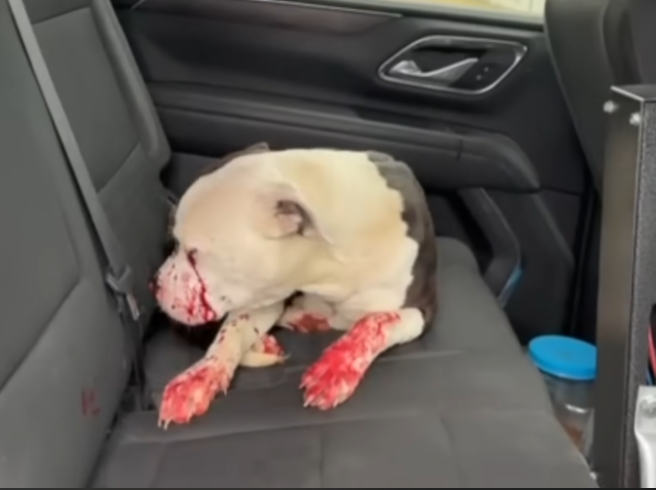
That single gesture said everything. Wallace was ready to be helped.
Wrapped in blankets and lifted into the rescue vehicle, Wallace trembled—not just from the cold, but from the shock of sudden care. For the first time in who knows how long, he was being held not to be hurt or chased away, but to be saved. As the vehicle drove toward the veterinary clinic, fireworks began to pop in the distance, early celebrations welcoming the New Year. Wallace, meanwhile, was beginning the hardest fight of his life.
At the clinic, the medical team moved swiftly. Wallace’s condition was critical. Tests revealed severe malnutrition and dehydration, and signs of infection that could have become deadly without treatment. His body was weak, and even something as simple as feeding him required caution. Giving too much food too quickly could overwhelm his system. Everything had to be done slowly, gently, and with constant monitoring.
Fluids were administered to rehydrate him. Pain relief helped ease his discomfort. Warm blankets surrounded him as his body temperature stabilized. Despite his condition, Wallace remained calm. He did not snap or resist. He simply rested, as if trusting that these strangers were doing everything they could to help him survive the night.
That first night was tense. Dogs in Wallace’s state often don’t make it through the initial hours. Rescuers and veterinary staff checked on him constantly, watching for any sign of decline. Outside, people counted down the seconds to midnight. Inside the clinic, every breath Wallace took felt like a victory.
When morning came, Wallace was still there.
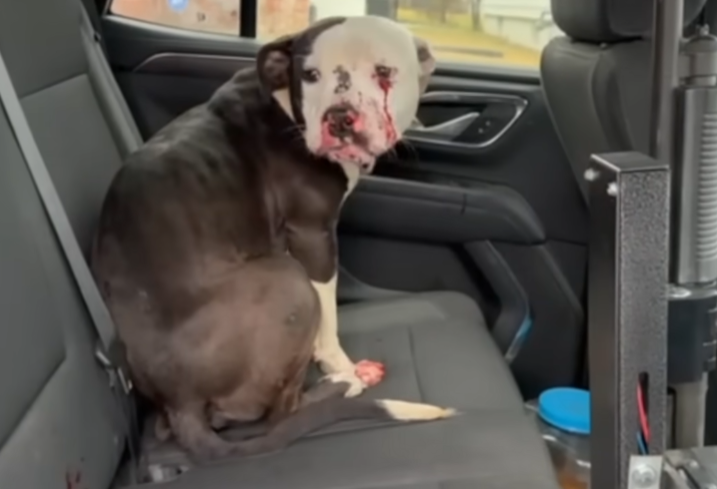
He was weak, but alive. And that alone felt miraculous.
Over the next few days, small changes began to appear. Wallace accepted tiny portions of food. His eyes, once dull and distant, slowly regained a spark of awareness. He lifted his head more often, watching the people who came to care for him. When spoken to softly, his tail gave the faintest wag—so small it might have been missed if no one was looking closely.
As his strength returned, so did his gentle nature. Wallace was kind, patient, and quietly affectionate. He did not demand attention, but he welcomed it deeply. A hand on his head, a soft voice calling his name—these simple acts meant everything to him. It was as if he was making up for a lifetime of being unseen.
Naming him Wallace felt important. Names give identity, and identity gives dignity. He was no longer just “a stray.” He was Wallace—a dog with a past, a present, and a future worth protecting.
The rescue team often reflected on the timing of Wallace’s arrival. This was not how they planned to start the year. Emergency rescues never are. They come with uncertainty, emotional weight, and urgent need. But Wallace reminded them why they do this work. Why they answer calls in freezing weather. Why they stay up through the night, watching over animals who have been forgotten. Because every life saved changes the world—at least for that one soul.
As weeks passed, Wallace continued to improve. He gained weight slowly, his body responding to consistent nourishment. His wounds healed. His coat began to shine again. He learned what it meant to sleep without fear, to eat without competition, to rest knowing someone would be there in the morning.
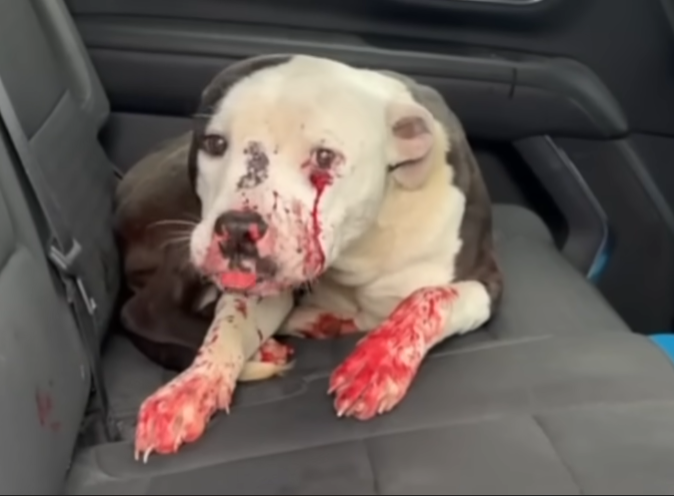
Perhaps the most beautiful transformation was emotional. Wallace began seeking out human contact, resting his head against a rescuer’s knee or gently pressing his body close for comfort. Trust, once shattered by life on the streets, was rebuilding one moment at a time. Each wag of his tail felt like a promise kept.
Wallace’s story is not unique, yet it is powerful. Every year, countless animals face the New Year not with celebration, but with survival as their only goal. While the world counts down to midnight, dogs like Wallace are counting heartbeats, hoping to make it through another cold night. Rescue organizations step in where compassion is most needed, turning despair into hope.
For Wallace, the New Year did not begin with fireworks or cheers. It began with warmth, care, and a chance. A chance to heal. A chance to trust. A chance to live.
His journey is still unfolding. Adoption will come when he is ready. For now, he is safe, loved, and no longer alone. The streets of St. Louis no longer define him. His scars tell a story, but they do not limit his future.
This was not how anyone wanted to ring in the new year—but for Wallace, it was the beginning of everything.