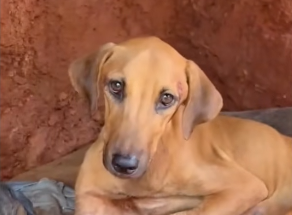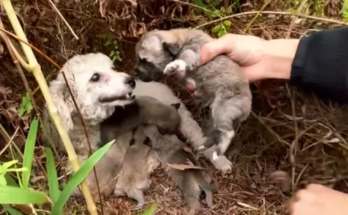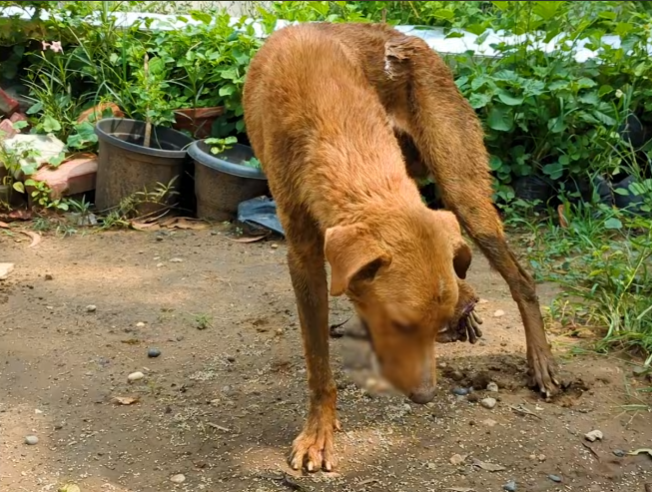
The call came in quietly, almost hesitantly. A local worker near a poultry farm reported seeing a dog limping near the edge of the property, staying close to discarded wood and feed sacks. At first, people assumed the dog was just another stray searching for food. Stray dogs were common in the area, and most kept their distance from humans. But something about this one felt different. The dog did not run. It barely moved. It lay down often, whimpering softly, as if each step was too much to bear.
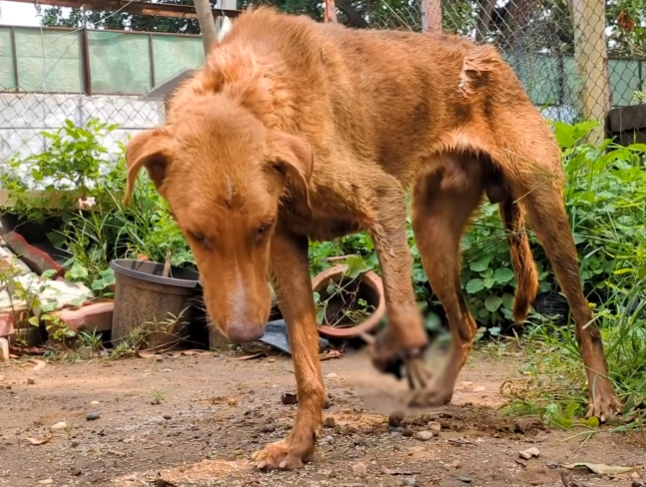
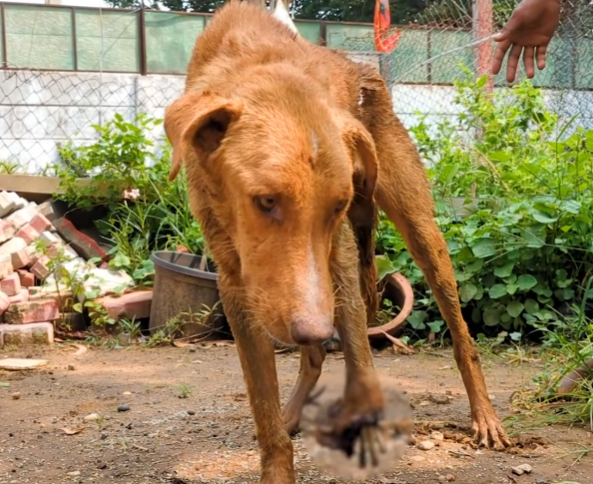
When rescuers arrived, the reality was far worse than expected. The dog, a medium-sized mixed breed, was severely dehydrated, weak, and clearly in pain. Its eyes were dull, yet still full of quiet fear and exhaustion. As the team approached carefully, they noticed a strong odor—an unmistakable sign of infection. One of the dog’s paws was swollen and badly injured. Closer inspection revealed a severe maggot-infested wound, the kind that develops when an open injury is left untreated for too long.
This was not a fresh wound. It had likely been there for days, possibly weeks. The dog had been surviving in silence, enduring constant pain while flies laid eggs in the exposed tissue. The maggots had caused extensive damage, eating away at dead and infected flesh. Every movement must have been agony. Yet the dog had continued to search for food and shelter, driven by pure survival instinct.
The rescue team acted immediately. They gently wrapped the dog in a blanket to prevent further contamination and reduce stress. Despite its pain, the dog did not resist. It was as if it understood that help had finally arrived. That quiet surrender broke everyone’s heart. Strays often fear humans, but this dog seemed too tired to fight, too desperate for relief.
At the veterinary clinic, the situation was declared critical. The wound on the paw was deep, infected, and dangerously close to the bone. If treatment was delayed any longer, the infection could spread to the bloodstream, becoming fatal. The veterinarian explained that emergency surgery was the only option. Without it, the dog would not survive.
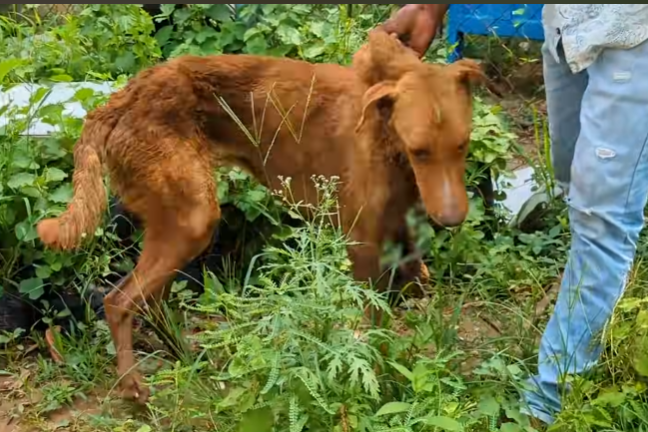
Before surgery could begin, the dog needed stabilization. Fluids were administered to combat dehydration. Pain relief was carefully given to ease suffering without overwhelming its weakened body. Antibiotics were started immediately to slow the spread of infection. Only once the dog was stable enough could the surgical team proceed.
The surgery itself was delicate and intense. Under anesthesia, the veterinarian carefully cleaned the wound, removing maggots and infected tissue. This process required precision and patience. The goal was to remove all dead tissue while preserving as much healthy structure as possible. Every decision mattered. Saving the paw was uncertain, but the team refused to give up without trying.
As the surgery continued, the extent of the damage became clearer. The infection had been aggressive, but there was still hope. The bone had not been completely compromised. After thorough debridement, the wound was flushed repeatedly and treated with medication to prevent reinfestation and further infection. The paw was then carefully bandaged, leaving room for drainage and healing.
When the surgery ended, the dog was moved to recovery. The hours that followed were critical. Sometimes, the body is too weak to bounce back, even after successful surgery. The team watched closely as the dog slowly regained consciousness. Its breathing steadied. Its heart rate remained stable. Small signs, but signs of hope.
Over the next few days, recovery became a daily battle. Bandages had to be changed regularly. The wound required constant monitoring to ensure no new infection developed. The dog needed encouragement to eat and drink. At first, it barely touched food. Pain and fear had shut down its appetite. But with gentle care, soft words, and patience, it began to take small bites.
Something remarkable happened during those days. As the pain decreased, the dog’s personality began to emerge. Its eyes became brighter. Its tail gave the smallest wag when caregivers approached. It leaned gently into hands that offered comfort. Trust, once broken by neglect and suffering, was slowly rebuilding.
The paw remained a concern. Healing would take time, and there was still a risk of complications. But each day brought improvement. Healthy tissue began to form. Swelling reduced. The dog started placing light weight on the injured leg, a moment that brought tears to everyone watching. It was proof that the body, when given care and compassion, can fight back.
This case highlighted a harsh reality faced by many stray animals, especially those living near farms or industrial areas. Injuries often go unnoticed. Flies are drawn to wounds, and maggot infestations can develop quickly in warm environments. Without intervention, these injuries become life-threatening. The suffering happens quietly, out of sight, until someone chooses to look closer.
Critical paw surgery is not just a medical procedure; it is a second chance at life. For this dog, it meant the difference between slow, painful death and the possibility of a future. Veterinary teams and rescuers work under immense pressure in such cases, often with limited resources. Yet their commitment to saving lives never wavers.
As weeks passed, the dog’s condition continued to improve. The wound gradually closed, and bandages became lighter and less frequent. Physical therapy exercises were introduced to help restore strength and mobility in the injured leg. Each small step forward felt like a victory. The dog, once lying helpless near a poultry farm, was now standing, walking, and even playing gently.
Emotionally, the transformation was just as powerful. Fear gave way to curiosity. Silence turned into soft barks and content sighs. The dog learned what it meant to rest without pain, to eat without competition, to sleep without fear of being chased away. These are things many take for granted, yet for a rescued stray, they are life-changing.
This story is also a reminder of the importance of community awareness. The dog survived because someone noticed, someone cared enough to make a call. Compassion does not always require grand gestures. Sometimes, it begins with simply refusing to look away. Reporting injured animals, supporting rescue organizations, and spreading awareness can save lives.
The dog’s journey is not over. Full recovery takes time, and adoption or long-term care decisions still lie ahead. But one thing is certain: this dog has already won the hardest fight. It endured unimaginable pain, survived neglect, and chose to trust again.
From a forgotten corner near a poultry farm to a veterinary clinic filled with care and hope, this dog’s story is a testament to resilience and compassion. Severe maggot wounds are devastating, but with timely intervention and critical surgery, survival is possible. More importantly, healing is possible—not just of the body, but of the spirit.
Every rescued animal carries a story of suffering, but also a story of hope. This dog’s scarred paw will always tell part of that story. Not as a symbol of pain, but as proof of survival. Proof that even in the darkest conditions, life can be saved when empathy meets action.