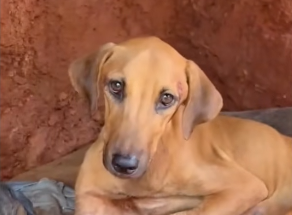
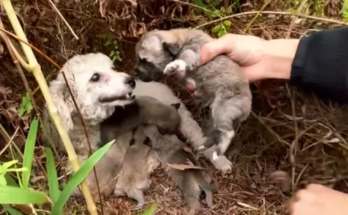
The road was unusually loud that afternoon. Trucks thundered past, motorcycles weaved through narrow gaps, and car horns echoed without pause. In the middle of that chaos, something small and broken lay near the divider—a dog, motionless except for the shallow rise and fall of his chest. Most vehicles swerved at the last second. Some drivers shouted in anger. A few slowed down, stared, and drove away.
The accident had happened only minutes earlier.
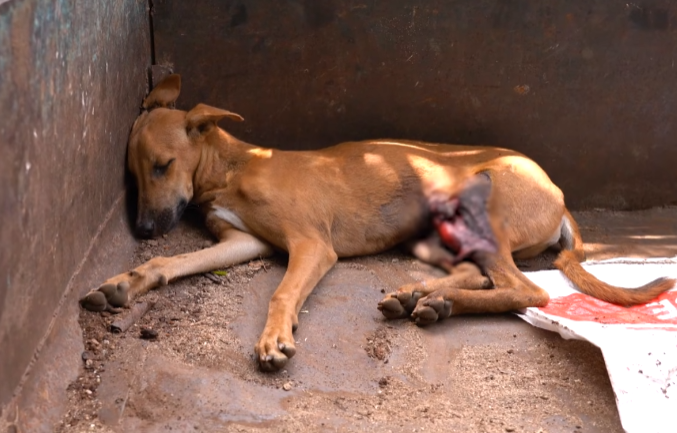
Witnesses later said the dog had tried to cross the road, startled by the sudden roar of an approaching bus. One wrong step, one terrible second, and his world shattered. He was thrown aside like a forgotten object, landing hard against the asphalt. Pain shot through his body, sharp and overwhelming. One of his legs twisted unnaturally beneath him, and blood seeped slowly onto the road, mixing with dust and oil.
He tried to stand.
His front paws trembled, but his back legs refused to move. A weak cry escaped his mouth, barely audible above the traffic. Fear flooded his eyes—not just fear of pain, but fear of being run over again, of being invisible in a place that never stopped moving.
People gathered at a distance.
“Someone should do something,” a man muttered, pulling out his phone to record a short video. A woman covered her mouth, whispering, “So sad.” Another passerby shook his head. “He won’t survive,” he said quietly, as if stating a fact made it easier to accept. No one stepped forward. The road felt too dangerous. The moment felt too inconvenient.
Time dragged on cruelly.
The sun beat down, and the dog’s breathing grew uneven. Each passing vehicle sent a gust of hot air over his body, carrying dust into his open wounds. His vision blurred. He no longer cried. He no longer struggled. His body surrendered to exhaustion, even as his heart stubbornly kept beating.
Then a call came in.
RRSA India received an emergency alert from a local volunteer who had seen the dog while riding past. The message was short but urgent: “Severely injured dog after road accident. Still alive. Heavy traffic area.”
Within minutes, the rescue team was on the move.
The RRSA vehicle pushed through traffic, siren cutting through the noise. When the rescuers arrived, they didn’t hesitate. Wearing reflective vests and gloves, they quickly secured the area, signaling drivers to slow down. One rescuer knelt beside the dog, speaking gently, his voice calm despite the chaos.
“It’s okay, boy. We’re here now.”
The dog’s eyes fluttered open at the sound. There was pain there—deep and raw—but also something else: a faint spark of hope. Carefully, the team placed a soft muzzle to prevent panic biting, then slid a stretcher beneath his fragile body. Every movement was slow and precise. They knew one wrong shift could worsen his injuries.
As they lifted him into the rescue van, a hush fell over the small crowd. The same people who had stood helpless moments earlier now watched silently. Some looked relieved. Others looked ashamed. The road, indifferent as ever, continued roaring behind them.
At the RRSA clinic, the real fight began.
Veterinarians rushed the dog into the emergency room. X-rays revealed the extent of the damage: a fractured pelvis, internal bruising, and severe trauma to one hind leg. He was dehydrated, in shock, and dangerously close to losing consciousness. The odds were uncertain.
But RRSA India did not give up on “uncertain.”
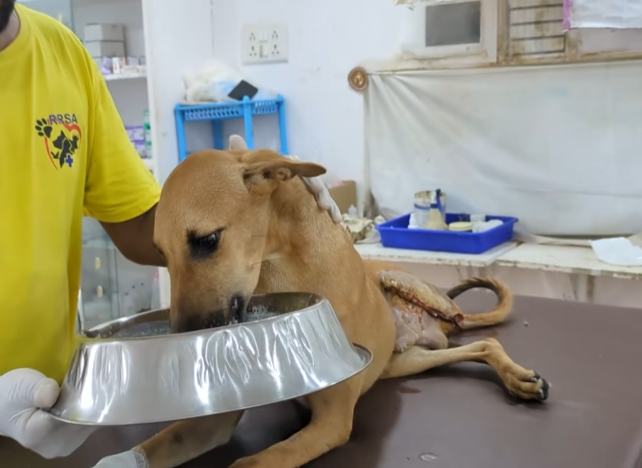
IV fluids were started immediately. Pain relief followed. The team worked with practiced urgency, hands moving in harmony, voices steady. Hours passed. Surgery was discussed, risks weighed, and finally approved. This dog, once just another nameless street soul, was now surrounded by people fighting fiercely for his life.
The surgery lasted longer than expected.
Outside the operating room, volunteers waited, their hearts heavy with worry. They had seen too many cases like this—too many lives lost to speeding vehicles and human indifference. Yet they still hoped, every time, because hope was part of their work.
When the veterinarian finally emerged, his mask lowered, his eyes tired but relieved. “He’s stable,” he said. “The surgery went well. The next 48 hours are critical, but he has a strong will.”

That night, the dog slept under warm lights, his body wrapped in clean bandages. Monitors beeped softly, keeping rhythm with his heart. Pain still lingered, but it was no longer unbearable. He was no longer alone on a dangerous road.
Recovery was slow and challenging.
The first days were the hardest. He refused food at first, turning his head away, confused and scared. Volunteers sat beside him, offering gentle words, stroking his head when he allowed it. Slowly, he began to trust. A few licks of liquid food became half a bowl. Half a bowl became a full one.
Physical therapy followed.
Each attempt to move his injured leg was met with frustration and trembling effort. Some days, progress felt invisible. But the RRSA team never rushed him. They celebrated the smallest victories: lifting his head, sitting up, standing for a few seconds longer than the day before.
Weeks turned into months.
His fur grew shinier. His eyes brightened. One morning, he wagged his tail when a volunteer entered the room, a simple gesture that brought smiles and quiet tears. He learned to walk again—slowly, carefully, but with determination.
The day he stepped outside the clinic for the first time, the sun felt different. No roaring traffic. No fear. Just open space and gentle hands guiding him forward.
The dog who once lay broken on the road had survived.
Today, he stands as a living reminder of what compassion can do. A reminder that accidents may be sudden and cruel, but kindness can arrive just as quickly. RRSA India did more than rescue an injured dog—they restored dignity, hope, and life itself.
And somewhere on that same busy road, cars still speed by. But because of RRSA India, one life no longer ends there.