Morning is a quiet promise. Before the noise of the day begins, before responsibilities pull you in every direction, there is a small window of time where your body and mind can meet gently. A full body morning flow is not about pushing, forcing, or proving anything. It’s about waking up with kindness, inviting movement back into your muscles, and reminding yourself that today begins with care.
When you first wake up, your body is still holding onto sleep. Muscles are warm but stiff, joints feel tight, and the mind may still be drifting between dreams and plans. Jumping straight into intense movement can feel shocking. That’s why a gentle morning flow is so powerful—it bridges rest and activity smoothly, preparing you for the day ahead without stress.
Start by finding a quiet space. You don’t need much room, just enough to stretch your arms and legs freely. Whether you’re on a yoga mat, a carpet, or the floor beside your bed, let this space feel safe and unhurried. Begin standing or seated, wherever feels most natural today.
Take a deep breath in through your nose, letting your chest and belly expand. Exhale slowly through your mouth, releasing any tension you notice. Do this a few times. With every breath, imagine your body waking up cell by cell, like sunlight slowly filling a room.
Begin with gentle neck movements. Drop your chin toward your chest and roll your head slowly to one side, then the other. There’s no rush. Notice where you feel stiffness and let gravity help you soften. These small movements send a signal to your nervous system that it’s okay to wake up calmly.
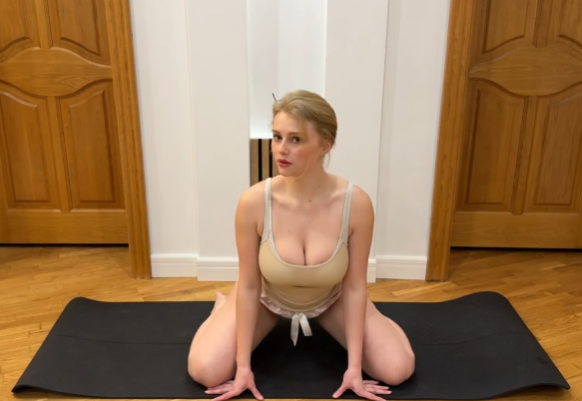
Move into shoulder rolls next. Lift your shoulders toward your ears on an inhale, then roll them back and down on the exhale. This helps release tension that often builds overnight or carries over from the previous day. Your shoulders don’t need to carry everything—let them rest where they belong.
Now, bring attention to your spine. If standing, place your hands on your thighs. Inhale as you gently arch your back, lifting your chest and looking forward. Exhale as you round your spine, tucking your chin and drawing your belly in. This slow spinal wave lubricates the vertebrae and awakens your core. If seated, you can do the same movement, letting your spine move naturally with your breath.
As warmth builds, begin to involve the whole body. Step your feet hip-width apart. Inhale and sweep your arms overhead, stretching tall as if you’re reaching for the sky. Exhale and fold forward slowly, bending your knees as much as you need. Let your head hang heavy. This forward fold gently stretches the back of the legs and releases tension in the lower back.
Take a moment here. Sway side to side if it feels good. There’s no perfect shape—only what your body needs today.
On your next inhale, lengthen your spine halfway up, placing hands on shins or thighs. Exhale and fold again. Repeat this flow a few times, syncing movement with breath. This simple pattern wakes up the hamstrings, calves, spine, and shoulders without strain.
Step one foot back into a gentle lunge. Keep your movements slow and mindful. Place your back knee down if needed. Inhale and lift your chest, opening the front of the hips. Morning tightness often lives here, especially if you sit a lot. Breathe into the stretch, allowing space rather than forcing depth.
Switch sides, moving with intention. Notice how one side of your body may feel different from the other. That awareness alone is a powerful form of self-care.
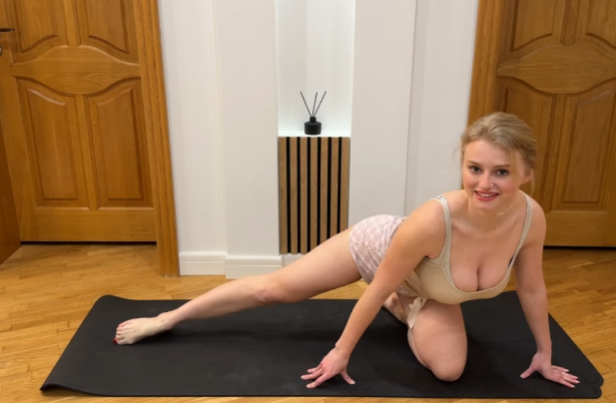
From your lunge, step back into a soft plank position or tabletop on your hands and knees. Engage your core lightly, not rigidly. This is about activation, not exhaustion. Take a few breaths here, feeling your arms and shoulders come alive.
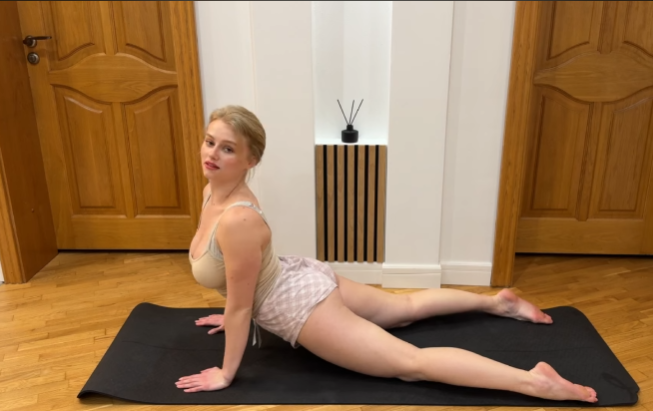
Lower down gently to the floor and transition into a low cobra or sphinx pose. Press your forearms or hands into the mat and lift your chest slightly. Keep your shoulders relaxed and your neck long. This pose counteracts the forward hunch we often carry and encourages healthy spinal extension.
Exhale and push back into a gentle downward-facing dog. Bend your knees generously and pedal your feet one at a time. This pose stretches the entire back body—from calves to shoulders—while also waking up circulation. Let your head relax between your arms, and breathe deeply.
From here, step forward slowly and return to standing. Take a moment to notice how your body feels now compared to when you started. Warmer. More open. More present.
Bring the flow to the floor for a final grounding sequence. Lie on your back and hug your knees into your chest. Rock gently side to side, massaging the lower back. This small movement soothes the nervous system and reminds your body that it’s supported.
Extend one leg at a time for a gentle hamstring stretch, holding behind the thigh or calf. Keep your breath steady. There’s no need to straighten the leg completely—comfort is more important than flexibility in the morning.
Finally, stretch out fully and then come into a comfortable seated or lying position. Place one hand on your heart and one on your belly. Feel your breath moving beneath your palms. This is the quiet center you can return to anytime during the day.
A full body morning flow is not about doing everything perfectly. Some mornings you’ll feel light and energized, other mornings slow and heavy. Both are okay. The practice adapts to you, not the other way around.
By moving gently in the morning, you set a tone of respect for your body. You remind yourself that strength can be soft, that progress doesn’t have to hurt, and that taking a few minutes to care for yourself is never wasted time.
Carry this feeling with you as you move into your day. Let your posture be a little taller, your breath a little deeper, your mind a little calmer. You’ve already done something meaningful—you’ve shown up for yourself.
And that is the best way to wake up your body gently.