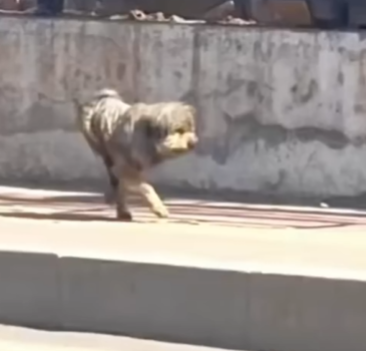
The homeless legless dog had learned to survive in a world that rarely noticed him. On the cracked sidewalks and dusty streets where he lived, people saw only what was missing—his legs, his strength, his usefulness. Few ever looked into his eyes long enough to see what remained: courage, gentleness, and a quiet will to live.
No one knew exactly how he had lost his legs. Some said it was an accident with a speeding vehicle. Others whispered darker stories of cruelty and neglect. The truth was written not in words, but in scars—old, uneven wounds that had healed without care, leaving him forever changed. What mattered was that when it happened, no one stayed. Whoever he once belonged to was gone, and the dog was left alone to face life on the streets with a body that no longer worked the way it should.
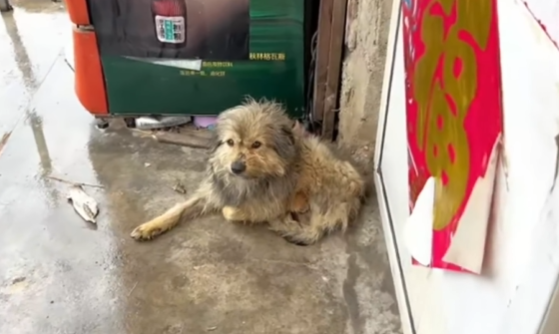
At first, he tried to move like other dogs. He dragged himself forward using his front body, scraping his chest and belly against the ground until they were raw and bleeding. Every movement hurt, but stopping meant starvation. Hunger became his constant companion, sharper than pain, louder than fear. He learned which alleys were quieter, which corners had shade, and which times of day people were most likely to drop food without noticing him.
Children sometimes stared. Some laughed nervously. Others pointed and asked questions their parents didn’t want to answer. Adults often looked away, pretending not to see him at all. A few offered scraps, tossing them from a distance, unsure and uncomfortable. He never blamed them. Survival had taught him not to expect kindness.
Rain was the worst. Water soaked his fur and chilled his body, turning the ground beneath him into mud that clung to his wounds. On those days, he curled into himself as much as he could, waiting for the storm to pass. At night, when the streets grew quiet, loneliness settled over him like a heavy blanket. He watched other dogs trot past with ease, their tails wagging, their lives moving forward. He wondered, in his own simple way, why his had stopped.
Still, he didn’t give up.
Every morning, he lifted his head and searched for food. Every evening, he found a place to rest. His body was broken, but his spirit refused to disappear.
One afternoon, as the sun burned hot against the pavement, a man noticed him.
The man wasn’t in a hurry like everyone else. He was walking slowly, carrying a small bag of groceries, when he saw something unusual near the edge of the road. At first, he thought it was a bundle of rags. Then the bundle moved. Two tired eyes looked up at him, alert but cautious.

The man stopped.
The dog froze, bracing himself for shouting or fear. Instead, the man crouched down. He didn’t reach out. He didn’t make sudden movements. He simply looked—really looked—at the dog in front of him.
“Hey there,” the man said softly.
The dog didn’t move, but his ears shifted slightly. No anger. No threat. Just a calm voice.
The man noticed the missing legs then, and his chest tightened. He had seen hardship before, but this… this was different. The dog was alive against all odds. Thin, dirty, injured—but alive.
The man slowly took a piece of bread from his bag and placed it on the ground a short distance away. Then he stepped back.
The dog hesitated. Hunger battled fear. After a moment, hunger won. He dragged himself forward and ate quickly, glancing up between bites. The man stayed still, giving him space.
That was how it began.
The man returned the next day. And the day after that. Each time, he brought food and water. Each time, he sat quietly nearby. The dog began to recognize his scent, his footsteps, the sound of his voice. Something unfamiliar stirred inside him—trust.
One evening, as the sky turned orange and pink, the man made a decision. He gently slid his hands under the dog’s body, lifting him carefully. The dog tensed, but he didn’t struggle. He was too tired, and somewhere deep inside, he sensed safety.
The man took him home.
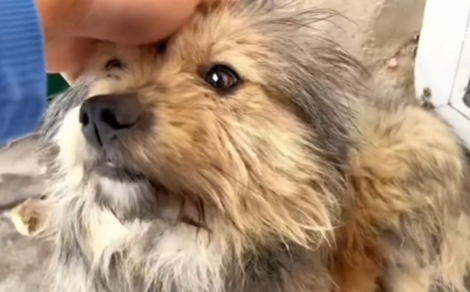
The house was small but clean, filled with warm light and quiet sounds. The dog was placed on a soft blanket. He lay still, overwhelmed by new smells and sensations. The floor was smooth. The air was cool. There was no noise from traffic, no shouting, no fear.
That night, for the first time in a long while, the dog slept deeply.
The man named him Hope.
At the veterinary clinic, the truth became clear. Hope’s injuries were old. His condition was permanent. He would never walk again—not in the way other dogs did. But he was not in pain anymore, and with proper care, he could live a full life.
The man didn’t hesitate.
He bought special padding to protect Hope’s chest. He learned how to help him move safely. Later, with help from others, he found a small wheelchair designed just for dogs like Hope. The first time Hope was placed in it, he panicked, unsure of this strange new thing attached to his body.
Then he moved.
At first, it was only a few steps. Then more. His eyes widened. His tail wagged so hard his whole body shook. For the first time since losing his legs, he was moving freely.
The man laughed, tears in his eyes.
From that day on, Hope’s world grew larger. He went on walks. He explored parks. Children no longer laughed—they smiled. Strangers stopped to admire him, to ask his story. Hope soaked up the attention, his confidence growing with each passing day.
At home, he had a bed by the window where sunlight poured in every morning. He had toys, food that came regularly, and a human who spoke to him as if he mattered—because he did.
Hope learned routines. Breakfast meant the man would be home soon. Evening meant walks and quiet time together. At night, Hope slept peacefully, no longer listening for danger.
Sometimes, the man would sit on the floor and stroke Hope’s head, thinking about how close this dog had been to disappearing unnoticed. How easily the world could have lost him.
But Hope was still here.
Though his body would always be different, his happiness was complete. He greeted each day with enthusiasm, rolling forward eagerly, ears perked, eyes bright. His past no longer defined him. It had shaped him—but it did not limit him.
The homeless legless dog who once dragged himself across unforgiving streets now lived in a place of warmth and love. He had found not just shelter, but belonging. Not just survival, but joy.
And the man who opened his home discovered something too—that kindness has the power to change lives, sometimes in the quietest, most unexpected ways.
Hope didn’t need legs to run toward happiness.
He only needed someone willing to stop, see him, and say, “You’re home now.”