“What a cute little monkey! Sell her to me. I will love and take care of her. She will be very happy with me, please!”
The words slipped out of my mouth before I even had time to think.
She was the tiniest monkey I had ever seen—soft brown fur, wide sparkling eyes, and the most delicate little fingers wrapped tightly around her mother’s chest. Her face was expressive and innocent, tilting curiously as she studied the world around her. Every small movement made my heart melt.
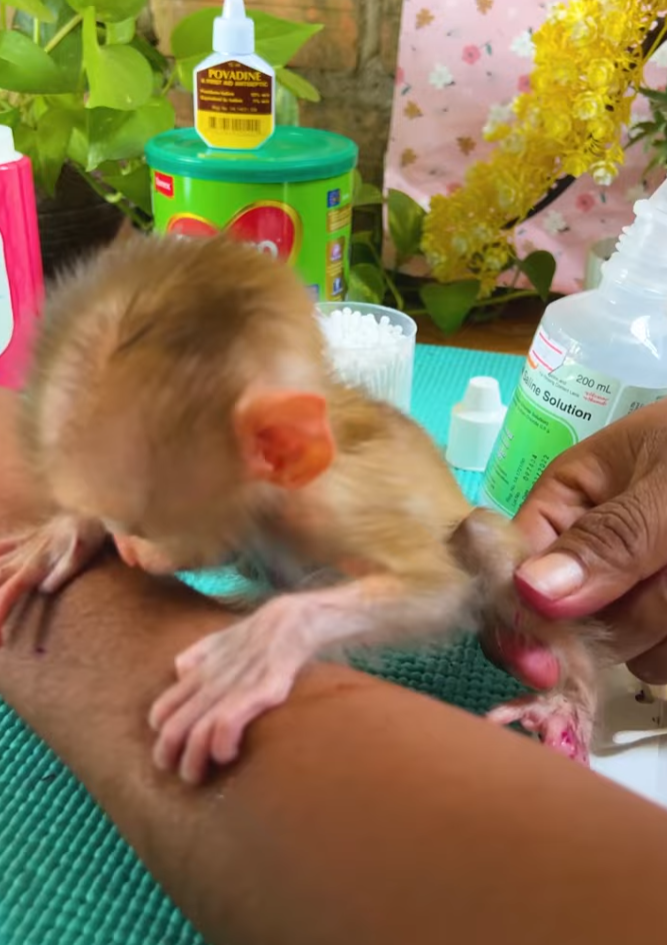
We were standing near the edge of a forest sanctuary where rescued wildlife lived safely, protected from harm. Visitors were allowed to observe from a distance, and that was where I first saw her. She clung to her mother as the troop rested on a wooden platform built high among the trees.
I couldn’t stop staring.
“She’s perfect,” I whispered again, half joking but half serious. “If someone sold her to me, I’d give her the best life.”
A caretaker standing nearby turned and looked at me gently. He didn’t scold me. He didn’t laugh. He simply said, “She already has the best life—right there.”
I watched as the baby monkey shifted her tiny body, reaching up to tug at her mother’s ear. Her mother responded by grooming her patiently, licking and smoothing her fur with careful movements. The baby squeaked in delight and tried to climb over her mother’s shoulder, only to slide back down clumsily.
It was adorable.
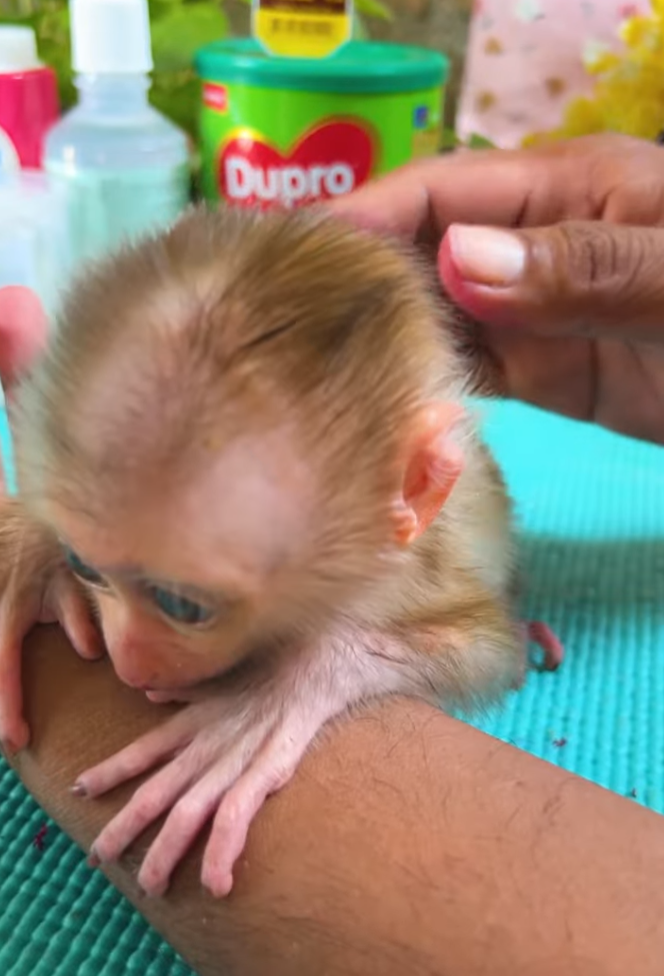
I imagined holding her. Feeding her fruit. Letting her sleep on a soft blanket in my home. I pictured her tiny hands gripping my finger. The thought made me smile.
But as I stood there longer, I began to notice more.
The baby monkey wasn’t alone. Around her, other monkeys moved freely—siblings chasing each other, older females grooming one another, juveniles practicing daring leaps between branches. The air was filled with chatter and energy.
She wasn’t just cute.
She belonged.
Every time she ventured a little too far, her mother gently pulled her back. When she squeaked nervously at a sudden sound, another monkey gave a reassuring call. When she stumbled while trying to climb, a sibling paused to wait for her.
It was a family. A community. A language I didn’t speak.
The caretaker continued softly, “Many people think love is enough. But monkeys are not pets. They need their troop. They need trees. They need to climb, argue, groom, and learn from their own kind.”
I looked again at the baby. She had managed to climb onto her mother’s back and now rode proudly as her mother moved across the platform. Her tiny tail flicked with excitement. She squealed when another young monkey approached, reaching out playfully.
Would she do that in my living room?
Would she have companions to wrestle with? Trees to swing from? The freedom to shout into the forest and hear others answer back?
The answer was no.
The more I watched, the more I understood that what I had felt wasn’t wrong—it was affection. But affection doesn’t equal ownership.
A sudden burst of energy broke out among the troop. Two juveniles began play-fighting, tumbling dramatically. The baby watched closely, her eyes wide. Then, to my surprise, she attempted to join them. She slid off her mother’s back and toddled forward with determination.
She tripped almost immediately.
But instead of crying, she got back up.
One of the older juveniles crouched lower, adjusting the play to include her. The baby grabbed his fur and squealed triumphantly as he pretended to fall over.
Everyone seemed to understand her place there.
She was not an object of cuteness. She was a student. A daughter. A future member of the troop.
I felt something shift inside me.
When I had first said, “Sell her to me,” I believed I could give her happiness. I thought love, food, and safety were enough.
But happiness for her wasn’t about being adored by a human.
It was about learning to leap between branches.
It was about recognizing the warning calls of her own species.
It was about grooming her mother’s fur someday, the way she was being groomed now.
The caretaker added quietly, “Many monkeys who are sold as pets suffer greatly. They grow up. They become stronger. They need space, social bonds, and stimulation. Without it, they become stressed, depressed, sometimes aggressive—not because they’re bad, but because they’re wild.”
Wild.
That word changed everything.
She wasn’t meant for walls and furniture. She was meant for sunlight filtered through leaves. For rain on her fur. For the constant hum of forest life.
As if on cue, the baby monkey climbed to a higher beam and paused. She looked out over the trees, her tiny silhouette outlined by the afternoon sun. For a moment, she seemed almost thoughtful, as if absorbing the vast world stretching beyond the platform.
Then she chirped loudly.
From somewhere deeper in the forest, another monkey answered.
It was a simple exchange—but it felt powerful.
That sound didn’t belong in a house. It belonged here.
I sighed softly.
“She is very cute,” I admitted.
The caretaker smiled. “Yes, she is.”
“And she will be very happy?”
He nodded toward the troop, now moving as one unit toward a shaded cluster of branches. “She already is.”
I stood there a little longer, watching her disappear into the greenery, her tiny tail the last thing visible before she vanished behind leaves.
I realized that loving an animal sometimes means letting it stay exactly where it belongs.
It means protecting forests instead of taking babies from them.
It means supporting sanctuaries instead of markets.
It means admiring from a respectful distance.
As I turned to leave, I no longer felt the urge to say, “Sell her to me.”
Instead, I whispered quietly, “Stay wild. Stay happy.”
And somehow, that felt like a much deeper kind of love.