The village lay at the edge of a dense forest where the trees grew tall and shadows lingered long after sunset. Life there followed the rhythm of nature — mornings filled with the sounds of roosters and distant cattle bells, evenings wrapped in the soft glow of cooking fires and quiet conversations. But everyone knew that beyond the last row of homes, the forest belonged to other creatures — silent, watchful, and wild.
Among the villagers lived a loyal brown dog named Raju.
Raju wasn’t owned by any one family; he belonged to everyone. He followed children to school, slept near the tea stall, and barked whenever strangers approached. Gentle and brave, he had earned the trust of the entire community. At night, he often patrolled the edges of the village, nose to the wind, as if he had taken it upon himself to keep watch.
One cool evening, the air felt different — heavy, tense. The forest seemed unusually quiet, as though holding its breath. Raju noticed first. His ears pricked, body alert, eyes scanning the darkness beyond the fields.
Then came the sound — a faint rustle, almost too soft to hear.
Before anyone could react, a shadow slipped silently from the tree line. A leopard, lean and powerful, driven by hunger, had ventured closer than usual.
Raju barked loudly, a sharp warning that echoed through the village. Lights flickered on, voices rose in confusion. The leopard paused, eyes glowing in the dim light — and then lunged.
The attack was swift and brutal.
Raju fought with everything he had, barking fiercely, trying to drive the predator away from the homes behind him. His courage bought precious seconds — enough for villagers to gather, shouting and clanging metal to scare the leopard off.
With a final snarl, the leopard retreated into the darkness.
Silence fell.
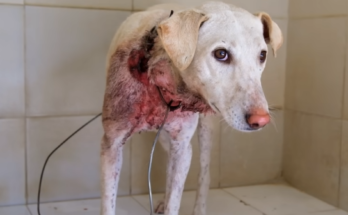
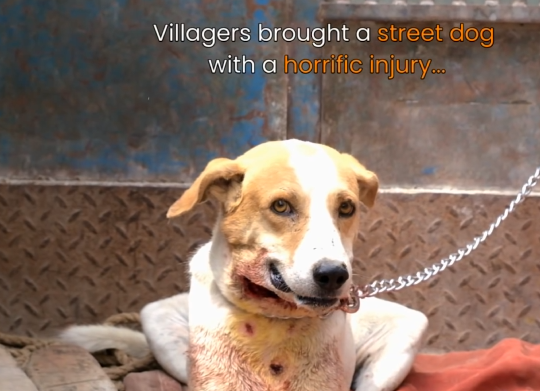
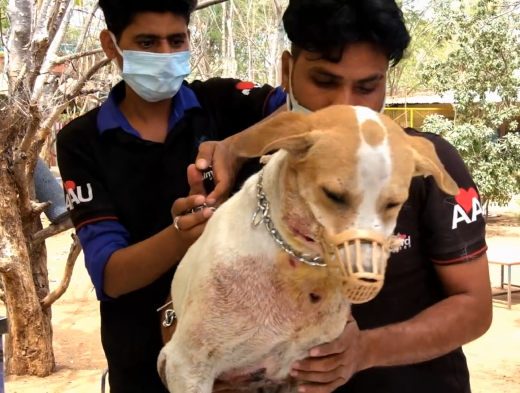
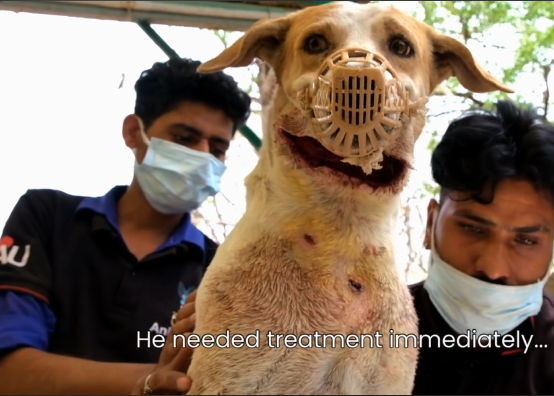
Raju lay on the ground, grievously injured. Deep wounds covered his body, his breathing ragged and weak. The ground beneath him was stained, and the villagers gathered in shock, hearts breaking at the sight.
“He saved us,” someone whispered.
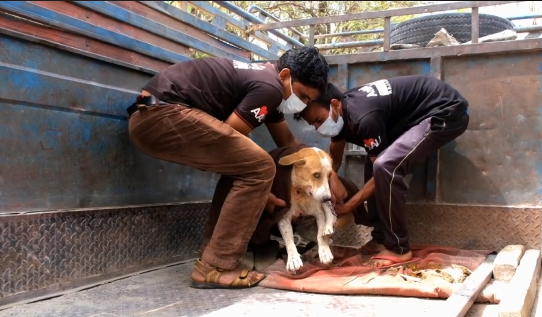
Without hesitation, they wrapped him gently in blankets and rushed him to the nearest veterinary clinic, a long drive over rough roads. Every bump felt like a race against time.
At the clinic, the veterinary team quickly assessed the damage. The injuries were severe — torn muscles, puncture wounds, and significant blood loss. Infection was a real danger.
“We’ll do everything we can,” the veterinarian said, eyes serious.
Surgery began immediately.
For hours, skilled hands worked tirelessly, cleaning wounds, stitching torn tissue, and stabilizing Raju’s fragile condition. Outside, villagers waited anxiously, offering silent prayers and holding onto hope.
Finally, the veterinarian emerged.
“He’s stable,” she said softly. “But recovery will be long.”
The days that followed were delicate. Raju drifted in and out of sleep, his body fighting to heal. Tubes delivered fluids and medication, while careful monitoring ensured complications were addressed quickly.
Despite the pain, there was a quiet determination in him — a resilience that seemed to mirror the courage he had shown that night.
When he finally opened his eyes fully, familiar faces greeted him. The tea stall owner, children from the village, and elders took turns visiting, speaking softly, offering comfort.
“You’re a hero,” one child whispered, gently placing a flower beside him.
Physical healing was only the first step.
Raju needed time to regain strength. At first, even lifting his head was an effort. The veterinary staff encouraged small movements, helping him stand briefly with support. Each attempt left him exhausted, but progress — however slow — continued.
Weeks passed.
Gradually, Raju began to eat more eagerly. His wounds showed signs of healing, new fur slowly growing over scarred skin. Physical therapy sessions helped rebuild muscle strength, and short walks became part of his routine.
There were moments of frustration — days when he seemed tired or withdrawn. But each small victory brought renewed hope.
One morning, as sunlight streamed through the clinic window, Raju stood unassisted for the first time. His legs trembled, but he remained upright, eyes bright.
The staff applauded softly.
“You’re stronger than you know,” the veterinarian said with a smile.
As his recovery continued, Raju’s gentle personality returned. He wagged his tail when visitors arrived, leaning into their touch. The trauma had not taken away his trust — instead, it seemed to deepen the bond between him and those who cared for him.
After several months, the day finally came when Raju was ready to return home.
The villagers gathered to welcome him back, smiles and tears mingling as he stepped cautiously out of the vehicle. Children cheered, and someone hung a simple garland around his neck.
“He’s back,” they said.
Raju looked around, recognizing familiar sights and scents. Though his body carried scars, his spirit remained strong.
Life slowly returned to normal.
Raju resumed his gentle routines — resting near the tea stall, accompanying farmers in the fields, and greeting everyone with quiet affection. He no longer patrolled as far at night, but his presence alone brought comfort.
Sometimes, when the sun dipped low and shadows stretched across the ground, he would sit at the edge of the village, gazing toward the forest. Perhaps he remembered that night — the danger, the fight, the pain — but there was no fear in his eyes, only calm awareness.
His story spread beyond the village, inspiring others with its message of courage and resilience.
Months later, during a community gathering, the villagers honored Raju. They spoke of his bravery, of the way he had protected them without hesitation. Children listened wide-eyed, learning about loyalty and selflessness through his example.
Raju lay nearby, tail wagging gently, unaware of the admiration he inspired.
The scars on his body remained as quiet reminders of what he had endured. Yet they also symbolized survival — proof that even after unimaginable hardship, healing is possible.
One evening, as the sky glowed with shades of orange and purple, Raju rested beside the tea stall, watching villagers go about their lives. Laughter drifted through the air, and the scent of cooking filled the breeze.
A young girl approached and sat beside him, gently stroking his head.
“You’re our brave guardian,” she said softly.
Raju closed his eyes, content.
His journey — from the terror of the attack to the long road of recovery — had revealed the strength not only within him but also within the community that refused to give up on him.
It was a reminder that courage can appear in unexpected forms, and that compassion can turn even the darkest moments into stories of hope.
As night fell and stars appeared above, Raju settled into a peaceful sleep, surrounded by the people who loved him. The forest remained beyond the fields, mysterious and wild, but the village stood strong — protected by the memory of a brave dog whose amazing recovery became a testament to resilience.
And in the quiet of that night, with the world at rest, Raju dreamed not of fear or struggle, but of gentle days, warm sunlight, and the simple joy of belonging — living proof that even after the deepest wounds, life can bloom again with remarkable beauty.