The dog had followed him for as long as it could remember. Through hot afternoons and cold nights, through hunger and exhaustion, that man had been its entire world. Even when food was scarce and affection rare, the dog believed—without question—that loyalty would be enough. It always is, in a dog’s heart. Loyalty is their language. Love is their instinct.
That was why, on that quiet morning, the dog did not understand what was happening.
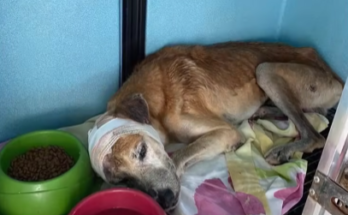
They stood on the edge of a dirt road far from town. The air was still, heavy with dust and silence. The dog’s body was weak, its ribs visible beneath dull, matted fur. Each breath rattled slightly in its chest. It had been sick for weeks—maybe longer. Walking hurt. Standing took effort. But when the man opened the car door, the dog’s tail still wagged, slow and tired, but hopeful.
The dog thought they were going somewhere together.
Instead, the man lifted the dog out of the car and placed it gently on the ground. For a brief moment, there was kindness in the touch, and that made everything more confusing. The dog looked up, eyes cloudy with pain yet full of trust. It leaned forward, pressing its body against the man’s leg, a silent plea for reassurance.
Then the car door closed.
The sound was sharp. Final.
The dog froze. It lifted its head, ears twitching, confused. When the engine started, panic surged through its fragile body. It tried to move, but its legs trembled. It stumbled forward, whining softly—not loudly, not angrily, but desperately. The sound was weak, broken, like its body.
The dog pleaded in the only way it knew how.
It dragged itself closer, eyes locked on the man behind the wheel. There was no anger in that gaze. No blame. Only fear and hope tangled together. Please don’t leave. I’m sick. I need you. I’m still here.
The man did not look back.
The car rolled forward slowly at first, then faster. Dust rose into the air, stinging the dog’s eyes. It tried to follow, collapsing after just a few steps. Its body gave out, and it fell onto its side, chest heaving. The sound of the engine faded, replaced by an unbearable silence.
The dog was alone.
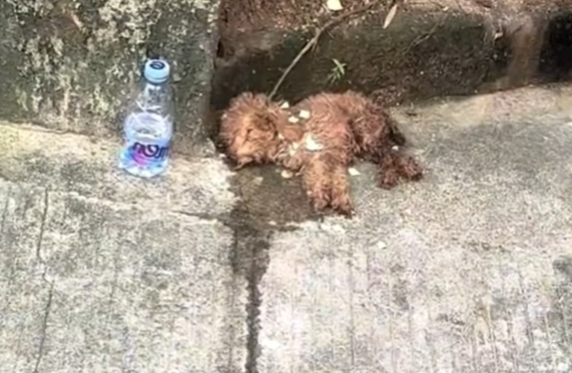
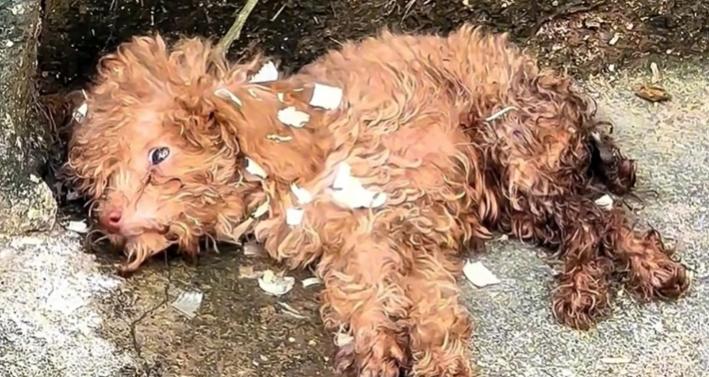
It lay there for a long time, not moving, as if waiting for the car to return. Dogs do that. They wait. Even when logic is gone, hope remains. Minutes passed. Then hours. The sun climbed higher, burning the ground beneath its body. Flies gathered around its wounds. The dog no longer had the strength to chase them away.
Its mind drifted in and out of awareness. Between shallow breaths, memories surfaced—curling up near the man’s feet, sharing scraps of food, walking together at night. The dog did not understand what it had done wrong. It searched itself for answers, but there were none. Dogs do not measure love. They give it freely, completely.
Pain spread through its body. Fever made everything blur. The dog whimpered once, softly, then fell silent again. It had learned that crying did not always bring help.
As the day wore on, the dog’s breathing slowed. It no longer tried to stand. It no longer watched the road. The hope that had kept it alive for so long began to fade, replaced by a heavy, creeping exhaustion. If this was the end, it would face it the same way it had faced life—with quiet endurance.
Then footsteps.
At first, the dog thought it was imagining things. But the sound grew closer. Shadows fell across the ground. A voice spoke—gentle, shocked, trembling.
“Oh my God… what happened to you?”
The dog forced its eyes open. Shapes came into focus. A stranger knelt beside it, hands hovering, unsure where to touch without causing pain. When those hands finally rested on its fur, they were warm. Careful. Real.
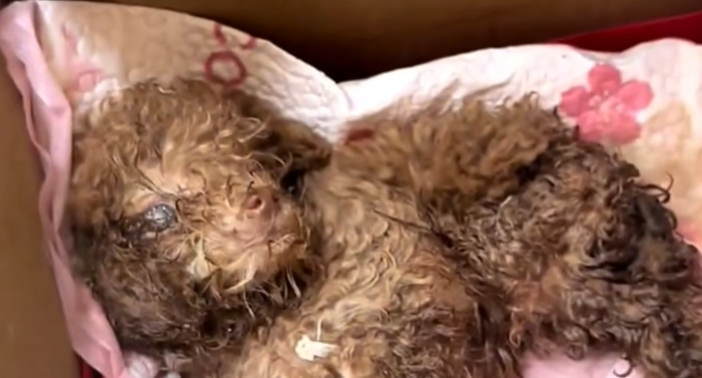
The dog let out a weak sound—not a bark, not a cry—just a breath that said, I’m still here.
The stranger called for help immediately. Their voice shook as they explained the condition of the dog, how bad it looked, how urgent it was. While waiting, they poured a little water onto their palm and gently touched it to the dog’s mouth. The dog licked weakly, barely able to swallow, but it tried.
For the first time since being abandoned, the dog was not invisible.
When rescuers arrived, they moved quickly but gently. The dog was lifted onto a blanket, every movement causing a small flinch. But it did not resist. It was too tired—and perhaps, somewhere deep inside, it sensed that these hands were different.
At the veterinary clinic, the reality was grim. Severe dehydration. Infection. Organ stress. The sickness had been ignored for too long. The vet shook their head, not in anger at the dog, but in disbelief at the cruelty it had endured. Still, they tried. Fluids were administered. Medication followed. Warm blankets wrapped around the dog’s fragile body.
The night was long.
The dog drifted between sleep and wakefulness. Sometimes it whimpered. Sometimes it was still. A volunteer sat beside it the entire time, whispering softly, stroking its head, reminding it that it was not alone anymore. The dog did not understand the words, but it understood the tone. It leaned into the touch as much as it could.
Morning came slowly.
Against expectations, the dog was still breathing.
Recovery was not immediate. It took days before the dog could lift its head without effort. Weeks before it could stand for more than a moment. There were setbacks—fevers, loss of appetite, moments when it seemed ready to give up. But each time, someone was there. Someone waited. Someone stayed.
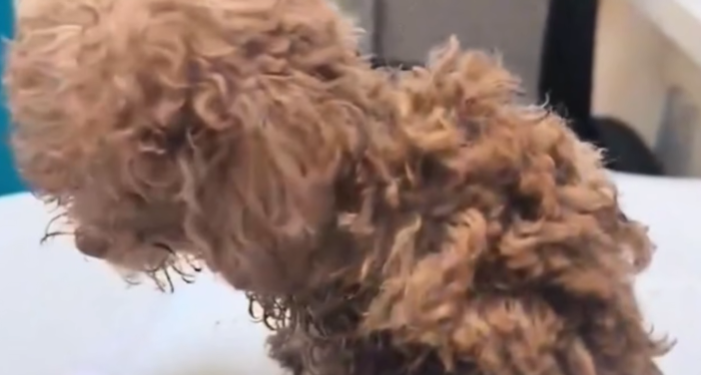
The dog began to change.
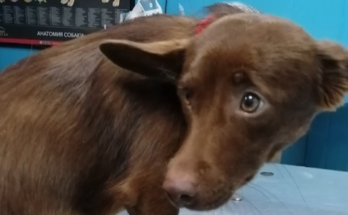
Its eyes, once dull and distant, started to follow movement. Its ears perked slightly at familiar voices. One day, when a volunteer entered the room, the dog’s tail moved—just a little. It was a fragile motion, but it carried enormous meaning. The will to live had not been completely extinguished.
Trust came slowly. When a hand reached toward it, the dog sometimes flinched, remembering the moment it had been left behind. But patience has a way of healing what force destroys. No one rushed it. No one demanded affection. Love was offered quietly, consistently.
Months later, the dog could walk again—unsteadily, but proudly. Its body would always carry scars. Its health would require care. But it was alive. And more importantly, it was safe.
Sometimes, when cars passed by, the dog would stop and watch them until they disappeared. There was no anger in its eyes. Just a lingering question that would never be answered.
Why?
The man who left never came back. He likely never knew what became of the dog. But the world, in its quiet way, balanced the cruelty with compassion. Where one person turned away, others stepped forward.
This dog’s story is not unique. Too many animals plead silently, trusting humans who fail them. But it is also a reminder of something powerful: abandonment can break a body, but kindness can rebuild a life.
The dog that once begged its owner to save it now rests in a place where it will never have to plead again. It is no longer waiting on the side of the road. It is no longer alone.
And though it may never understand why it was left behind, it now understands something just as important—that some humans stay.