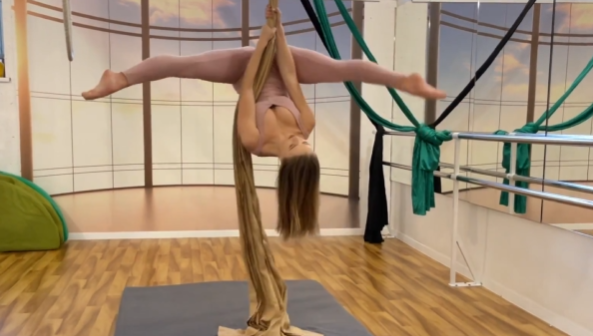
Middle splits—also known as straddle splits—are one of the most visually impressive and physically demanding flexibility skills in the world of movement arts. They sit at the crossroads of contortion, gymnastics, and yoga, uniting strength, mobility, patience, and body awareness into a single powerful expression of human potential. Whether performed gracefully on a yoga mat, explosively in a gymnastics routine, or dramatically in contortion performance, the middle split represents far more than flexibility alone. It tells a story of disciplined training, respect for the body, and a deep connection between mind and movement.
At first glance, middle splits look simple: legs extended wide to the sides, pelvis close to or resting on the floor, torso upright or folding forward. But anyone who has ever trained them knows the truth—this position demands intense openness in the hips, strong and lengthened inner thighs, stable knees, and a well-controlled core. It also requires mental focus and emotional patience, as progress is often slow and non-linear. This is why middle splits are so revered across contortion, gymnastics, and yoga training systems.
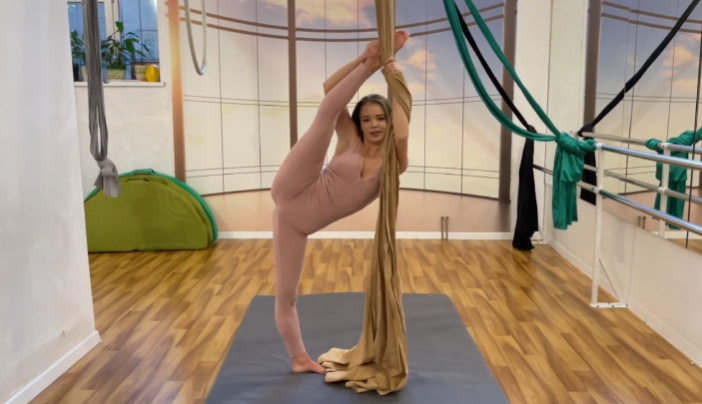
In contortion, middle splits are foundational. Contortionists rely on extreme ranges of motion, especially in the hips, spine, and shoulders. The middle split becomes a base position from which dramatic shapes are created: oversplits on blocks, lifted leg variations, pancake folds, and transitions into backbends or inversions. For contortion training, the emphasis is not only on achieving the split but on owning it—being able to enter, exit, lift, twist, and balance while maintaining control. Strength is trained alongside flexibility, particularly in the hip flexors, glutes, adductors, and deep core muscles. Without strength, extreme flexibility becomes unstable and risky. Contortion teaches that flexibility without control is incomplete.
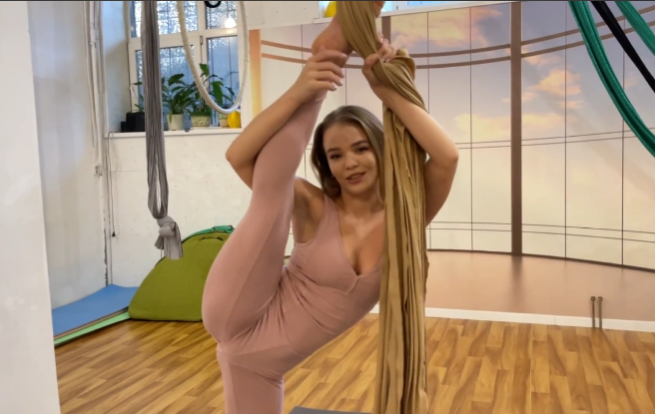
In gymnastics, middle splits play a different but equally important role. They are essential for skills on floor, beam, and bars, as well as for leaps, jumps, and transitions. A gymnast’s split is judged not only on depth but also on alignment, posture, and fluidity. Unlike contortion, gymnastics demands explosive power and speed in and out of flexibility positions. Gymnasts train middle splits dynamically—using kicks, pulses, active holds, and resistance drills—to ensure their flexibility transfers into performance. Here, the middle split is not held for long periods but is expressed briefly, cleanly, and with maximum visual impact. Precision matters as much as range.
Yoga training approaches middle splits from a more internal and holistic perspective. While advanced yoga practitioners may achieve very deep straddle positions, yoga places strong emphasis on breath, nervous system regulation, and mindful progression. In yoga, middle splits are often prepared through poses like wide-legged forward folds (Prasarita Padottanasana), frog pose (Mandukasana), yogi squat (Malasana), and side lunges (Skandasana). The goal is not to force the body open, but to create space gradually by relaxing tension and improving joint communication. Breathwork plays a crucial role—slow, controlled breathing helps calm the nervous system, allowing muscles to release safely. Yoga teaches practitioners to listen closely to their bodies and respect limits, making it an excellent foundation for long-term flexibility training.
Despite their different philosophies, contortion, gymnastics, and yoga all agree on one thing: middle splits require consistent, intelligent training. Random stretching or aggressive forcing often leads to plateaus or injury. The inner thighs (adductors), hamstrings, hip flexors, and glutes must be warmed thoroughly before deep work begins. Gentle mobility drills prepare the joints, while progressive stretching increases range over time. Active flexibility—where muscles engage while lengthening—is key to making splits safe and usable. Passive flexibility alone may look impressive, but it does not translate well into movement or performance.
One of the most overlooked aspects of middle split training is hip anatomy. Not all hips are built the same. Bone structure, socket depth, and femur angle play a huge role in how close someone can get to the floor. This is why some people seem naturally gifted in middle splits while others struggle despite years of training. Understanding this removes unnecessary comparison and frustration. Progress should always be measured against one’s own starting point, not someone else’s highlight reel. In all three disciplines—contortion, gymnastics, and yoga—wise teachers emphasize personalization over imitation.
Mental discipline is another shared element. Middle splits can be uncomfortable, sometimes even emotionally challenging. The hips are a region where many people hold stress and tension. During deep stretches, feelings of resistance, impatience, or self-doubt may arise. Yoga philosophy encourages observing these sensations without judgment. Gymnastics training teaches pushing through discomfort with focus and determination. Contortion balances both—acknowledging sensation while maintaining calm control. Together, these approaches build mental resilience alongside physical flexibility.
Recovery is just as important as training. Muscles and connective tissues need time to adapt to increased range. Overstretching without adequate rest can lead to strains, especially in the groin area. Proper hydration, gentle mobility on rest days, and occasional soft tissue work help maintain healthy progress. In yoga, restorative poses support recovery. In gymnastics and contortion, lighter training days prevent overload. Long-term flexibility is built over months and years, not days.
Middle splits also teach body awareness and alignment. True depth comes not from forcing the legs wider, but from positioning the pelvis correctly, engaging the core, and distributing stretch evenly. Many practitioners get stuck because they collapse into their hips or twist unknowingly. Learning to square the torso, maintain neutral spine control, and actively rotate the thighs outward makes a dramatic difference. This awareness carries over into all movement—improving balance, posture, and overall coordination.
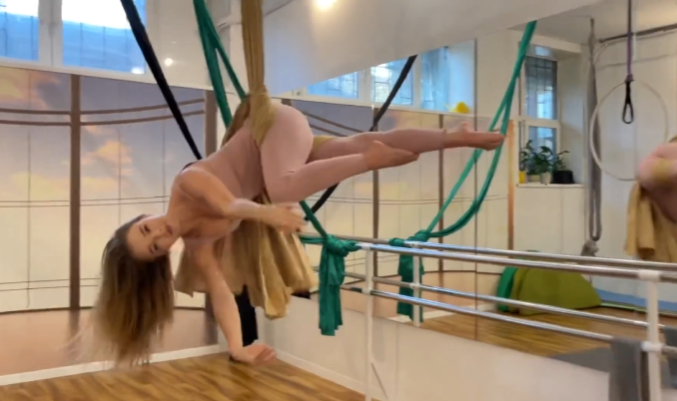
Ultimately, middle splits are not just a flexibility goal; they are a journey. They reflect dedication, patience, and respect for the body. In contortion, they become a canvas for artistic expression. In gymnastics, they add power and elegance to athletic performance. In yoga, they symbolize inner openness and mindful growth. Each discipline offers something valuable, and when combined, they create a balanced, sustainable approach to training.
Whether you are a yogi seeking deeper mobility, a gymnast chasing cleaner lines, or a contortion enthusiast exploring extreme ranges, middle splits will challenge and teach you. They remind us that progress is rarely instant, but always meaningful. With consistent practice, intelligent methods, and a calm, focused mindset, the journey toward middle splits becomes not just about touching the floor—but about understanding your body, mastering control, and discovering strength in softness.