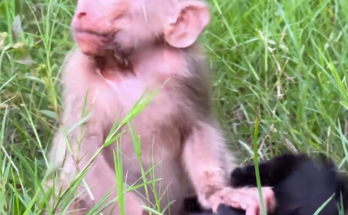
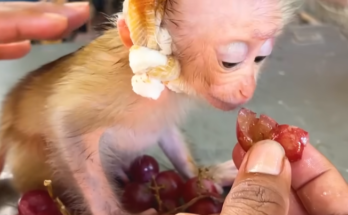
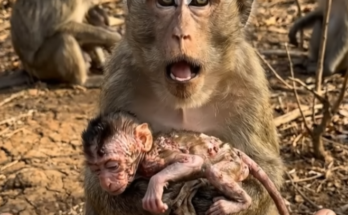
Morning light crept slowly across the mouth of the cave, turning the darkness into a soft gray glow. Inside, the air was cool and still, carrying the faint scent of earth and stone. A small baby monkey blinked awake, its tiny fingers curling against the rough ground. For a moment, it didn’t move. It listened.
Beside it, its mother stirred.
She had been awake longer than the baby realized. Mothers often are. Her sharp eyes had already scanned the cave entrance, her ears tuned to the subtle sounds of the outside world—the whisper of wind through leaves, the distant call of birds, the quiet signals that told her whether the morning was safe.
The baby shifted closer to her, pressing its warm body against her side. It felt safe in the cave. The cave was quiet. The cave was familiar. The outside world, though exciting, was big and unpredictable.
The mother rose slowly.
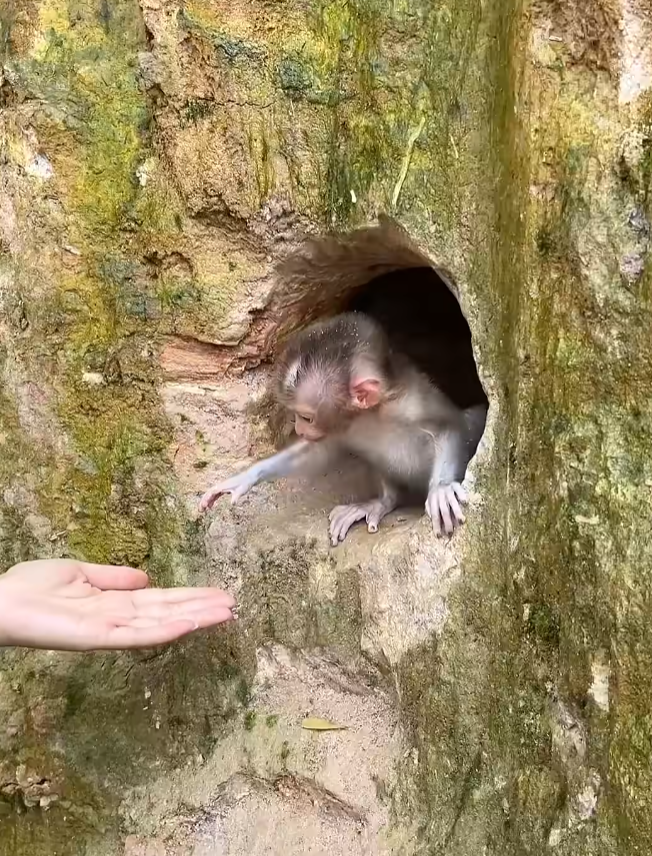
That movement changed everything.
The baby monkey immediately straightened, alert and slightly anxious. When its mother moved, it meant something was about to happen. She stepped toward the cave entrance, her silhouette framed by the growing light.
The baby hesitated.
The edge of the cave felt like a boundary between two worlds. Inside was comfort and stillness. Outside was brightness and noise. The baby peered out, eyes wide. The forest beyond shimmered in morning light, leaves sparkling with dew. It was beautiful—but it was also unknown.
The mother paused at the entrance and glanced back.
She didn’t call. She didn’t make a dramatic gesture. She simply looked at her baby with calm expectation.
Come.
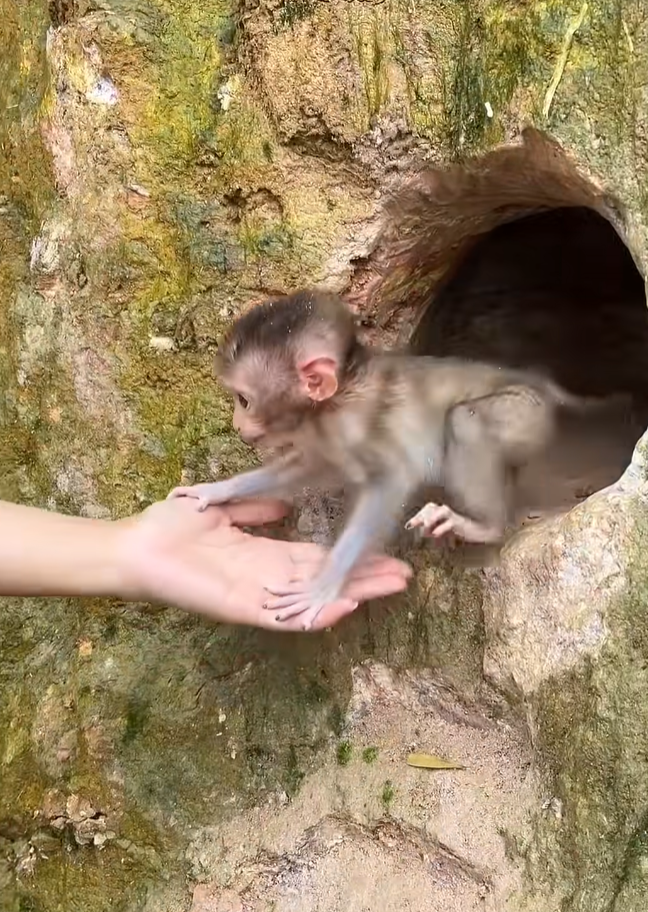
The baby’s tiny heart beat faster. It took one small step forward, then stopped. Its fingers brushed the ground nervously. Outside, a bird fluttered suddenly from a nearby branch, and the baby flinched.
But its mother was already moving.
She stepped into the sunlight without hesitation, her body strong and confident. The baby watched her silhouette grow brighter as she left the shadows behind.
For a second, fear held the baby in place.
Then instinct pushed it forward.
The baby scrambled to its feet and hurried after her, tiny legs moving quickly. The moment it crossed the cave’s threshold, the light hit its face fully. It blinked hard, adjusting to the brightness. The air outside felt warmer, fresher, alive with scent and sound.
The forest greeted them with gentle noise—leaves rustling, insects humming, distant monkeys calling to one another. The baby pressed close to its mother’s side, comforted by her steady presence.
She began climbing immediately, gripping the low branches of a nearby tree. The baby watched carefully. Climbing out here felt different from climbing inside the cave walls. The branches were thinner, more flexible. They moved beneath weight.
The mother glanced down again.
The baby swallowed its fear and reached upward.
Its first grip slipped slightly. The branch swayed, and the baby let out a tiny squeak. But it didn’t give up. It adjusted its hands and tried again, pulling its small body upward with determination. The mother stayed just above, close enough to catch, but far enough to let the baby try.
Step by step, grip by grip, the baby followed.
As they climbed higher, the cave entrance became smaller below them. The world expanded. The baby could see more trees stretching into the distance, sunlight dancing across leaves, and other monkeys moving through the canopy.
A strange feeling filled the baby’s chest—not just fear anymore, but excitement.
The forest was bigger than the cave. Louder. Brighter. Full of movement. And as long as its mother was there, it didn’t feel impossible.
The mother moved confidently from branch to branch, occasionally pausing to check behind her. The baby mirrored her actions, learning through observation. When she leaped a short distance, the baby hesitated—but seeing her land safely encouraged it.
It made the jump.
The landing was clumsy, but successful. The baby looked almost surprised at itself. Its mother waited calmly, as if she had known all along that the baby could do it.
They traveled together through the trees, leaving the cave farther behind. The baby’s movements became steadier with each step. Its breathing slowed. Its grip strengthened. The fear that once froze it at the cave’s entrance slowly transformed into confidence.
The forest was no longer just unknown—it was becoming familiar.
At one point, the baby stopped to examine a bright green leaf. It reached out and touched it gently, fascinated by the texture. The mother allowed the pause. Exploration was part of growing.
But when a louder sound echoed in the distance—a sharp cry from another animal—the mother stiffened. She moved closer to the baby immediately. The baby sensed the change and hurried back to her side.
This was another lesson.
The forest offered beauty and danger in equal measure. Following its mother wasn’t just about staying close—it was about learning when to move, when to pause, when to explore, and when to retreat.
Eventually, they reached a sunlit branch high above the ground. The mother settled there briefly, grooming the baby’s fur with careful fingers. The baby relaxed completely, leaning into her touch.
It had done something important that morning.
It had left the cave.
It had followed.
The cave would always exist as a place of comfort and rest, but life happened outside it. Growth waited beyond familiar shadows. And though the first steps were uncertain, they were necessary.
As the baby nestled against its mother, looking out at the wide forest before them, it felt something new.
Not just safety.
Not just curiosity.
But belonging.
The baby followed its mother as they left the cave—and in doing so, it began discovering the world beyond fear, one small, brave step at a time.