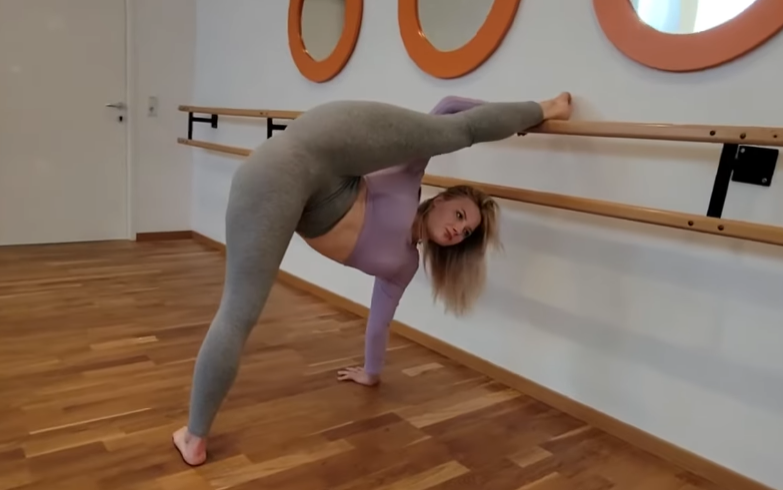
When people hear words like contortion, gymnastics, or splits, the same thought often appears: That’s not for me. Many imagine bodies bent into impossible shapes, performers who seem born with extraordinary flexibility, or athletes who started training before they could walk. For the “inflexible,” the idea of ever reaching a split or moving with stunning flexibility can feel unrealistic, even intimidating.
But the truth is far more inspiring.
Flexibility is not a gift reserved for a few—it is a skill that can be developed, respected, and transformed. Contortion and gymnastics are not about forcing the body into extreme positions; they are about patience, awareness, and learning how to work with your body rather than against it. This journey is not just physical—it’s mental, emotional, and deeply empowering.
At its core, contortion is the art of movement through extreme ranges of motion, built on strength as much as flexibility. Gymnastics, similarly, blends power, control, coordination, and grace. Both disciplines celebrate what the human body can do when trained with care and consistency. And surprisingly, both can be adapted for beginners and even for those who believe they are “too stiff.”
The idea of splits for the inflexible may sound like a contradiction, but it isn’t. Every flexible athlete was once inflexible. Every smooth split started as tight hamstrings, resistant hips, and muscles that refused to cooperate. The difference lies not in genetics alone, but in approach.
The biggest myth about flexibility is that pain equals progress. In reality, pain is a signal—not a goal. True flexibility training focuses on gradual lengthening, breathing, and nervous system relaxation. When the body feels safe, it allows more range. When it feels threatened, it tightens.
This is why many inflexible people struggle. They push too hard, too fast, and the body responds by protecting itself.
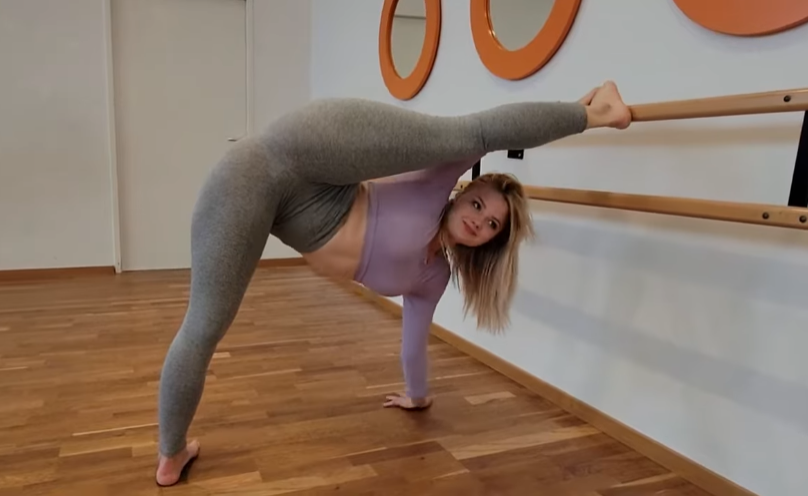
Stunning flexibility is not forced—it’s invited.
Gymnastics and contortion training begin with foundations. Before deep bends or splits come mobility, joint preparation, and strength. Strong muscles protect joints, allowing flexibility to increase safely. Without strength, flexibility becomes unstable. Without flexibility, strength becomes limited. Balance between the two is essential.
For splits, this balance is especially important.
A split is not just about flexible legs. It involves the hips, lower back, core, and even posture. Tight hip flexors, weak glutes, and poor spinal alignment can block progress more than tight hamstrings ever will. When these areas are addressed, the body begins to open naturally.
In gymnastics, flexibility supports performance. Leaps become higher. Lines become cleaner. Landings become smoother. In contortion, flexibility becomes expression—fluid, controlled, and precise. But in both, the goal is not extremes—it is mastery.
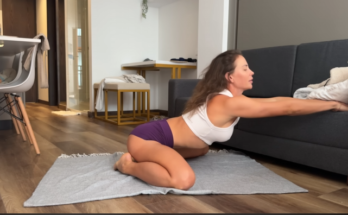
For beginners, especially those who feel inflexible, the journey starts with small movements. Gentle lunges. Seated forward folds. Supported stretches. These movements may seem simple, but they are powerful. Over time, they retrain muscles and connective tissue, teaching them to lengthen without fear.
Breathing plays a crucial role.
Deep, slow breathing signals the nervous system to relax. Each exhale allows muscles to soften just a little more. This is why experienced contortionists and gymnasts move calmly into deep positions—they are not fighting their bodies. They are listening.
Consistency matters more than intensity.
Stretching for ten minutes a day, done regularly, creates far more progress than one intense session a week. The body responds best to gentle, repeated signals. Over weeks and months, stiffness fades. Movement becomes easier. What once felt impossible begins to feel accessible.
This is where mental flexibility matters too.
Many people label themselves as “not flexible” and stop trying. That belief becomes a barrier stronger than tight muscles. When the mind changes, the body often follows. Approaching training with curiosity rather than frustration opens doors.
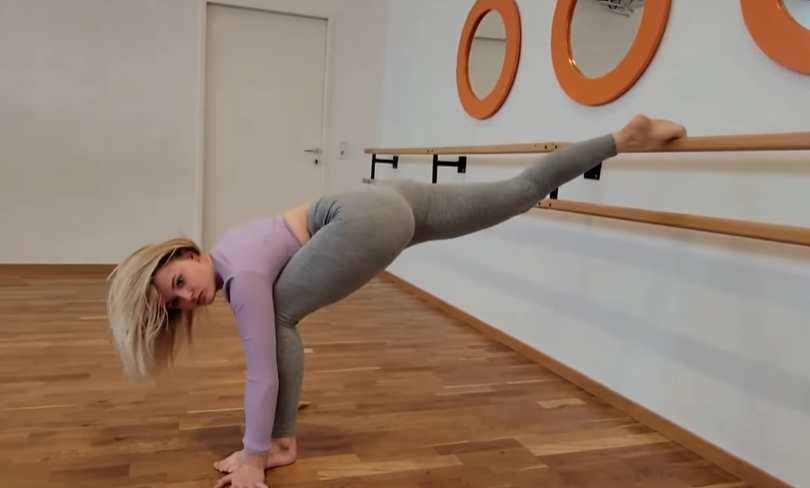
Instead of asking, Why can’t I do this?
Ask, What does my body need today?
Gymnastics and contortion also teach body awareness. You learn how your hips move, how your spine responds, how balance shifts. This awareness builds confidence—not just in movement, but in life. There is something powerful about learning to trust your body again.
As flexibility improves, posture often improves as well. Tight muscles release, allowing the spine to align naturally. Movement feels smoother. Everyday activities—walking, bending, sitting—become more comfortable. Flexibility training isn’t just for performance; it supports long-term joint health and mobility.
Splits, when approached safely, become a milestone—not a requirement.
Some bodies reach full splits. Some reach deep, comfortable partial splits. Both are valid. The goal is not comparison; it is progress. Stunning flexibility looks different on every body. What matters is control, ease, and absence of pain.
In contortion, especially, the beauty lies not just in how far a body bends, but in how smoothly it moves. A slow, controlled backbend can be more impressive than a forced extreme shape. Grace comes from patience.
For the inflexible, seeing contortionists and gymnasts perform can feel both inspiring and discouraging. But remember—what you see is the result of years of training, not overnight success. Behind every stunning pose are countless hours of careful practice, rest, and recovery.
Recovery is often overlooked but essential.
Muscles need time to adapt. Stretching should be balanced with rest and strengthening. Hydration, sleep, and nutrition all support flexibility. A well-rested body responds far better than an exhausted one.
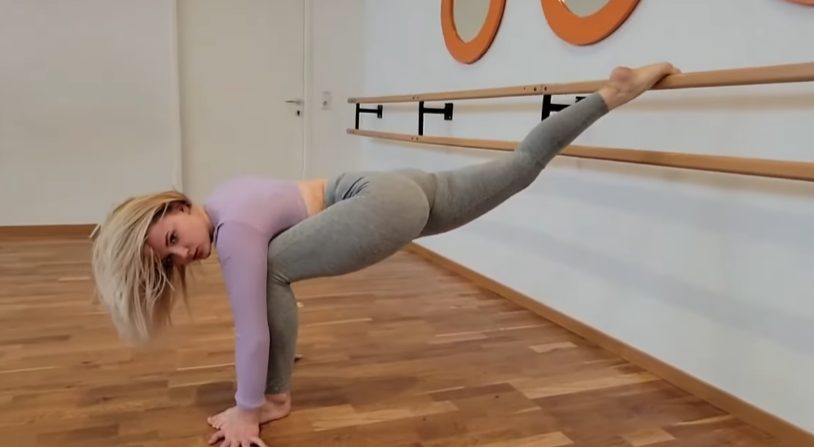
Flexibility training also builds resilience.
Progress is not linear. Some days feel open and easy; others feel tight and resistant. This fluctuation is normal. Learning to accept these changes without frustration builds patience—a skill that extends beyond training.
Over time, what once felt like stiffness becomes strength. What once felt like limitation becomes possibility.
Splits for the inflexible are not about reaching the floor. They are about changing your relationship with your body. About learning that progress comes from kindness, not force. About understanding that flexibility is earned through respect.
Gymnastics and contortion remind us that the human body is adaptable. Capable. Intelligent. When trained with care, it responds beautifully.
Stunning flexibility is not reserved for the young, the naturally bendy, or the fearless. It is available to anyone willing to move slowly, breathe deeply, and stay consistent.
So if you think you’re inflexible, start anyway.
Start where you are.
Move gently.
Breathe.
Repeat.
Because one day, you may look back at the body you once doubted—and be amazed at how far it has learned to bend, not just physically, but mentally.
And that is the true beauty of contortion, gymnastics, and the journey toward flexibility.