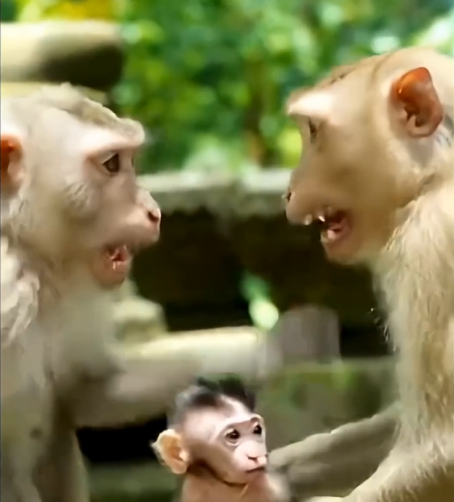
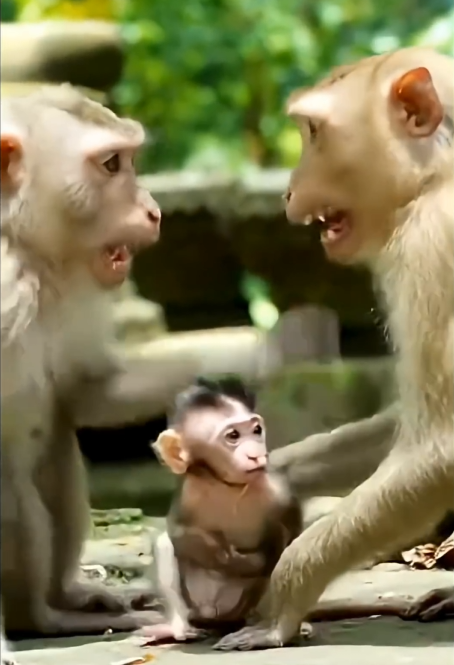
In the dense, vibrant canopy of the tropical forest, life is a constant balancing act. Every day brings the challenge of finding food, avoiding predators, and navigating complex social hierarchies. For the troop of monkeys that called this forest home, survival depends not only on agility and intelligence but also on social dominance and cooperation. Yet sometimes, conflicts erupt—moments when tensions boil over and the delicate balance of power is violently tested. One day, I witnessed such an intense confrontation: two monkeys locked in a battle that would determine status, respect, and the respect of the entire troop.
The forest was alive with the usual morning symphony—chirping birds, rustling leaves, and distant calls from other monkeys. But an unusual tension lingered in the air, a subtle warning that something was brewing. The two monkeys at the center of the coming clash were mature males, both strong, experienced, and determined. Their rivalry had been simmering for weeks, rooted in disputes over food, territory, and the affection of females within the troop.
The younger male, whom I’ll call Kiro, was muscular, quick, and clever. He had risen rapidly through the ranks of the troop, challenging older males with his boldness and daring. The older male, whom I’ll call Balu, was larger, heavier, and more experienced. He had held a dominant position in the troop for years, respected for both his strength and his ability to maintain order. But Kiro’s challenge was persistent, and Balu could not ignore the threat.
The first signs of conflict were subtle. Kiro began encroaching on Balu’s favored feeding spots, grabbing fruit from trees that Balu usually claimed first. He mimicked Balu’s vocalizations, taunting him, and even followed him closely during morning patrols of the territory. Each of these small provocations increased tension, and the troop watched in silent anticipation, sensing that the inevitable confrontation was near.
Finally, it happened. On a particularly large fig tree, where fruit hung low and abundant, Kiro and Balu found themselves in direct competition. Both reached for the same cluster of figs simultaneously. Their eyes locked, bodies tensed, and the air seemed to crackle with anticipation. The younger male made the first move, lunging toward the fruit, only to be met by Balu’s swift and forceful response.
The fight escalated rapidly. Kiro dodged a powerful swipe, leaping to a nearby branch, but Balu was relentless, his experience giving him a strategic advantage. He used his weight to block Kiro’s movements, cornering him against a trunk. Kiro retaliated with agile strikes, scratching and biting where he could, his speed and flexibility keeping him in the fight. The sounds of their clash—grunts, screeches, and the snapping of branches—echoed through the forest.
The troop gathered, forming a wide circle at a safe distance. Females and younger monkeys watched with a mixture of fear and fascination, while other males remained on the periphery, evaluating the battle and considering which side to support if needed. In monkey society, such fights are rarely just about immediate disputes; they serve as demonstrations of strength and strategy, reinforcing social hierarchies and teaching younger monkeys about dominance, risk, and the consequences of challenge.
Kiro made a daring leap, attempting to land directly on Balu’s back, but Balu twisted mid-air, throwing Kiro off balance. Kiro landed awkwardly on a thin branch, which creaked ominously under his weight. He scrambled quickly, finding purchase, and launched a counterattack, aiming for Balu’s arm. Each strike and parry was calculated, a blend of instinct, skill, and raw aggression.
The fight lasted longer than I expected. Observing it, I could see that it was not just about food or territory; it was about pride, power, and the assertion of identity. Each monkey tested the other, measuring weaknesses, gauging reactions, and adapting strategy on the fly. Balu relied on his size and strength, while Kiro relied on speed and cunning. The forest itself seemed to respond to the tension—birds scattered, leaves rustled violently, and even the wind seemed to pick up as if amplifying the intensity of the confrontation.
At one point, Kiro made a critical error. In a bid to land a decisive blow, he lunged too far and lost his footing, falling toward the lower branches. Balu seized the opportunity, advancing with precision, aiming to end the fight decisively. But Kiro’s resilience shone through. With a swift twist, he avoided the attack, regained balance, and launched a surprise strike that landed squarely on Balu’s shoulder. The older male yelped and recoiled, momentarily stunned.
This exchange demonstrated an essential truth about monkey confrontations: victory is rarely immediate. Both participants must endure physical pain, strategic missteps, and mental stress. Success depends not only on strength but also on adaptability, endurance, and the ability to read the opponent. Kiro and Balu were evenly matched in different ways, which is why the fight dragged on, tense and exhausting for both combatants.
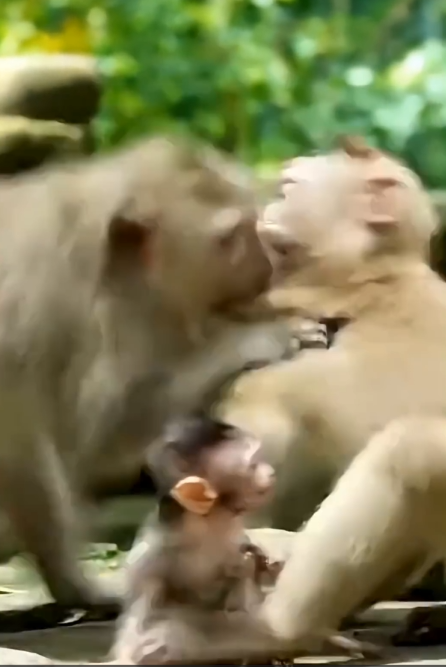
During the confrontation, I noticed subtle interventions from other troop members. An older female barked sharply, a warning to both males. Another younger male chirped, mimicking aggressive vocalizations to signal his alignment. These social signals are vital in monkey society; they can de-escalate or escalate fights, influence outcomes, and maintain troop cohesion. The presence of witnesses added a layer of psychological pressure, forcing both Kiro and Balu to fight not just for themselves but for social validation.
After several minutes of heavy fighting, both monkeys began to show signs of fatigue. Kiro’s breathing became rapid, his movements slightly less precise. Balu’s attacks lost some of their force, his swings less accurate. Yet neither backed down. The battle had transformed from a simple skirmish over figs into a test of endurance, courage, and determination.
Finally, the turning point came unexpectedly. Kiro feigned a retreat, backing toward a sturdy branch while appearing vulnerable. Balu advanced aggressively, ready to strike. At the last moment, Kiro twisted sharply, leaping upward and striking Balu on the side of the head. Balu staggered, momentarily disoriented. Kiro seized the advantage, using his speed to force Balu down the tree and toward a lower branch.
Balu, recognizing the shift in momentum, made a strategic decision. Instead of continuing the fight, he emitted a series of vocalizations that signaled surrender—not humiliation, but acknowledgment of the younger male’s temporary advantage. Kiro, exhausted but victorious in spirit, stopped attacking. Both monkeys sat on separate branches, panting, eyes wary but alert. The troop observed silently, recognizing the conclusion without further intervention.
After the fight, social dynamics within the troop subtly shifted. Kiro had demonstrated his strength and cunning, gaining respect from peers and acknowledgment from elders. Balu, though defeated in this confrontation, maintained his overall authority, having chosen to end the fight strategically rather than risk serious injury. The lesson for the troop, particularly for younger monkeys, was clear: conflicts are inevitable, but strategy, endurance, and adaptability are as important as raw strength.
Interestingly, the aftermath of the fight also highlighted cooperation and reconciliation. Both males engaged in grooming behaviors shortly afterward, signaling the restoration of social bonds. In monkey society, even after intense conflict, maintaining relationships is crucial for long-term survival. Aggression is balanced by cooperation, and dominance is tempered by social cohesion.
Observing this fight provided insights not only into monkey behavior but also into the complexity of their social systems. The conflict was a microcosm of survival strategies, teaching the troop valuable lessons in hierarchy, respect, and the consequences of challenge. Young monkeys watched and learned, absorbing information about risk, strategy, and the importance of reading social cues.
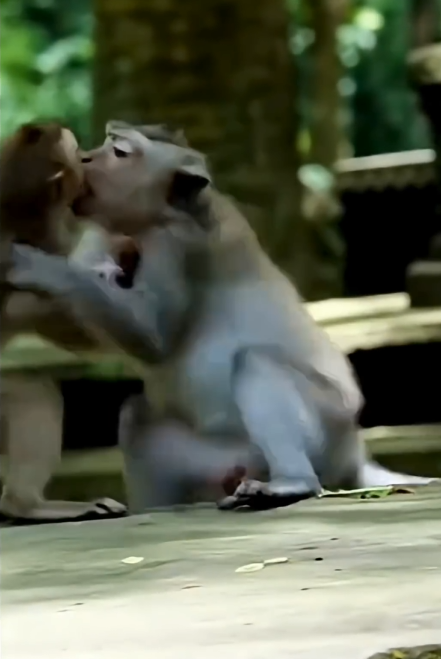
The fight also reinforced the physical and mental demands placed on dominant males. Maintaining status requires vigilance, strength, and the ability to navigate unpredictable challenges. For Kiro, the battle was a coming-of-age moment, solidifying his reputation as a capable and ambitious member of the troop. For Balu, it was a reminder that leadership is not static; it must be continuously defended and negotiated through both confrontation and social intelligence.
By the end of the day, peace returned to the forest. Leaves shimmered in the afternoon sun, birds resumed their songs, and the troop moved through the trees with fluid grace. The confrontation, while intense, had reinforced social bonds and clarified hierarchies, ensuring the troop’s continued stability. Kiro and Balu, now calmer, rested side by side in a shared tree, their earlier aggression replaced by mutual respect and cautious acknowledgment of each other’s strength.
The story of this fight illustrates the delicate balance of monkey society. Aggression is natural, sometimes necessary, but it is always governed by rules, social cues, and consequences. Both monkeys fought heavily, risking injury and social disruption, yet the outcome reinforced the principles that allow the troop to function: dominance, respect, and reconciliation.
Observing the troop over the following days, it became clear how such conflicts shape long-term behavior. Younger monkeys learned to recognize the risks of challenge, the importance of strategy, and the value of patience. Elders demonstrated the consequences of overstepping boundaries while also showing how reconciliation restores cohesion. Every interaction, including intense fights, contributes to the collective knowledge and survival of the group.
In conclusion, the heavy fight between Kiro and Balu was more than a mere clash over food—it was a complex interplay of strength, strategy, social learning, and survival. Through this intense confrontation, both monkeys demonstrated their abilities, tested limits, and reinforced the rules that govern their society. The troop benefited as a whole, with younger members learning essential lessons, and the social hierarchy reaffirmed through both conflict and cooperation.
Life in the forest is unpredictable and often harsh, but it is also filled with lessons about resilience, intelligence, and community. Observing two monkeys fight heavily reminds us that even in moments of intense aggression, there is purpose, structure, and ultimately, growth. For Kiro, Balu, and the troop, the confrontation was a defining experience—painful, exhausting, and yet necessary—a testament to