In the heart of a dense forest, where sunlight filters through a canopy of emerald leaves and the air vibrates with the calls of birds and the rustle of branches, the lives of monkeys unfold in complex, fascinating ways. Unlike many solitary creatures, monkeys live in highly social groups known as troops. Within these troops, hierarchies exist, relationships are formed, and survival depends as much on social skill as it does on physical ability. One of the most compelling aspects of monkey life is how young members are gradually integrated into the troop—a process filled with care, guidance, discipline, and sometimes playful mischief.
The troop I observed was particularly interesting. It consisted of about thirty members, ranging from newborn infants to wise elders who had lived for many seasons. At first glance, the troop might seem chaotic—monkeys swinging through the trees, chattering, grooming, and occasionally squabbling over food. Yet beneath this apparent disorder lies a highly structured social system, carefully maintained through cooperation, observation, and shared responsibility.
For young monkeys, integration into the group is a gradual process. The newborns spend the first few weeks of life clinging to their mothers, entirely dependent on her care. During this period, the mother is vigilant, protecting her infant from both environmental dangers and social friction within the troop. She teaches the infant basic behaviors: how to grip branches securely, how to vocalize effectively, and how to interpret the subtle signals of other troop members.
As the infant grows, the role of the broader troop becomes increasingly important. This is when social learning takes precedence over physical survival. Young monkeys begin to explore the world beyond the safety of their mother’s arms, tentatively approaching older siblings and other group members. At this stage, the troop serves as both teacher and guardian.
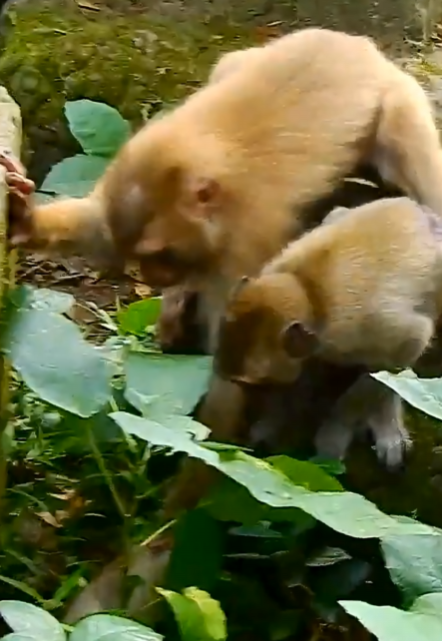
I observed a young monkey named Liko, just a few months old, whose integration into the troop was particularly illustrative. Liko was curious, energetic, and occasionally reckless—traits that endeared him to some troop members while frustrating others. He would reach for fruit before his mother allowed him to eat, chase insects through the underbrush, and even attempt to mimic the grooming behaviors of older monkeys, often clumsily.
The troop responded with a mixture of tolerance, correction, and encouragement. Older siblings and aunts would allow Liko to play alongside them, demonstrating how to properly groom or handle food. If he overstepped, a gentle nip or a vocal reprimand would redirect him, teaching boundaries without unnecessary aggression. Monkeys have a remarkable capacity for patience with young members, understanding that mistakes are part of the learning process.
Integration is not just about individual relationships; it also involves understanding the troop’s hierarchy. Every monkey must recognize the dominant males and females, learn whom to approach for play or grooming, and whom to avoid during disputes. For Liko, this meant observing interactions carefully. On one occasion, he attempted to snatch a piece of fruit from a dominant male. The male growled, bared his teeth, and swatted the fruit away. Liko’s mother immediately intervened, pulling him back and grooming him to soothe his fear. Later, an older female demonstrated the correct approach—how to request food through submission signals and gentle gestures.
This process is crucial for survival. Young monkeys who fail to understand social cues or who act too aggressively risk injury, social exclusion, or even death. The troop ensures that each juvenile learns these rules by providing a network of support, correction, and mentorship.
Play is another essential component of integration. Young monkeys spend hours chasing, wrestling, and swinging through trees together. Play is not frivolous; it teaches coordination, strengthens muscles, and, most importantly, establishes social bonds. During these sessions, older juveniles often take on mentoring roles, showing younger monkeys how to navigate complex branch networks, how to read subtle facial expressions, and how to respond to threats.
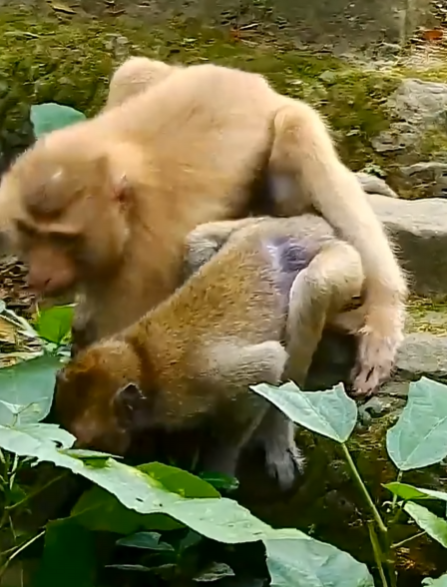
I watched as Liko engaged in a game of chase with three other young monkeys. Initially, he was clumsy, falling off low branches and losing his balance mid-leap. But the other juveniles paused to let him catch up, occasionally guiding him with gentle nudges or vocal encouragement. The play ended with grooming, a social ritual that cemented trust and friendship within the group.
Grooming, in particular, is a cornerstone of troop life. It is both practical and social. Practically, it removes parasites and keeps fur clean, which is vital for health. Socially, grooming strengthens alliances and establishes bonds of trust. Young monkeys are introduced gradually to grooming rituals. At first, they observe from a distance, then participate under supervision, and eventually engage independently.
Integration also involves exposure to the dangers and responsibilities of troop life. The troop teaches young monkeys how to recognize predators, where to find food, and how to react to environmental hazards. When a hawk swooped overhead during my observation, Liko froze in fear. An older sibling grabbed him gently, moving him to the safety of a lower branch while the rest of the troop scattered and regrouped after the threat passed. These experiences, while frightening, are essential lessons in survival.
Discipline is another tool the troop uses to ensure young monkeys learn appropriate behavior. It is not arbitrary punishment but rather corrective action intended to teach. I witnessed an incident where Liko grabbed a piece of fruit from a female without waiting for permission. She scolded him with a sharp vocalization and a quick tap on the arm. Liko shrank back, startled, but the lesson was clear: social boundaries matter. This balance of play, guidance, and correction is what allows young monkeys to develop confidence without overstepping.
The troop also teaches empathy and cooperation. Liko observed older monkeys sharing food and helping injured members. One afternoon, a juvenile had fallen and scraped its leg. Members of the troop hovered nearby, grooming and comforting the injured monkey, ensuring it was not left vulnerable. Liko watched intently, learning that troop life involves caring for one another, not just oneself.
Integration is a gradual but deliberate process. By the time a young monkey reaches six months to a year, it has learned how to interact appropriately with almost every member of the troop. It understands the nuances of dominance and submission, the importance of cooperation, and the rules that govern play, grooming, and foraging. The troop has provided a scaffolded learning environment, combining observation, direct instruction, and experiential learning.
In observing Liko, I was struck by the complexity and sophistication of monkey social structures. The troop functions almost like a classroom, with each member playing a role in the education of the young. Mothers provide the initial safety and basic instruction. Older siblings and peers offer examples and corrections. Dominant members enforce boundaries. And the entire group models cooperation, empathy, and problem-solving.
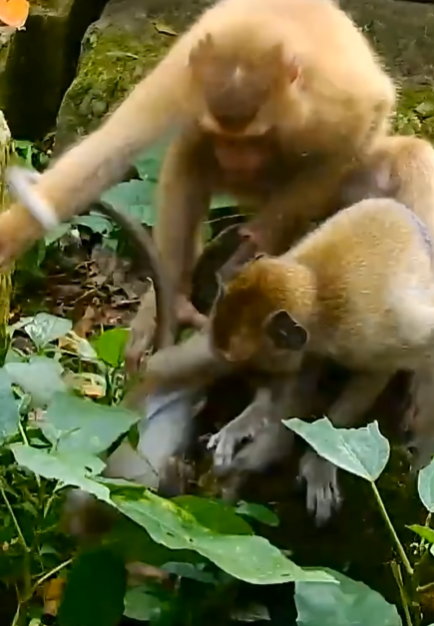
The process of integration is not without its challenges. Some young monkeys resist guidance, testing limits and provoking stronger members. Others may struggle with fear or anxiety, requiring patience and reassurance. Yet the troop adapts, using a mix of individual attention and social pressure to help each juvenile find its place.
By the end of my observation period, Liko had transformed. He was still playful, still mischievous, but now his actions were measured and socially appropriate. He approached food-sharing situations with patience, groomed peers with care, and navigated the forest canopy with confidence. The troop’s collective effort had succeeded: Liko was now fully integrated, capable of surviving, thriving, and contributing to the group.
The life of monkeys, particularly in terms of social integration, offers profound insights into the importance of community, mentorship, and learning through observation and experience. Young monkeys are not left to fend for themselves; instead, they are carefully guided, corrected, and nurtured by a network of social relationships. This ensures not only their survival but also the cohesion and stability of the troop as a whole.
In the dense forest, where life can be harsh and unpredictable, the troop provides both structure and flexibility. Each member plays a role in the ongoing education of the young, modeling behavior, enforcing rules, and providing opportunities for play and experimentation. For young monkeys like Liko, this guidance is invaluable. Without it, they would struggle to navigate social hierarchies, avoid danger, or develop the skills needed to forage, communicate, and cooperate effectively.
Integration into the troop is more than just learning rules—it is the foundation of identity and belonging. Through interaction, observation, and participation, young monkeys discover who they are, how they relate to others, and what it means to be part of a community. The lessons they learn in these early months and years have lifelong consequences, shaping their social abilities, confidence, and survival skills.
Ultimately, the story of Liko and his troop is a testament to the remarkable intelligence and social sophistication of monkeys. It reminds us that community is not just a human construct, but a fundamental aspect of life for many species. It illustrates the delicate balance between independence and guidance, play and discipline, curiosity and caution. Most importantly, it shows that growth is rarely achieved in isolation; it requires support, mentorship, and the shared efforts of those who care.
As I watched Liko swing confidently through the canopy, pausing to groom a sibling or share a piece of fruit, I realized the troop had succeeded not just in teaching him the mechanics of monkey life, but in helping him become a fully integrated member of a social network—a young monkey capable of navigating the complexities of his world with skill, empathy, and confidence.
In the forests where sunlight dances through leaves, the life of monkeys continues in all its richness. And for young monkeys, integration into the troop is a journey that is both challenging and rewarding, demanding patience, courage, and trust. Thanks to the guidance of their elders, the playful experiments of their peers, and the watchful eyes of their mothers, young monkeys like Liko find their place in the world, learning the lessons that will guide them for a lifetime.