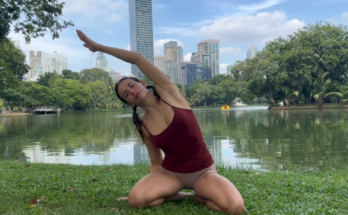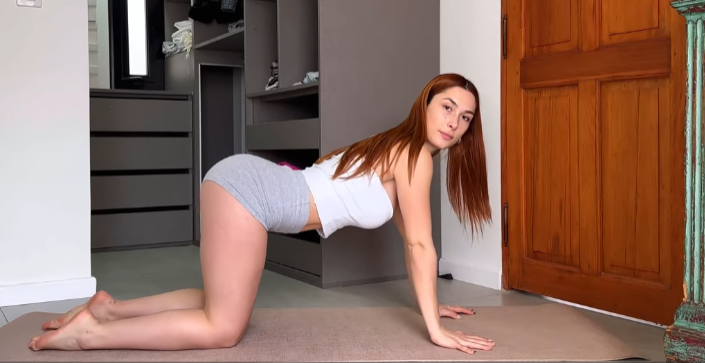
There are moments when stress arrives without warning—your chest feels tight, your breath shortens, and your thoughts begin to race. In those moments, you don’t need a long workout or a complex routine. You need relief now. Feel Calm Now: 7 Minute Full Body Yoga for Stress and Anxiety Relief (PART 2) is designed for exactly that purpose: to gently reset your nervous system, soften your body, and bring your mind back to a place of ease in just a few intentional minutes.
This short practice builds on the foundation of Part 1, but it also stands completely on its own. Whether you are returning to deepen your calm or discovering this sequence for the first time, these seven minutes offer a powerful reminder that peace is never far away—it lives in your breath, your body, and your awareness.
Why Short Yoga Practices Are So Effective
When anxiety or stress is high, long sessions can feel overwhelming. The beauty of a seven-minute practice is its accessibility. You can do it in the middle of a busy day, during a work break, before bed, or whenever your nervous system needs support.
Short practices work because they focus on quality, not quantity. Every movement and breath in this sequence is intentional, chosen to calm the mind rather than stimulate it. Instead of activating adrenaline, the body is guided toward relaxation and balance.
This practice is not about flexibility or strength—it is about regulation. It helps your body shift out of “fight or flight” and into “rest and digest.”
Beginning with Breath: Immediate Calm
The moment you begin, you are invited to pause. Whether seated or lying down, you are encouraged to find a position that feels safe and supported. Hands rest where they feel most comforting—on the belly, the chest, or gently by your sides.
The first few breaths are slow and deliberate.
Inhale through the nose, feeling the belly rise.
Exhale slowly through the mouth, releasing tension.
This type of breathing sends a powerful message to the brain: you are safe. Heart rate begins to slow. Muscles soften. Even before movement begins, anxiety starts to loosen its grip.
This breathing alone can be enough to reduce stress—but in this practice, it becomes the gateway to gentle, full-body release.
Gentle Neck and Shoulder Release
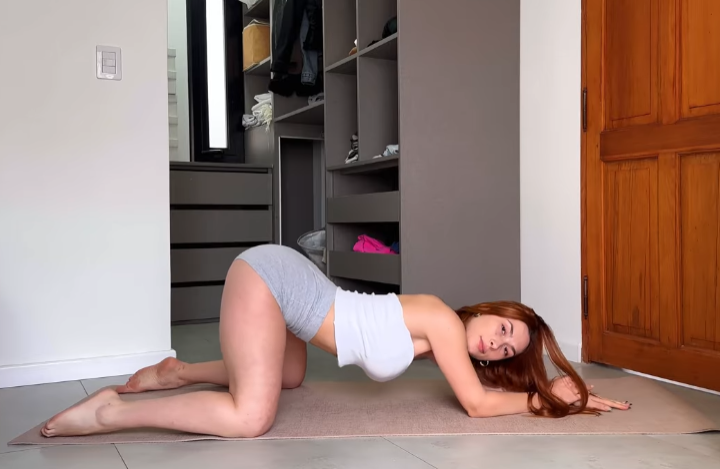
Stress often gathers in the neck and shoulders, creating stiffness, headaches, and discomfort. The practice gently introduces small movements here—slow head tilts, subtle rotations, and soft shoulder rolls.
There is no forcing or stretching to the edge. Each movement is slow, mindful, and guided by breath. As you inhale, you create space. As you exhale, you let go.
These movements help relieve built-up tension and improve circulation, signaling to the body that it no longer needs to stay guarded.
Even a few slow circles can make a noticeable difference in how you feel.
Flowing Through the Spine: Releasing Stored Stress
The spine plays a major role in emotional regulation. Gentle spinal movements help release stress that has been stored in the body, often without our awareness.
In this short practice, slow spinal flexions and extensions awaken the back without effort. The movement is rhythmic and soothing—almost like rocking a baby.
As the spine moves, the nervous system responds. Each gentle wave through the back encourages relaxation and grounding.
You may notice your breath naturally becoming deeper and smoother as these movements continue.
Soft Full-Body Stretching
Even in just seven minutes, it is possible to stretch the entire body in a calming way. This practice introduces simple, accessible stretches for the arms, legs, hips, and lower back.
Movements are slow and held just long enough to encourage release, not strain. There is always the option to modify or rest.
Stretching in this way increases blood flow, reduces muscle tension, and helps clear mental fog. It also reconnects you with physical sensations, pulling attention away from anxious thoughts and back into the body.
The focus remains on comfort, not depth.
Grounding Through the Legs and Hips
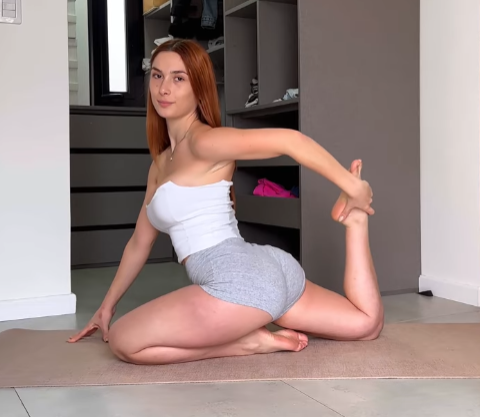
Anxiety often creates a feeling of being ungrounded or restless. Gentle engagement of the legs and hips can help restore a sense of stability.
Simple poses that connect you to the floor or mat bring awareness downward, anchoring energy and calming the mind. Even minimal movement in the hips can release deep-seated tension and emotional stress.
As the body feels more supported, the mind follows.
This grounding effect is one of the reasons yoga is so effective for anxiety relief—it reconnects you to the present moment through physical sensation.
Calming Twists: Refreshing the Nervous System
Gentle twists are included to help detoxify tension and refresh the body. Twists are done slowly and mindfully, guided by breath rather than force.
Inhale to lengthen.
Exhale to twist softly.
These movements help relieve pressure in the back and abdomen, while also stimulating the parasympathetic nervous system—the part responsible for rest and relaxation.
Twists often leave you feeling lighter, both physically and mentally.
Bringing It All Together: Mindful Flow
As the practice continues, movement and breath become one. There is a sense of flow, even though the sequence remains gentle and accessible.
Each transition is slow, allowing your nervous system to stay calm rather than startled. The mind has less space to wander, as attention stays anchored in breath and sensation.
This mindful flow is what transforms simple movements into a powerful tool for stress relief.
The Power of Stillness
One of the most important moments in this seven-minute practice is stillness. Near the end, movement slows, and you are invited to pause completely.
In this stillness, the effects of the practice integrate.
Heart rate is lower.
Breathing is steady.
Muscles are relaxed.
This pause allows your body to recognize the shift that has occurred—from tension to calm.
Even a brief moment of stillness can be deeply restorative when the nervous system is supported beforehand.
Closing with Intentional Breathing
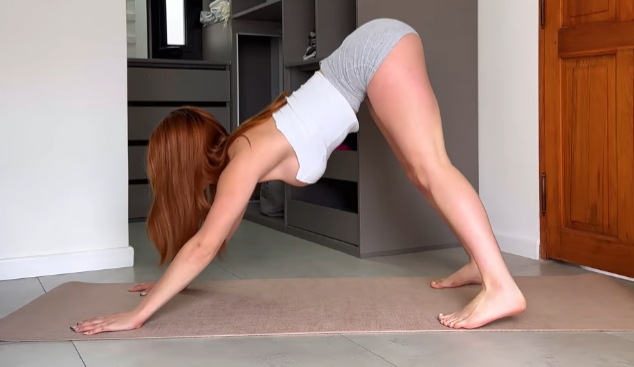
The practice ends with a few final breaths, reinforcing the sense of calm you’ve created. You may be guided to lengthen the exhale, which further encourages relaxation.
Each breath becomes an anchor—something you can return to anytime stress arises.
You are reminded that this calm is not temporary or external. It is something you can access again, whenever you need it, through breath and awareness.
Why This 7-Minute Practice Works
This practice works because it respects the body’s response to stress. Instead of pushing or distracting, it soothes and regulates.
It is effective because:
- It is short and approachable
- It focuses on the nervous system, not performance
- It combines breath, movement, and awareness
- It meets you where you are emotionally and physically
Seven minutes may seem small, but when used intentionally, it can change the direction of your entire day.
When to Use This Practice
Feel Calm Now: 7 Minute Full Body Yoga for Stress and Anxiety Relief (PART 2) is ideal for:
- Moments of acute stress or anxiety
- Midday mental overload
- Before bed to calm racing thoughts
- After difficult conversations or emotional moments
- Anytime you need to reset quickly
It fits easily into real life—no special setup required.
Carrying the Calm Forward
As you return to your day, notice how you feel. Perhaps your shoulders are lower. Your breath is fuller. Your thoughts feel less urgent.
You didn’t escape stress—you learned how to soften it.
This practice reminds you that calm is not something you have to earn or wait for. It is something you can create, gently and intentionally, in just seven minutes.
Whenever life feels overwhelming, return to this sequence. Breathe. Move softly. Pause.
And remember: calm is always closer than you think.