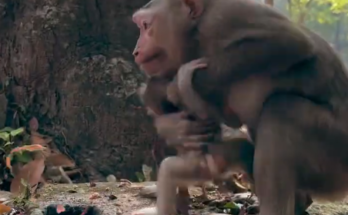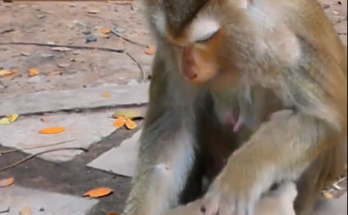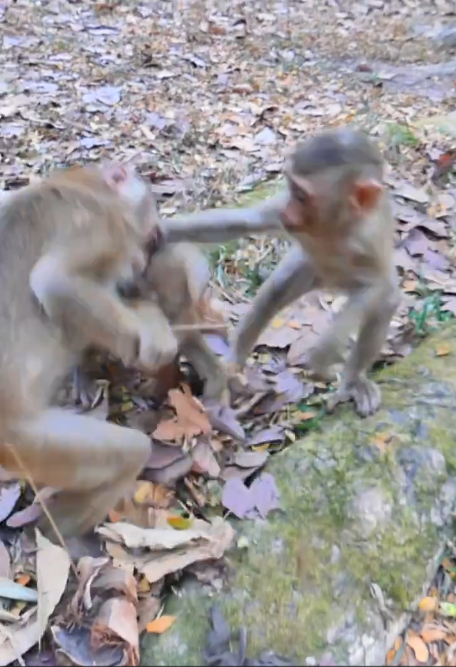
In the dense heart of the jungle, where sunlight filtered through swaying canopies and the air was thick with the scent of earth and foliage, a young monkey clung to the branches, its eyes wide with curiosity and uncertainty. Life for this small creature was a constant lesson in observation, adaptation, and survival. Every leap, every grasp, every cautious exploration of the world around it carried the weight of discovery. On the surface, it was simply a story about a young monkey growing up in the wild. Yet, beneath this tale lay a profound truth: the journey of this young monkey is a microcosm of life’s broader reality.
From the very beginning, the young monkey’s life was defined by dependence. It relied on its mother for nourishment, protection, and guidance. The mother provided not only food but also the confidence to navigate the complex social structures of the troop. She taught the young monkey how to identify ripe fruit, avoid dangerous predators, and interact with other members of the group. In many ways, the early days of the young monkey mirror the formative years of human life, where we rely on parents, teachers, and mentors to guide our first steps in understanding the world.
Yet, dependence is temporary. As the young monkey grew stronger and more capable, the mother began to encourage independence. It was a gradual process — gentle nudges, careful observation, and, at times, firm discipline. When the monkey hesitated to climb higher branches or explore unfamiliar territory, the mother would stand back, allowing the young one to struggle, to stumble, and to learn from its own mistakes. This mirrors human reality: growth often requires letting go of comfort and facing challenges alone. Whether it is a child learning to walk, a teenager navigating social relationships, or an adult entering a new career, independence is earned through trial, error, and perseverance.
The young monkey’s first solo foraging trips were fraught with difficulty. The forest was a labyrinth of hidden dangers and opportunities. Some fruits were rotten, some insects too quick to catch, and predators lurked in unseen corners. Hunger was a constant companion, teaching patience and strategy. The young monkey learned to observe patterns: which trees bore fruit at certain times, which paths led safely through the undergrowth, and how to approach other monkeys without conflict. In these moments, life revealed a universal truth: survival, success, and progress are rarely effortless. Effort, observation, and resilience are indispensable.
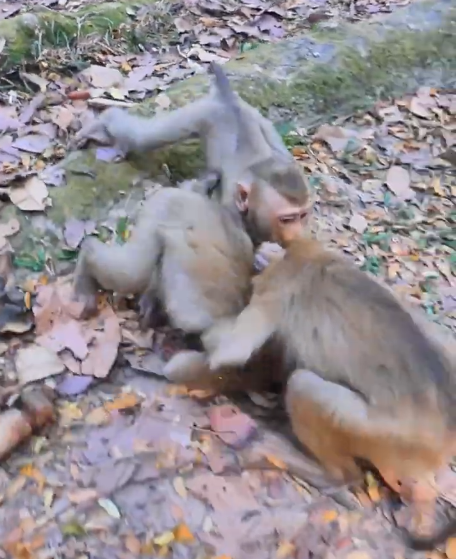
Social dynamics in the troop added another layer of complexity. Dominance, competition, and cooperation coexisted in a delicate balance. The young monkey had to navigate these relationships carefully. Challenging a dominant member too soon could lead to aggression, while retreating too often could result in isolation. Cooperation, sharing food, and forming alliances became crucial strategies for survival. This microcosm mirrors the human world, where social intelligence, negotiation, and empathy are essential for thriving in communities. Workplaces, families, and social groups all require similar navigation, where understanding hierarchy, collaboration, and timing can determine one’s success and well-being.
Yet, the jungle was not merely a place of struggle; it was also a place of learning and discovery. Each challenge, each failure, and each small triumph shaped the young monkey’s understanding of itself and the world. A misstep on a slippery branch taught caution; a successful leap to a fruiting tree taught confidence; finding a hidden water source taught problem-solving and resourcefulness. These lessons parallel the broader human experience: mistakes are inevitable, but they provide the raw material for growth, resilience, and wisdom. Life does not hand success on a platter; it is earned through effort, observation, and adaptation.
One of the most poignant aspects of the young monkey’s story was the interplay between dependence and independence. Even as it ventured alone, the presence of the troop — and especially the mother — remained a subtle anchor. Occasional guidance, a distant watchful gaze, or a protective intervention reminded the young monkey that while independence is essential, connection and support are never irrelevant. In human life, this duality is evident: we grow, struggle, and strive independently, yet the knowledge that support exists — from family, friends, mentors, or community — provides security and courage. True growth often balances autonomy with interdependence.
Resilience became the defining trait of the young monkey. Days of hunger, near misses with predators, and the challenges of navigating unfamiliar territory taught endurance. Failure was not catastrophic; it was instructive. Over time, the young monkey developed confidence, agility, and foresight. It could anticipate obstacles, recognize danger, and seize opportunities. Life, in its broader reality, is much the same: resilience is forged through hardship, adaptability, and persistence. Success is rarely linear, and setbacks are as integral to growth as triumphs.
Moreover, the story of the young monkey underscores the importance of perspective. To an outsider, the struggles of a small monkey may seem trivial or harsh, yet for the monkey, each decision carries weight. Similarly, in human life, challenges are often relative. What appears insignificant to one person may be life-altering to another. Respecting the scale of struggle — for oneself and for others — fosters empathy, humility, and understanding. Life’s broader reality is composed not only of personal challenges but of shared experiences, interconnected struggles, and collective learning.
The young monkey also learned the value of patience. Quick solutions rarely yielded lasting results. Waiting for fruit to ripen, observing patterns of other animals, and timing movements carefully were essential for survival. Patience in action, patience in observation, patience in decision-making — these qualities are mirrored in human endeavors. From pursuing education and careers to building relationships and personal skills, patience and timing often dictate outcomes more than impulsive effort.
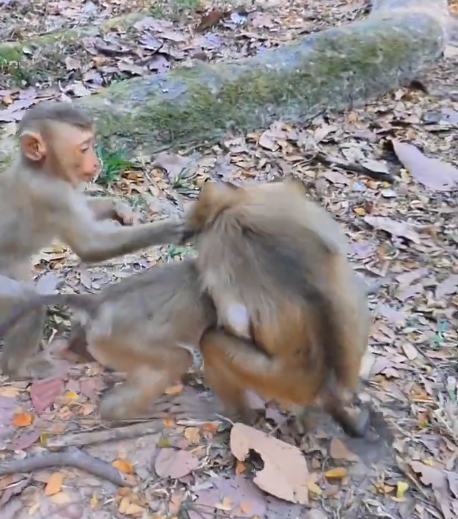
Finally, the young monkey’s journey highlighted the inevitability of change. Seasons shifted, the troop’s composition evolved, and the environment itself transformed. What worked yesterday might fail today. Adaptability, flexibility, and continuous learning became crucial. This mirrors the human condition: life is dynamic, unpredictable, and often challenging. The capacity to adjust, learn, and grow is what defines survival, success, and fulfillment.
In conclusion, the story of the young monkey is more than a tale from the jungle; it is a reflection of life itself. It illustrates dependence and independence, struggle and triumph, patience and adaptability. It teaches that growth is earned through effort, observation, and resilience. It reminds us that social navigation, empathy, and cooperation are essential, even as we strive for personal autonomy. It underscores the inevitability of change and the importance of learning from failure.
Just as the young monkey learns to forage, leap, and survive, humans must navigate the complexities of life, relationships, and personal growth. The jungle may be more literal for the monkey, while human society is the jungle for us — filled with challenges, opportunities, lessons, and rewards. The microcosm of a young monkey’s life mirrors the broader reality of human existence: survival, learning, and growth are intertwined; struggle is unavoidable, yet transformative; and independence, tempered with connection, is essential for thriving.
In the quiet moments, as the young monkey rests after a day of exploration and discovery, there is a sense of accomplishment and understanding. Hunger has been met, obstacles navigated, and lessons absorbed. Life moves forward, one careful leap at a time. And in this small, dense jungle, a universal truth is revealed: the struggles and triumphs of one creature echo the journey of all life. Growth is hard. Survival is constant. Resilience is earned. And every living being, no matter how small or seemingly insignificant, reflects the broader realities of life itself.