In a quiet village surrounded by lush green fields and the gentle hum of nature, a small child named Lina lived with her family. She was no more than three years old, with soft, golden hair that glimmered in the sun and eyes that sparkled with curiosity and innocence. Lina was cheerful, playful, and full of life—but there was one thing about her that made her different from other children: she wanted only her mother. Not the elder siblings who tried to guide her, not the younger ones she occasionally babysat, only her mother, and her mother alone.
Lina’s mother, Anya, was a kind and gentle woman. She had a warm smile that could melt worries and hands that were always busy, either cooking, tending the garden, or caring for her family. Her love for Lina was unconditional, deep, and unwavering. Yet, as a mother of three, Anya often had to divide her attention. She had a teenage daughter, a young boy, and baby twins. The household was bustling with activity, laughter, cries, and the constant need for care.
Despite all this, Lina’s little heart was singular in its desire. Whenever her mother stepped away for even a moment, Lina would cry. If her elder sister tried to entertain her, she would push her away, shaking her tiny fists and calling out for her mother. If the baby twins cooed and gurgled beside her, Lina would look around, frown, and insist, “Mama! Only Mama!” Her cries were not spoiled or demanding; they were a pure expression of love and trust, the kind of bond that only a mother and child could share.
One afternoon, Anya was preparing lunch in the kitchen. The scent of fresh bread and herbs filled the air. Lina toddled behind her, holding onto her mother’s skirt, her little feet making soft pattering sounds on the wooden floor. Suddenly, Anya had to step outside to water the garden. She bent down and whispered, “Be a good girl, Lina. I’ll be back in a few minutes.” But Lina shook her head vigorously. Her little brows furrowed, and tears filled her eyes.
“No! No! Only Mama!” she cried, throwing herself onto the floor in a tiny but dramatic protest. Her older brother tried to pick her up gently, speaking soothing words, but Lina wriggled free, flinging her arms out toward the door where her mother had disappeared. “Mama! Mama!” she shouted, her voice trembling with urgency.
Even though Anya had stepped out just for a moment, Lina’s attachment was fierce and unwavering. She didn’t care about who else was around. The elders could guide, comfort, or distract her, and the younger ones could play beside her, but nothing could replace the presence of her mother. Her world was small and simple: the one person she trusted completely, the one person who could calm her, comfort her, and make everything feel safe.

The villagers often watched this bond with a mix of amusement and admiration. It was said that Lina’s devotion to her mother was extraordinary. Some whispered that such intense attachment was rare, a sign of a heart that was deeply secure in the love it had received. Others thought it might be a phase that all children went through, but those who knew Anya and Lina could see that this was more than a phase—it was a testament to a pure, unbreakable bond between mother and child.
Even in play, Lina’s attachment showed. If the other children tried to join her in games, she would start but then look around anxiously. Her attention was never fully on them. Her laughter would start but fade as soon as she realized her mother was not watching. When Anya peeked through the window or called her name, Lina’s face would light up, and she would run to her mother with a speed and joy that made everyone smile.
One day, Lina’s father brought home a small puppy, thinking it might be a delightful companion for the children. The puppy yipped and wagged its tail, trying to play with Lina. But she looked at it with skepticism. She bent down, poking the puppy gently, then glanced around the room. “Mama?” she asked, her voice tiny but firm. The puppy whimpered in confusion, and Lina turned away, running straight to her mother who was sitting on the veranda, watching the sunset.
The scene repeated every day. Whether it was a toy, a sibling, or a neighbor trying to entertain her, Lina’s eyes always searched for one person: her mother. The bond was so intense that even in her sleep, she would sometimes cry out for Anya. Anya, for her part, never scolded or discouraged the attachment. She understood that this love was genuine and precious. She knelt by Lina often, hugging her tightly, whispering words of comfort, and allowing the child to cling as long as she needed.
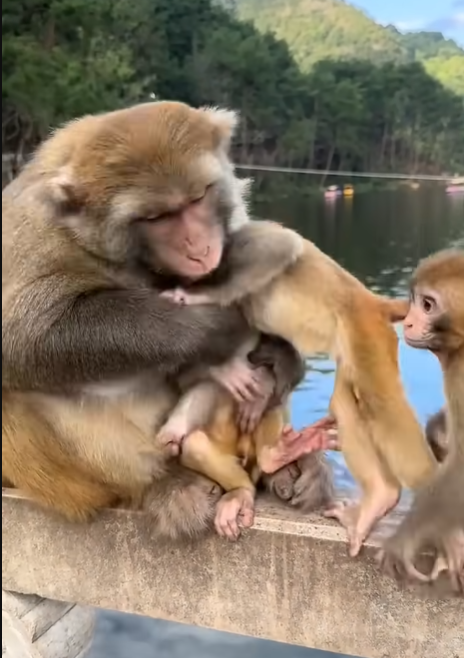
Anya also knew that this attachment had its lessons. She gently encouraged Lina to explore, to play with the other children, and to trust that she would always return. Slowly, over time, Lina began to allow brief moments where she interacted with others without constant distress, but the underlying truth remained: when it mattered most, Lina wanted only her mother.
There was a village festival approaching, and all the children were preparing for a small performance. Lina’s elder sister, Maya, tried to teach her a dance. Lina’s little brother tried to follow along. But when the performance day came, Lina refused to participate until Anya stepped onto the stage with her. Only then, with her mother nearby, did Lina smile, dance, and clap with delight. The crowd watched in awe at the pure, unfiltered joy on Lina’s face, a joy that came from seeing her mother right beside her.
This attachment was not born out of selfishness. Lina was capable of love for others, of kindness, and of sharing. But the depth of her need for her mother was different. It was a primal, heartfelt connection. The villagers often said it was like a tether between two hearts, invisible yet unbreakable. No matter what happened in the day—whether laughter, play, or mischief—Lina always sought the comfort, warmth, and security that only her mother could provide.
Even as Lina grew, this bond remained. It wasn’t about dependency in a negative sense, but about love, trust, and a sense of safety. Anya understood that the child’s insistence on having only her was natural and beautiful. She encouraged exploration, independence, and curiosity, but always with the reassurance that she would be there. This balance allowed Lina to grow confident, yet secure in the knowledge that the heart she loved most would always be her anchor.
At night, when the household quieted, Lina would climb into her mother’s lap, resting her small head against Anya’s chest. She would murmur softly, sometimes recounting her day, sometimes simply sighing in contentment. “Only Mama,” she would whisper before drifting into sleep. And Anya would hold her close, feeling the warmth of a bond that was rare, profound, and unshakable.
The story of Lina and her devotion to her mother spread quietly throughout the village. Neighbors often remarked on it, calling it a beautiful example of love between a mother and child. The elders would nod knowingly, saying that such a bond was a treasure, one that could never be measured in words or gestures, only felt in the heart.
Indeed, for Lina, the world could be full of noise, play, toys, and even other people’s affection—but nothing mattered more than her mother. Not the elders who guided her, not the little siblings who played beside her, only and only her mother. That singular love, pure and unwavering, shaped her days, her emotions, and the way she saw the world.
In the years to come, Lina would grow, learn, and meet new people. But the lessons of love, trust, and connection she received from her mother in those early years would stay with her forever. The bond they shared—the quiet mornings, the clinging arms, the whispered words, the moments of shared joy—would remain a foundation on which she could build confidence, empathy, and strength.
And so, the simple truth remained: a child’s heart, in its innocence and purity, often knows exactly what it wants. For Lina, that was simple, yet profound: not the elder, not the little, not anyone else, only her mother. A love that was timeless, unwavering, and unbreakable. ❤