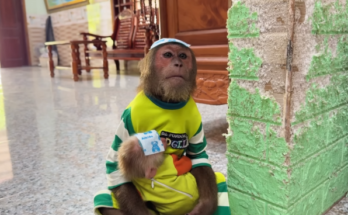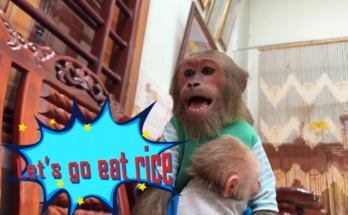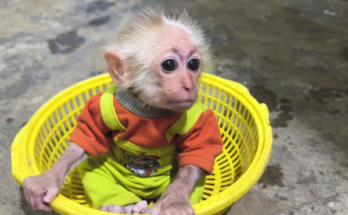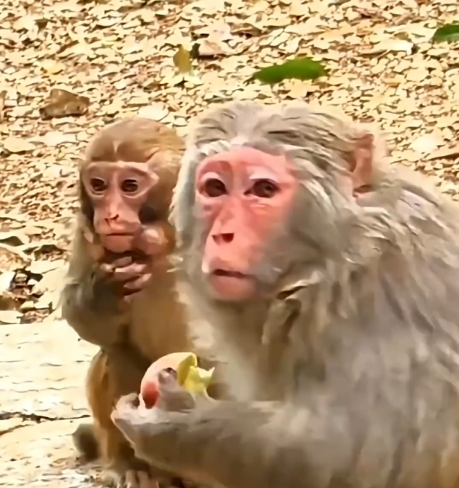
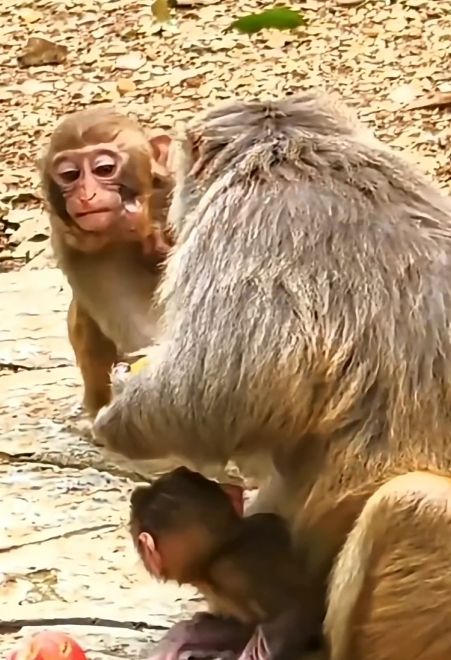
It was a warm afternoon in the small village nestled on the edge of a sprawling forest. The sun cast long shadows over the dusty roads, and the air was filled with the chatter of children, the clucking of hens, and the occasional bark of a stray dog. Among the villagers was a young boy named Arin, about ten years old, with bright, curious eyes and a heart brimming with kindness. Arin loved animals more than anything in the world. Birds, dogs, cats, and especially monkeys fascinated him.
Just beyond the village, in the thick canopy of the forest, a troop of monkeys played among the branches. They were clever, mischievous, and known to cause trouble for villagers by stealing food, fruit, or anything shiny. Among the troop was a particularly greedy monkey named Koko. Koko had a reputation among the forest animals for hoarding anything he could get his hands on, often taking food from other monkeys and even from humans if they weren’t careful.
That afternoon, Arin was walking home from school with a small basket of fruits his mother had packed for him: bananas, mangoes, and a few peanuts. He hummed to himself, enjoying the sun on his face and the gentle sway of the trees overhead. But he wasn’t alone. From the treetops, Koko’s sharp eyes spotted the basket. His small, nimble fingers itched to snatch it away.
“Not today,” Arin whispered to himself, sensing the shadow above. But before he could react, Koko leapt down with astonishing speed, landing beside him. The monkey’s eyes gleamed with greed as it reached for the basket, scattering fruits everywhere.
Arin was startled. “Hey! That’s mine!” he shouted, trying to protect the basket. But Koko’s determination was unmatched. The monkey grabbed a banana, stuffing it quickly into his mouth, and then snatched a handful of peanuts. Koko’s greed seemed insatiable; he didn’t stop, and his eyes darted toward the remaining fruits, calculating how to get everything.
Arin realized that he couldn’t match Koko’s speed or strength, but he could outsmart him. He remembered what his father had told him: “Sometimes, you win not by fighting, but by thinking.” Taking a deep breath, Arin’s mind raced for a plan.
Koko, meanwhile, continued his frenzy, ignoring the scattered fruits around him. He grabbed another mango and tried to climb a tree with it, but the fruit was heavy. Koko struggled, and the fruit slipped from his hands, rolling down the trunk and landing near Arin’s feet. The boy picked it up quickly, smiling faintly.
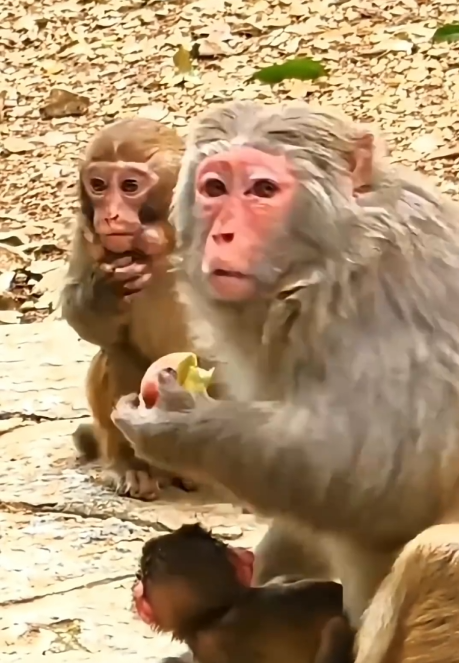
He noticed something: Koko’s greed wasn’t just for fun. The monkey seemed anxious, desperate, as though hoarding the fruits would somehow make him safer or stronger. Arin’s heart ached for the monkey, realizing that greed often came from fear. But he also knew that if Koko continued like this, the troop might scold him, or worse, he could fall from the trees with the heavy fruits.
“Wait a minute,” Arin said softly, an idea forming. He grabbed one of the mangoes and placed it gently a few feet away from himself. Then he made a show of holding out his hands as if to offer the rest. “Take what you want,” he whispered, stepping back.
Koko’s eyes lit up with excitement. The monkey dropped some of the fruits he had already stolen and leapt toward the mango, snatching it with a triumphant squeal. But as he reached for the rest, Arin moved slightly, subtly guiding the greedy monkey in a circle. He led Koko away from the basket and toward a soft patch of grass near the edge of the village.
The plan was simple but risky: let Koko indulge in a little greed, but keep him away from the main pile of fruits so no one would get hurt. The boy’s quick thinking worked. Koko, completely absorbed in the mango, didn’t notice the other fruits safely placed back into Arin’s basket. He climbed a low tree to enjoy his loot, squealing in delight, oblivious to the boy’s careful movements.
Arin’s heart pounded. “It’s working,” he whispered. With careful steps, he retrieved the scattered bananas and peanuts, arranging them back neatly in his basket. The other children in the village, who had gathered to watch the commotion, cheered silently for the boy’s cleverness.
But the situation wasn’t over. Koko’s greed grew, and he started jumping from branch to branch, trying to grab more than he could hold. Arin realized that if he didn’t act quickly, the monkey could injure himself. He remembered the trick his grandfather had taught him for handling mischievous animals: “Use kindness, not force. Animals respond to gestures and patience.”
Arin picked up a banana and tossed it gently a few meters away from Koko, landing in soft grass. The monkey paused, eyeing the banana. Slowly, cautiously, he climbed down and took the fruit. Arin smiled, tossing another piece further away. He repeated this, slowly guiding Koko to a clearing away from the village, until the greedy monkey was fully occupied with the fruits Arin had offered.
Once Koko was distracted, Arin quietly returned the remaining fruits to his basket. He had not only protected his food but also ensured that the greedy monkey would not harm himself or the troop. The other children clapped and cheered quietly, impressed by Arin’s clever handling of the situation.
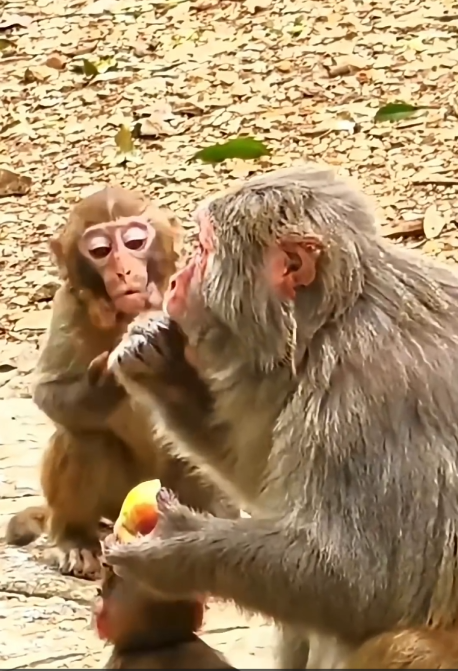
When Koko finally sat down, munching happily on the last of the fruits, Arin approached carefully. He held out a small piece of mango, placing it just out of reach. Koko looked up, eyes meeting Arin’s. There was a moment of understanding—a silent acknowledgment between boy and monkey. Arin didn’t take more than what he had offered; he simply ensured that Koko was satisfied and safe.
“Good boy,” Arin whispered, patting the ground gently. Koko squealed softly in response, as if in gratitude. The monkey didn’t attack or steal again that day. Instead, he sat munching quietly, enjoying the fruits and perhaps reflecting on his own greed.
The villagers were amazed. They had expected chaos, maybe even a fight, but instead, they had witnessed something remarkable: a young boy, seeing the greed of the monkey, had acted with wisdom, courage, and compassion. Arin had not only saved his own food but had also protected the mischievous monkey from the dangers of its own impulses.
Word of the event spread quickly. Parents praised Arin for his cleverness, the children marveled at his bravery, and the elders nodded in approval. “He did a great thing,” one of them said, “not just for himself, but for the monkey too. That takes heart.”
From that day on, Koko seemed different. Though still mischievous, the monkey respected Arin, often keeping a safe distance while the boy walked through the village. And whenever fruits were left in the open, Koko would not rush in greedily as before—perhaps remembering the gentle guidance of the boy who had taught him a subtle lesson about balance, kindness, and patience.
Arin, meanwhile, felt a deep sense of satisfaction. He had faced a challenge, made a difficult decision, and acted wisely in a situation where force would have failed. He had seen greed in action, understood its dangers, and had done something great—not through strength, but through intelligence, patience, and compassion.
That evening, as the sun dipped below the horizon and painted the village in shades of pink and gold, Arin sat under the old banyan tree, basket of fruits beside him. He thought about the day’s events, the greedy little monkey, and the lesson he had learned: sometimes, greatness isn’t about taking or conquering—it’s about understanding, guiding, and doing what’s right, even when it seems small.
And in the treetops above, Koko sat quietly, nibbling on a mango, his eyes occasionally glancing toward the boy who had outsmarted him with kindness. Perhaps, in his own way, the monkey had learned something too: greed may drive desire, but compassion and wisdom can achieve far more than force ever could.
That day, both boy and monkey grew a little wiser, a little kinder, and the village had witnessed a story worth remembering: 😱Seeing the greed of the monkey, the boy did a great thing!😱