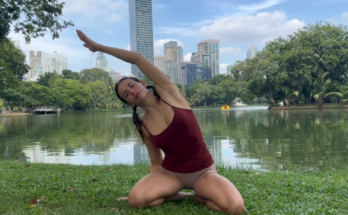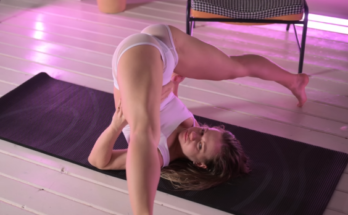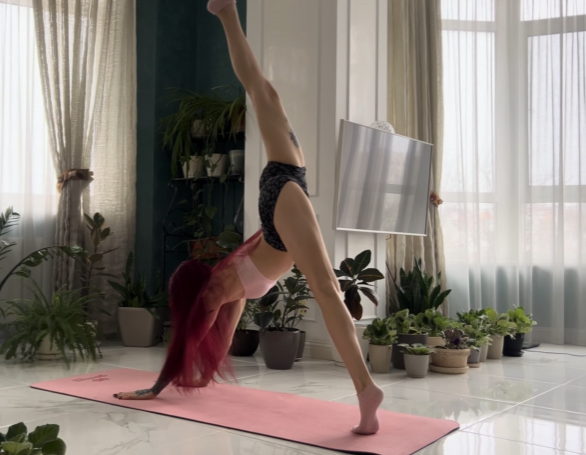
Deep flexibility is not something the body gives up all at once. It is earned slowly, patiently, through breath, awareness, and trust. Splits & Backbend Stretch | Deep Flexibility Flow is a journey into that space where strength supports softness and effort dissolves into ease. This practice is designed for those who want to explore deeper ranges of motion while honoring the body’s limits, creating flexibility that feels open, safe, and sustainable.
The flow begins quietly, with grounding and breath. Seated comfortably on the mat, the spine grows tall as the eyes close. Inhales expand the ribcage; exhales soften the shoulders and hips. This initial stillness is essential—it signals the nervous system to relax. True flexibility cannot exist without calm. When the mind settles, the body follows.
Gentle spinal movements come first. Cat–cow waves warm the back, inviting fluidity into the spine. Each inhale arches the chest forward, each exhale rounds the back, releasing stiffness. These movements awaken the vertebrae and prepare the spine for deeper extension later in the practice. The focus is not depth but continuity—moving smoothly, without breaks in the breath.
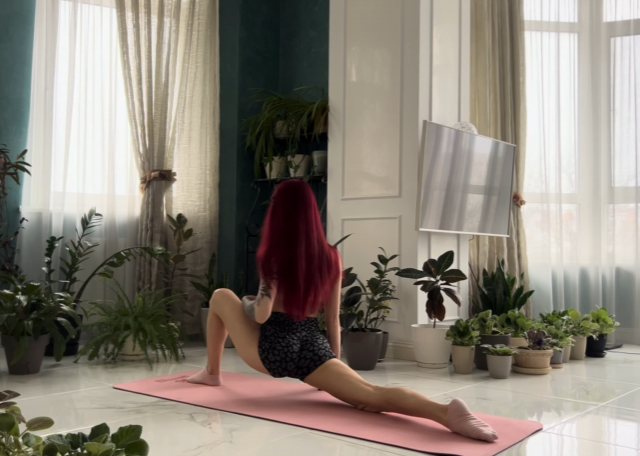
From the spine, attention shifts to the hips and legs. Slow, controlled lunges open the hip flexors, an area often tight from sitting and daily stress. The pelvis sinks gradually, supported by breath. Arms may reach overhead, creating length from the fingertips down through the legs. This opening is essential preparation for both splits and backbends, as tight hip flexors can restrict range and strain the lower back.
Hamstrings are next, approached with patience. From a half split, the hips glide back while the front leg lengthens. The spine stays long, folding only as far as it can without rounding. This active stretch teaches the muscles to release while remaining engaged. Over time, this balance between strength and softness creates real flexibility, not just passive range.
As warmth builds, the flow becomes more dynamic. Sun-salute–inspired transitions link lunges, folds, and gentle backbends. Movement becomes fluid, breath guiding each transition. This rhythmic flow increases circulation, delivering warmth and oxygen to the muscles, making deeper stretches safer and more accessible.
The practice then moves into split preparation. From a deep lunge, the back knee lowers, and the front leg gradually straightens as the hips descend. Blocks or folded blankets may support the hands or hips, reminding practitioners that flexibility is not about forcing the body to the floor. Alignment remains the priority—hips square, spine lifted, breath steady. Each exhale invites release; each inhale reinforces support.
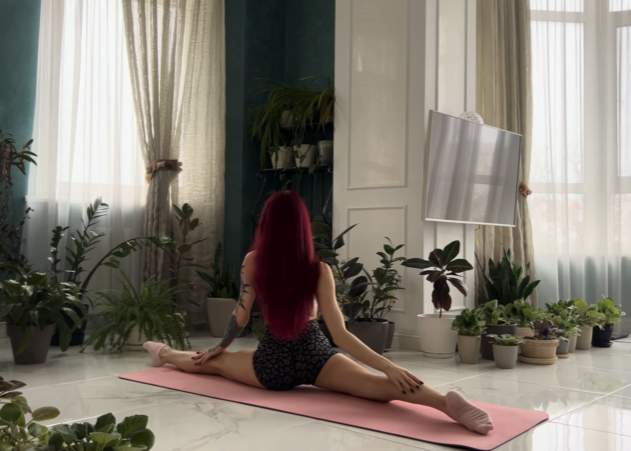
Staying in the split preparation, small adjustments are explored. The front foot may flex to protect the knee, while the back leg remains active, pressing into the mat. These subtle engagements create stability, allowing the stretch to deepen safely. Whether the body reaches a full split or remains higher, the intention is the same: presence and respect.
From splits, the body transitions into backbend work. Gentle sphinx and low cobra poses introduce spinal extension without compression. The chest lifts, shoulders roll back, and the gaze softens forward. These preparatory backbends awaken the muscles that support deeper arches, especially the back body and glutes.
As the spine warms, the backbends deepen. From low lunges, the back knee may stay grounded while the arms reach overhead, creating a crescent shape through the spine. The emphasis remains on length rather than collapse—lifting up before bending back. This principle protects the lower back and creates a more even, expressive curve.
Bridge pose follows, offering a supported yet powerful backbend. Feet press firmly into the mat, glutes and thighs engage, and the chest lifts toward the chin. Hands may support the lower back or reach overhead. This pose opens the front body, counteracting daily forward posture and preparing the spine for deeper extensions.
For those ready, deeper backbends are explored gradually. Wheel pose or supported variations allow the spine to express its full range. The breath remains the anchor, guiding the body safely through intensity. There is no rush, no expectation—only curiosity and control. Each inhale creates space; each exhale softens resistance.
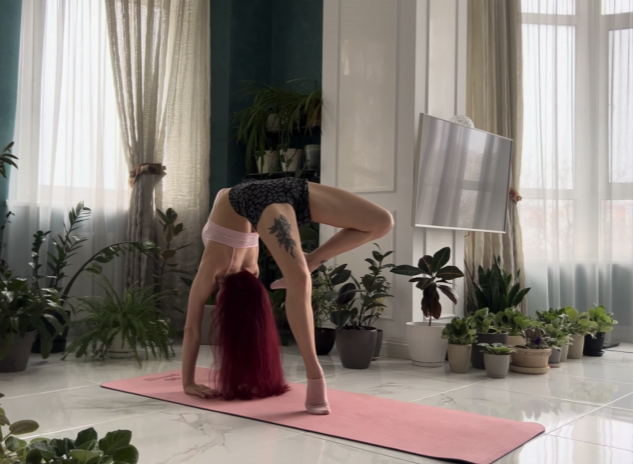
Between intense shapes, counterposes are woven in. Forward folds and gentle twists neutralize the spine, releasing tension and restoring balance. These moments of rest are not pauses but integral parts of the flow. They teach the body that effort and ease coexist, preventing overstretching and fatigue.
The final phase returns to the floor for deep release. Reclined hamstring stretches, hip openers, and spinal twists allow the muscles to fully relax after active work. The body feels open yet grounded, energized yet calm. These poses help integrate the benefits of the practice, ensuring flexibility gains are balanced and lasting.
The flow ends in stillness. Lying in savasana, the body rests completely. Breath moves effortlessly, the spine settles into the mat, and the nervous system absorbs the work. This rest is where progress truly happens—where muscles adapt and the mind integrates the experience.
Splits & Backbend Stretch | Deep Flexibility Flow is more than a physical practice. It is a lesson in patience, awareness, and self-trust. Deep flexibility is not about pushing to extremes but about building a relationship with the body—one rooted in respect and curiosity. With consistent practice, these movements create not only greater range but also strength, confidence, and freedom.
Step onto the mat with intention, move with breath, and allow flexibility to unfold naturally—one mindful moment at a time.