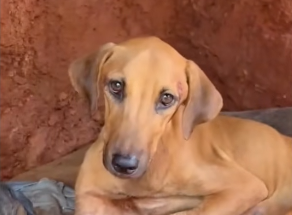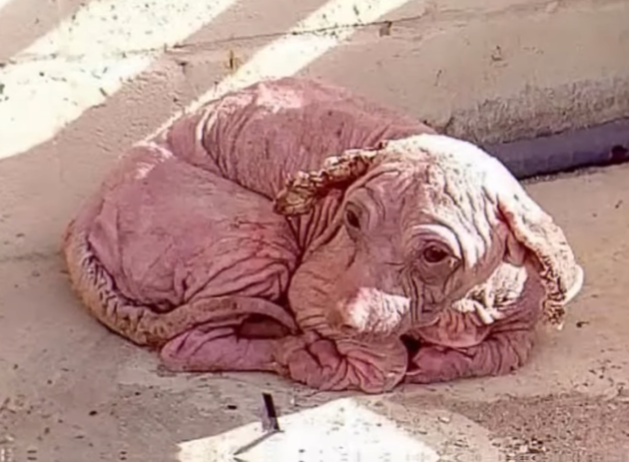
For as long as anyone in the village could remember, the strange-looking dog wandered the dusty roads like a ghost. His fur grew in uneven clumps, patches missing from years of untreated skin infections. His tail, thin and crooked, dragged low behind him. His ribs stuck out sharply beneath the little flesh he had, and one of his ears folded down permanently, as if weighed by the burden of the life he lived.
But it was his eyes—soft, golden, and impossibly gentle—that made people pause. They were the eyes of a soul who remembered love, even when the world had given him none.
Yet despite this, most people turned away. Some threw stones. Others chased him away with sticks, shouting that he looked diseased, that he would bring bad luck, that he was too ugly to deserve kindness. Everywhere he wandered, he was met with fear, disgust, or cruelty.
And so he kept moving, day after day, searching for someplace—anyplace—where he could rest.
He learned to sleep with one eye open. Nights were the hardest; the cold bit into his thin frame, and the darkness made the world feel even more dangerous. He curled himself tightly beneath staircases, behind old market stalls, or under abandoned carts, always ready to run if someone approached. Because someone always did.
Children laughed and threw pebbles. Shopkeepers banged metal pans. Strangers yelled, “Go away!”
He didn’t know why he looked different. He didn’t know why the world treated him like a monster. All he knew was that he was tired—deeply, endlessly tired.
But still, he survived. Every morning he got up, tail tucked, nose searching for scraps. Even when he limped from a festering wound, even when hunger hollowed his belly, some small fragile hope kept him moving. The hope that one day, someone would see past the strange fur and crooked ear and notice the loyal heart beating beneath.
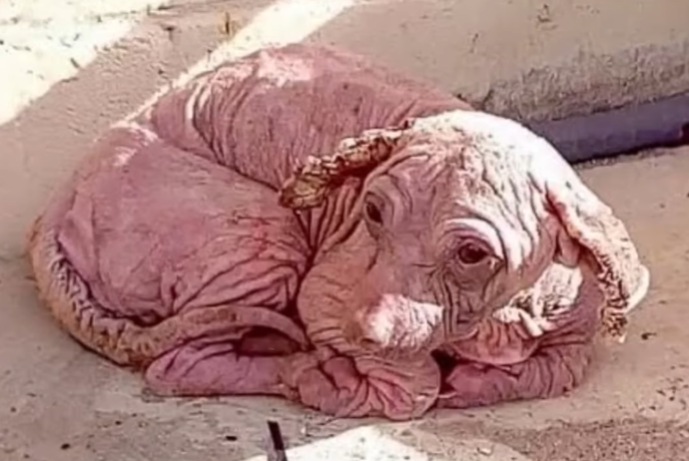
That moment came on a blisteringly hot afternoon. The dog had been chased out of the market again, this time knocked over by a broomstick. His legs trembled as he stumbled toward the shade of a crumbling wall.
Just then, a scooter rolled to a stop beside him.
“Hey, buddy… you okay?” a gentle voice called.
The dog froze. He’d learned not to look humans in the eye. But something in the tone—soft, steady, not angry—made him lift his head ever so slightly.
A woman crouched beside him, her expression full of shock and heartbreak. She could see every bone in his body, the infected skin, the old scars. Tears gathered in her eyes.
“Oh sweetheart,” she whispered. “What have they done to you?”
The dog tried to back away, sure she would hit him next. His body shook uncontrollably.
But she didn’t move to strike him. Instead, she slowly extended a hand, palm facing downward. He flinched—but she waited. Patient. Calm. Kind.
Minutes passed. Finally, trembling, he inched forward and sniffed her fingers.
Then he felt it—a gentle touch on the top of his head.
No one had touched him kindly in years.
The dam inside him broke.
He collapsed.
Not physically, but emotionally. His body relaxed, his tail gave the smallest twitch, and he rested his head on her knee as if surrendering his whole story in one gesture.
“I’ve got you now,” she murmured. “No more running. No more fear.”
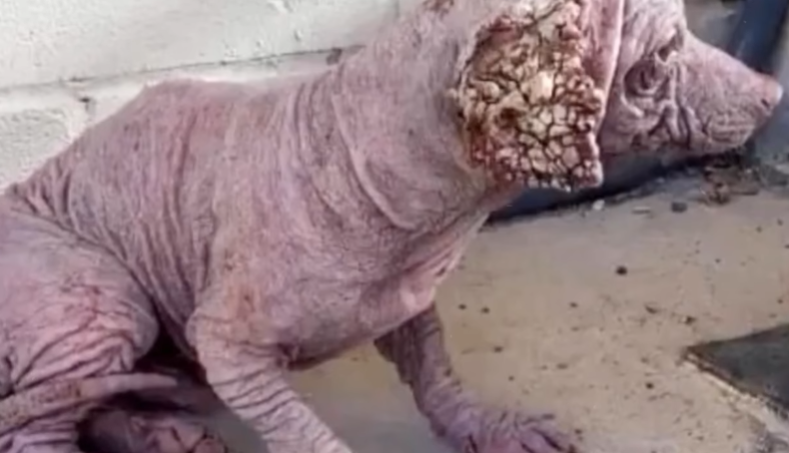
The woman, named Lani, called an animal rescue group she volunteered with. Within minutes, rescuers arrived carrying water, a towel, and a transport crate. The dog didn’t fight when they lifted him; he only whimpered softly, as if afraid this kindness would vanish.
At the shelter, his transformation began.
First came a warm bath. His matted fur loosened, the dirt washed away, and underneath was a frail, trembling body that had carried too much pain for too long. He stood still the whole time, unsure but willing to trust.
Then came medicine for his infections, food for his starving belly, and a soft blanket placed inside a quiet kennel just for him.
When they gave him a bowl of warm chicken and rice, he stared at it for a long moment—confused. No one had ever given him food. Not like this. Not with care.
When he finally took a bite, his tail moved for the first time in years.
Days passed. Then weeks.
Every step of healing was slow, but remarkable. His wounds closed, the swelling went down, and his fur began to grow back in healthy layers. He gained weight. He learned to walk without limping. He discovered toys—especially a squeaky blue ball he guarded like a treasure.
He also learned something beautiful: not all humans were cruel.
He loved the sound of volunteers approaching. He wagged his tail when Lani visited, following her everywhere like a shadow. When she sat on the floor, he curled into her lap, something he’d never dared to do with anyone.
His eyes, once full of fear, now shone with gratitude.
But the biggest change came the day a family visited the shelter.
They saw him the moment they walked in—the strange-looking dog with the crooked ear and the brave heart.
The little boy approached slowly. “Can I pet him?” he asked.
The dog watched him with calm, curious eyes. When the boy placed a small hand on his head, the dog leaned into it, tail swishing gently.
“That’s it,” the father laughed softly. “He’s chosen us.”
And just like that, the dog who once wandered the streets unwanted and unloved found his forever home.
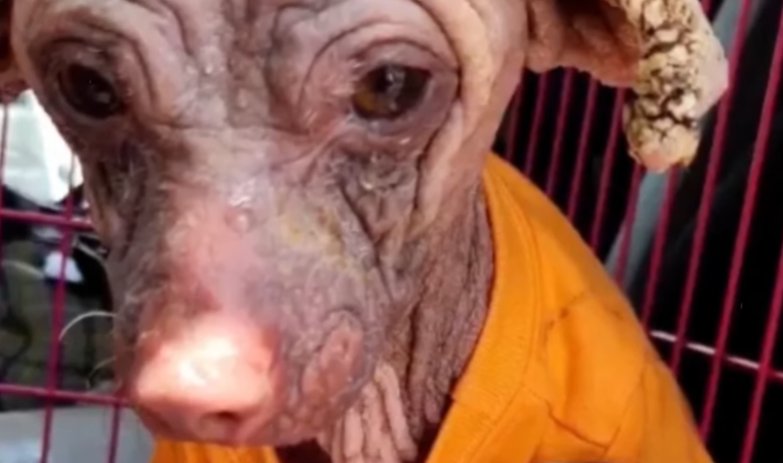
His new family named him Bento—because, they said, he was small, special, and full of surprises. Bento quickly learned what real love felt like: a warm bed, daily meals, soft blankets, and endless affection.
He chased butterflies in the yard. He napped under the sun. He followed his family from room to room, always wanting to be close to the people who gave him the one thing he had longed for all his life—belonging.
But the most heartwarming moment was the first night he slept in his new home.
He circled his plush bed, then suddenly climbed into the little boy’s bed instead. He curled up beside him, resting his head on the child’s chest, letting out a long, peaceful sigh.
For the first time in his life, he felt safe.
For the first time, he felt loved.
And he never had to run again.