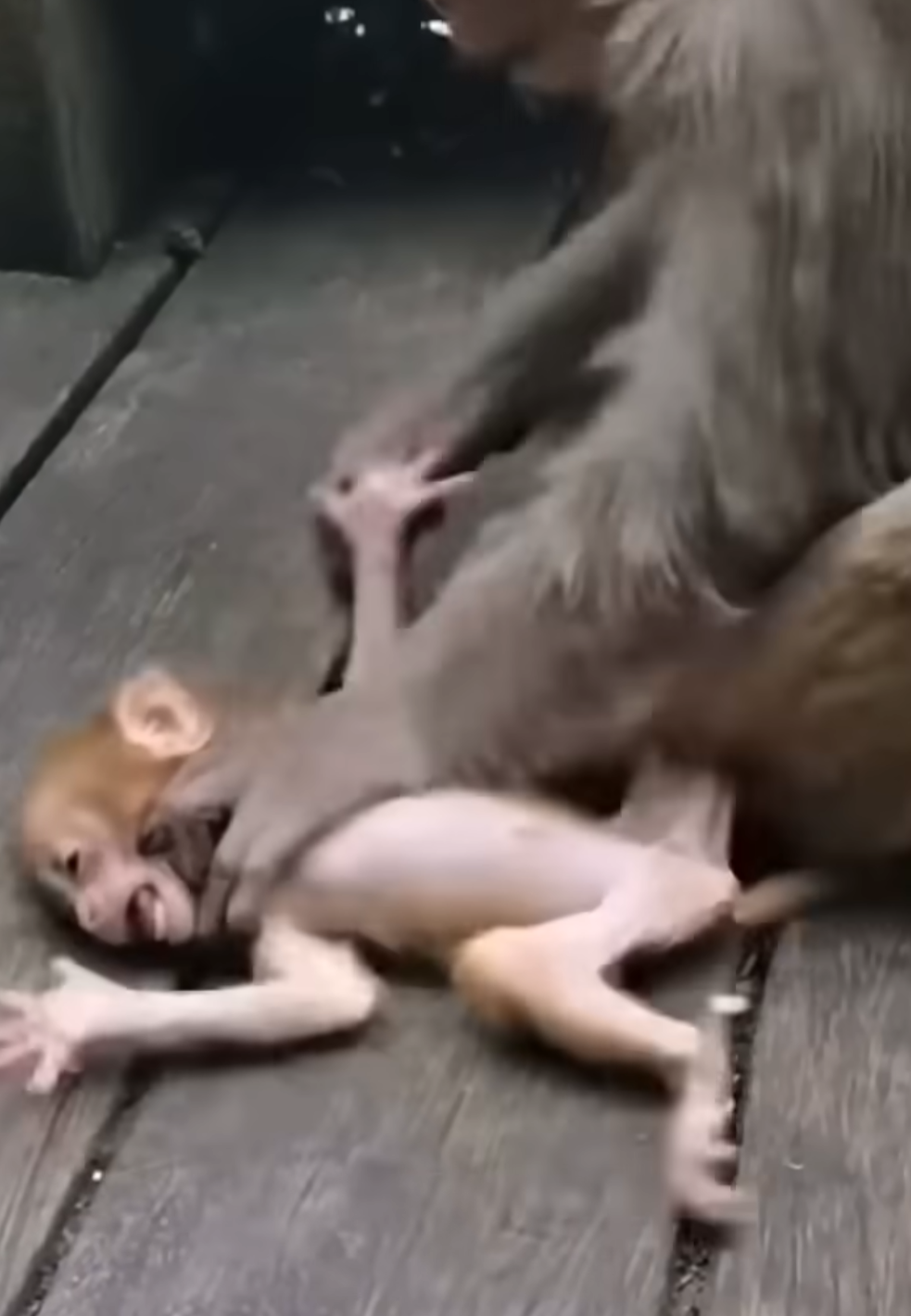
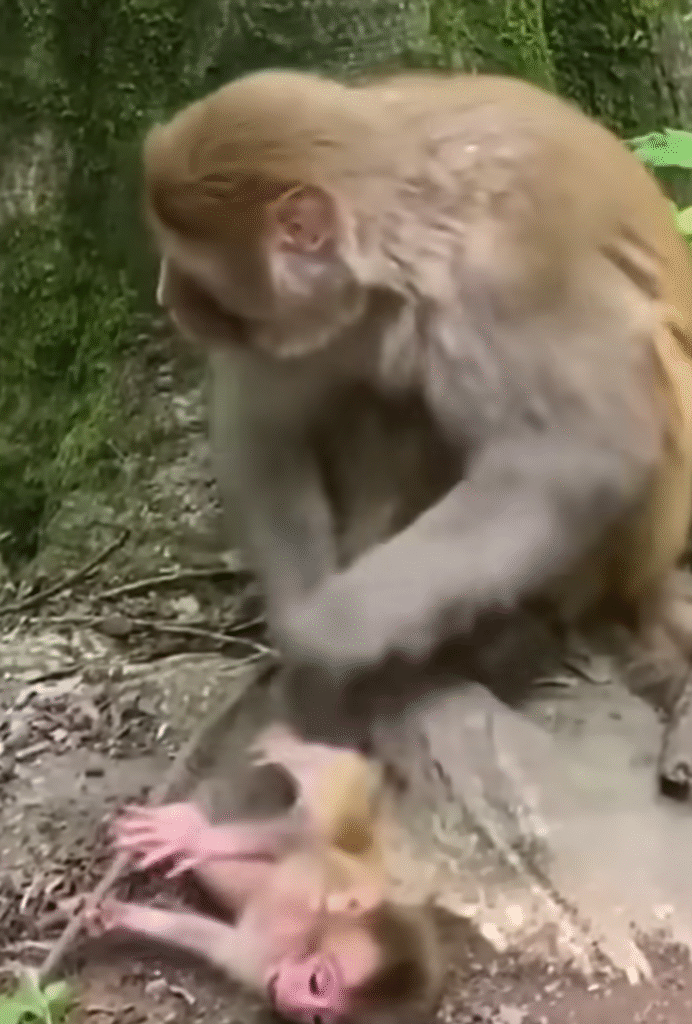
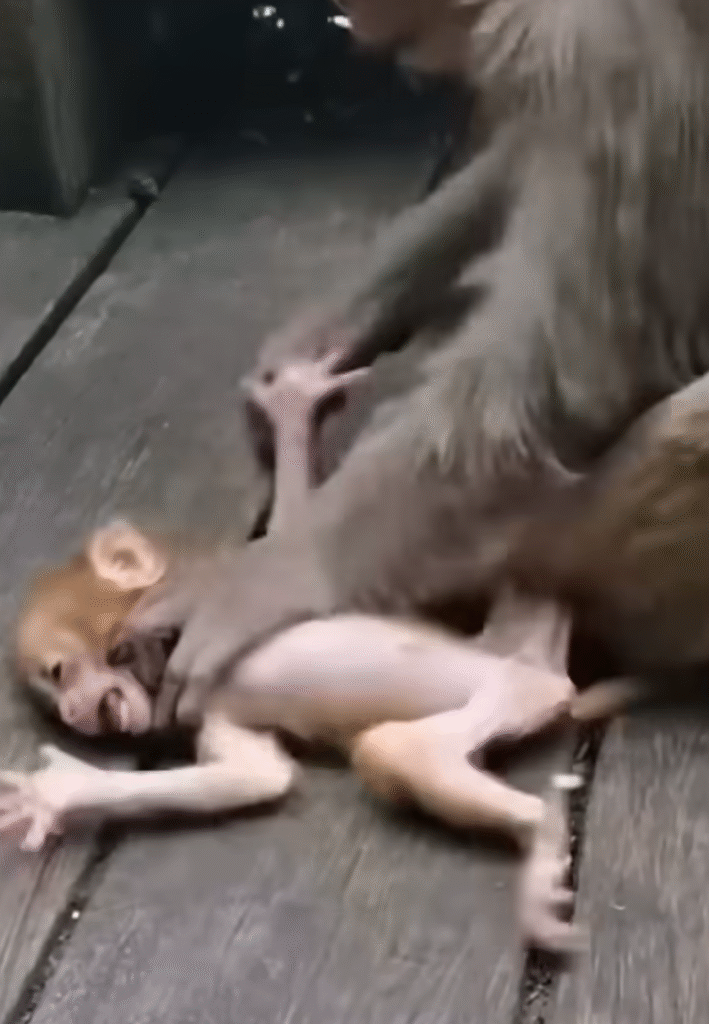
In the wild, monkeys live lives full of constant challenges — danger, hunger, social competition, and survival instincts that shape every move they make. When we see a mother monkey tugging, biting, or roughly handling her baby, our hearts immediately ache. It looks cruel, unfair, and heartbreaking. We can’t help but think, “Why would a mother treat her baby like that?” But in the world of monkeys, things aren’t always as they appear. What looks harsh to us might actually be a deep expression of love, protection, and survival training.
Let’s take a closer look at why mother monkeys sometimes treat their babies this way — and why we shouldn’t judge too quickly.
🐒 1. Monkey Moms Have Tough Love
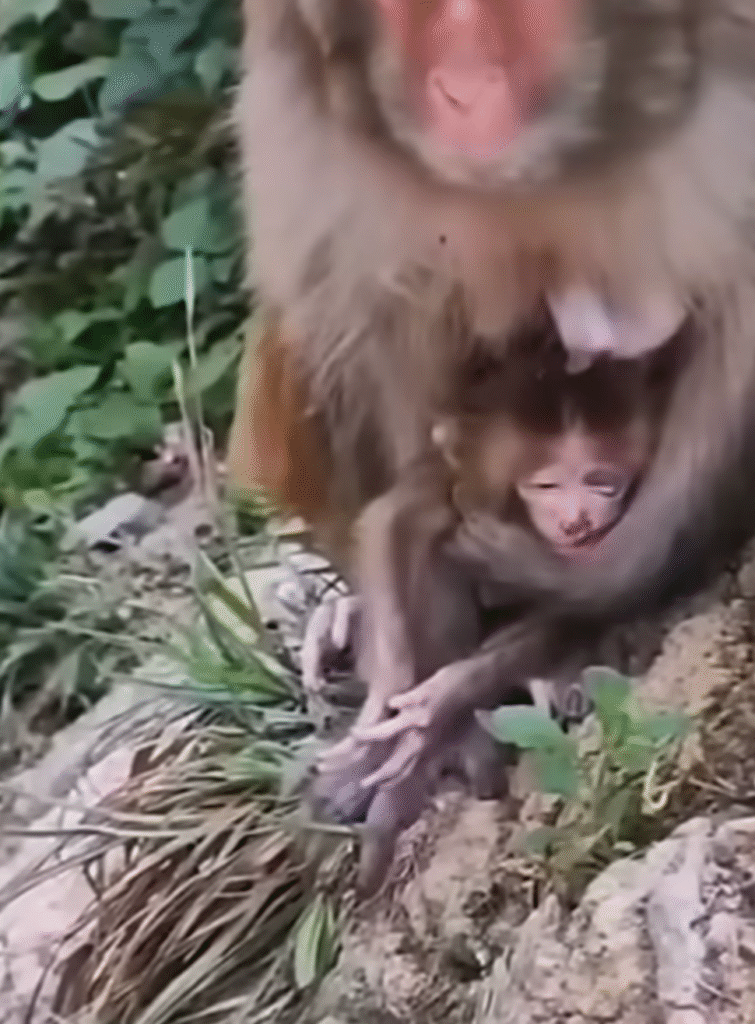
Unlike human mothers, who can safely raise their babies in protected environments, monkey moms live in the middle of danger every single day. They must keep their babies safe from predators, aggressive males, and even other jealous females in the troop. When a mother monkey pulls her baby roughly or forces it to cling tighter, she’s not being mean — she’s teaching it survival skills.
From the moment a baby monkey is born, it must learn how to cling tightly to its mother’s fur. This isn’t optional. If the baby fails to hold on when mom jumps, runs, or fights, it could fall — and in the jungle, a fall can mean death. So when a mother shakes her baby or seems to scold it, she’s saying, “Hold on tighter, don’t let go!”
Her behavior might look rough, but it’s her way of preparing the baby for the real world — a world where hesitation or weakness could be fatal.
💔 2. The Struggle of Young or Stressed Mothers
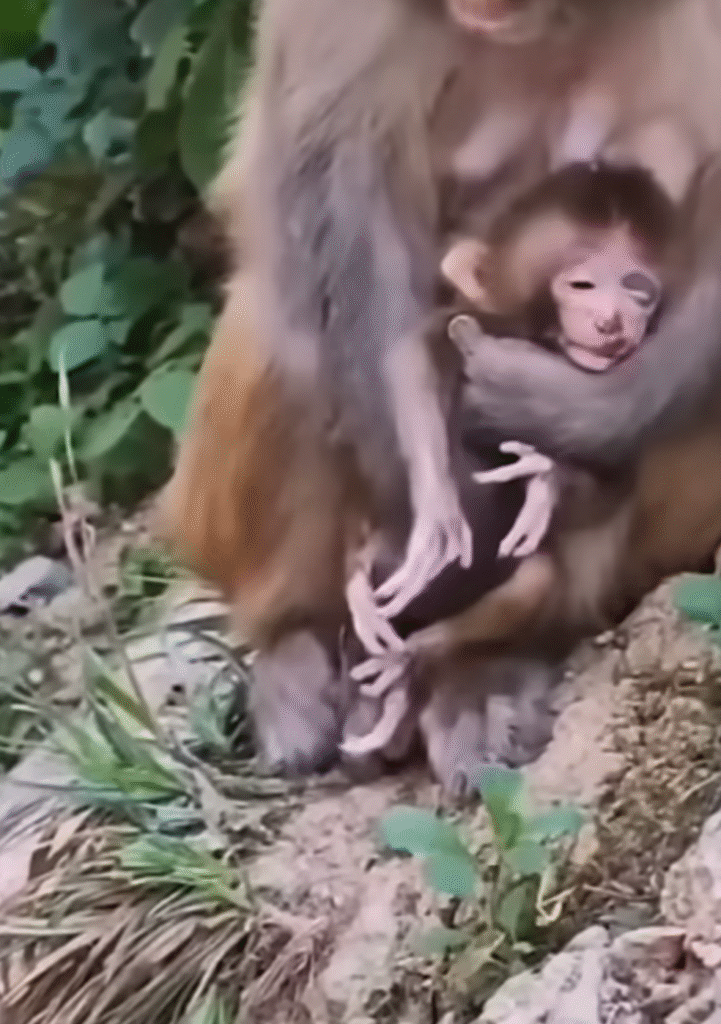
Sometimes, the sad truth is that not every monkey mom is ready to be a mom. Just like in humans, young or first-time mothers can feel confused, stressed, or overwhelmed. They might not know how to properly care for their babies.
In captivity or in crowded troops, young mothers often give birth without support or guidance. They might accidentally hurt their babies because they don’t yet understand how gentle they need to be. Their instincts tell them to keep the baby close, but inexperience makes their grip too tight or their handling too rough.
Scientists who study primates have witnessed heartbreaking scenes of confused young mothers not knowing how to nurse or comfort their infants. These moments make us feel so sorry — because both the mother and baby are struggling in their own way. The mother isn’t being cruel; she’s simply lost and learning through pain.
🥺 3. Protecting the Baby from the Troop
In many monkey species, life in the troop is full of rules and power struggles. Dominant males may harm or even kill infants that are not their own, especially if they take over a new group. Females may also attack weaker mothers or babies out of jealousy or competition.
That’s why some mother monkeys act so fiercely protective. When we see a mom clutching her baby tightly, pulling it away from others, or even slapping it when it wanders off, she’s doing what she must to keep it alive. She’s not punishing it — she’s saying, “Stay close! It’s dangerous out there.”
To human eyes, this looks like aggression. But to the monkey, it’s instinctual safety. The mom knows how quickly danger can strike — one wrong move and her baby could be taken or hurt.
😢 4. The Emotional Side: When Moms Are Under Stress
In sanctuaries and rescue centers, some mother monkeys behave roughly because they’ve gone through trauma themselves. Many were captured, separated from their families, or raised in poor conditions before being rescued. Their emotional wounds show up in how they treat their babies.
When a mother has experienced fear, loss, or neglect, she may struggle to express tenderness. She may love her baby deeply, but her stress hormones make her anxious and unpredictable. Sometimes she becomes overprotective, other times distant. It’s not that she doesn’t care — it’s that she doesn’t yet know how to show love in a calm way.
Caregivers at monkey rescue centers often step in gently, offering these mothers extra care, space, and food. Over time, many of them learn to trust again — and their relationship with their babies improves. Watching that transformation is one of the most touching sights: a scared, broken mom finally learning to cuddle her baby softly.
🧠 5. Teaching Independence the Hard Way
Mother monkeys are teachers. They have to prepare their babies to live without them one day. That’s why, as the baby grows, the mom begins to push it away. She refuses to carry it everywhere or nurse it constantly. She may even swat or nip the baby when it insists on being spoiled.
At first, this looks harsh — like rejection. But it’s really an important lesson. In the wild, every young monkey must learn how to climb, find food, and recognize danger on its own. The mother’s “tough love” ensures the baby grows strong and smart enough to survive without her.
If she didn’t push the baby to be independent, it would stay weak and helpless. So even though we feel sorry when we see a mom ignoring her crying baby, she’s actually teaching it how to be brave and self-reliant.
🫶 6. But There’s Still So Much Love Beneath It All
If you’ve ever watched monkeys quietly, you’ll see tender moments too. After a stressful moment, a mother will often groom her baby, gently picking through its fur. She’ll cuddle it close when it’s cold, share her food, or let it play with her tail. She’ll hold her baby tight against her chest when danger is near.
Mother monkeys might not express affection the same way we do, but their love is powerful and instinctive. Even the ones who seem rough still risk their lives for their young. They’ll fight off predators, other monkeys, and even humans to protect their babies.
Their world is just harsher than ours — and their way of showing love must match that reality.
🧍♀️ 7. What We Can Learn from Them
Watching mother monkeys teaches us a lot about nature — and about ourselves. It reminds us that love takes many forms. Sometimes it’s gentle; sometimes it’s fierce. Sometimes it’s patient, and sometimes it’s full of frustration. But underneath it all, love is still love.
When we say, “Awww, I feel so sorry,” we’re feeling compassion — and that’s a good thing. It means we see their pain and their struggle. But if we look deeper, we can also see the courage and devotion hidden in their actions.
So next time you see a mother monkey pulling or scolding her baby, remember: she’s teaching it how to live. Her way may look rough, but her heart beats with the same powerful instinct that all mothers share — the instinct to protect, to teach, and to love.
💗 Final Thoughts
It’s okay to feel sad when we see mother monkeys treat their babies in ways that seem rough. Our human hearts are full of empathy, and it’s natural to wish every baby could be loved with softness. But in the wild, softness alone isn’t enough.
Mother monkeys show us that love isn’t always gentle — sometimes, it’s fierce, demanding, and unyielding. What looks harsh is often the very thing that keeps their babies alive.
So when we whisper, “Awww, I feel so sorry,” maybe we can also whisper, “But I understand.” Because behind every rough tug or scolding gesture is a mother’s heart — strong, wild, and full of love. ❤️🐒