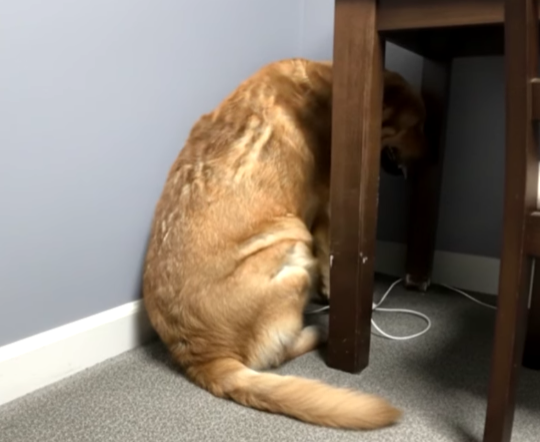
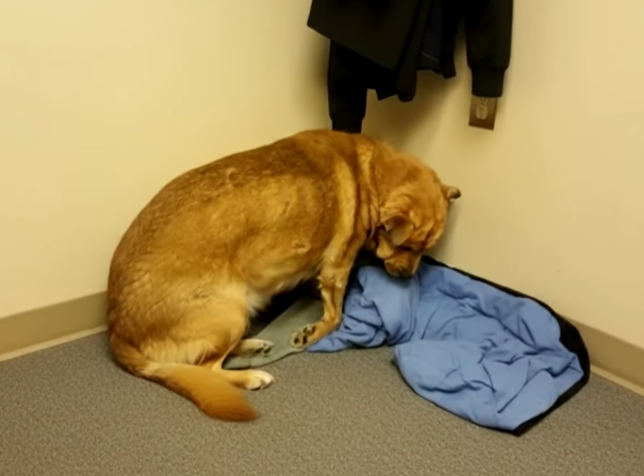
He had learned to turn away long before anyone noticed.
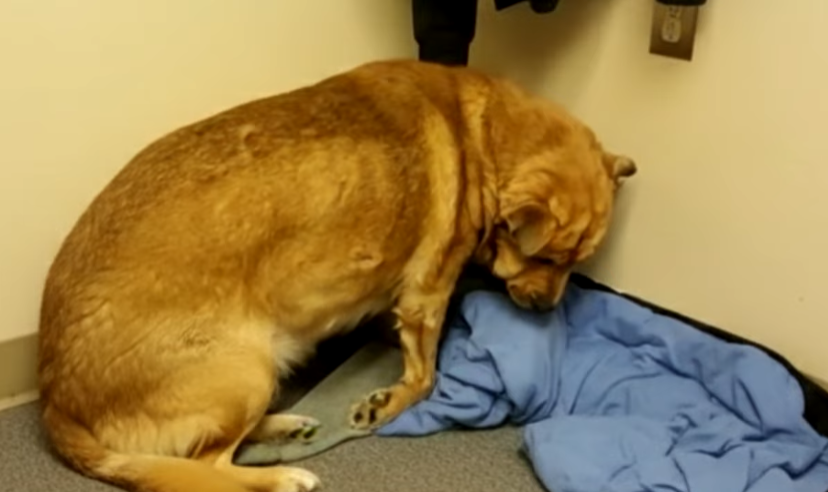
Whenever footsteps approached, he shifted his body so his back faced the sound. Whenever voices rose nearby, he lowered his head and stared at the ground. Looking at people only brought disappointment, confusion, or fear. Turning away felt safer. If he didn’t see them, maybe they wouldn’t see him either.
The sad dog had mastered invisibility.
He lived near the edge of a busy market, where noise never stopped and kindness was rare. People hurried past him every day—some with bags of food, some laughing, some complaining about their own small problems. Few ever looked down. Those who did usually frowned, waved him away, or shouted to scare him off. Over time, he learned the pattern well. Humans came and went. None stayed.
So he turned away.
His body was thin, his fur dull and patchy. Old scars hid beneath the dirt that clung to him. Hunger was a constant ache, but not as painful as loneliness. At night, when the market quieted and the lights dimmed, he curled up near a closed stall, pressing his nose to his tail to keep warm. Sleep came lightly, broken by dreams he didn’t understand—dreams of warmth, of a hand resting gently on his head, of a voice calling his name.
If he had ever had a name, he no longer remembered it.
The sadness lived deep inside him. It showed in the way he moved slowly, carefully, as if every step might lead to trouble. It showed in his eyes—eyes that no longer searched for help, only for escape routes. When children ran past laughing, he flinched and turned away. When adults argued loudly, he pressed himself flat against the ground.
He did not trust people anymore.
One afternoon, the heat was unbearable. The pavement burned his paws, and his throat felt dry and tight. He hadn’t eaten properly in days. He lay in the shade of a parked truck, too weak to move much, watching dust swirl in the sunlight. Footsteps passed close by, and instinctively, he turned his head away, bracing himself for the familiar sting of rejection.
Then he heard it.
A voice.
Not loud. Not sharp. Not angry.
It was soft, almost musical, carrying something he hadn’t felt in a long time. Concern.
“Hey there, little one… are you okay?”
His ears twitched despite himself.
He didn’t turn around. Experience had taught him that looking only made things worse. But the voice didn’t disappear. It didn’t turn into shouting. It didn’t fade away like so many others had.
It stayed.
The footsteps stopped a short distance away. He felt the presence, warm and still, not looming over him. His heart began to race. Fear crept in, urging him to run, but his body felt heavy, drained. All he could do was listen.
“I’m not going to hurt you,” the voice continued gently. “You don’t have to look at me if you don’t want to.”
That was new.
People usually demanded attention. They waved their hands, made noises, or tried to chase him away. This voice asked for nothing. It offered space.
Slowly, almost without realizing it, he lifted his head just a little.
The human was crouched down, not standing tall, not blocking his escape. Their eyes were kind, filled with sadness at the sight of him. They didn’t reach out. They didn’t move closer. They simply sat there, respecting his fear.
He turned his head back again quickly, unsure of what to do with this unfamiliar situation. His heart pounded, but his fear was mixed with something else now—curiosity.
The human placed a small bowl of water on the ground and gently slid it toward him, then moved back.
“There you go,” the voice said softly. “Take your time.”
Water.
His throat burned as he stared at the bowl. He didn’t move at first. Trust was dangerous. But thirst eventually won. Keeping his body low and his eyes averted, he crept forward and began to drink. Cool relief spread through him, and he drank deeply, as if afraid it would vanish.
The human watched quietly, not making a sound.
When he finished, he retreated to his spot, turning away again, but his body felt a little stronger now. The voice spoke once more, still calm.
“Good boy.”
Something stirred in his chest.
Good boy.
The words were simple, but they carried warmth. They didn’t demand anything. They didn’t come with strings attached. They reminded him of something he had lost—a time when being good meant being loved.
The human returned the next day.
And the day after that.
Each time, the same gentle voice. The same slow movements. Food appeared. Water appeared. And always, space. No forcing. No grabbing. No shouting.
The sad dog still turned away, but not as quickly.
Sometimes he allowed himself to glance back. Sometimes his ears stayed upright instead of flat. His body still tensed, but the constant dread began to loosen its grip. The voice became familiar, something he began to listen for among the chaos of the market.
One day, when the human spoke, his tail moved.
It was barely noticeable—a tiny flick, uncertain and shy. But it was there.
The human noticed and smiled, though they didn’t react loudly. They understood how fragile this progress was. They simply said, “That’s okay. You’re doing great.”
The voice became his anchor.
When the market grew too loud, he listened for it. When fear threatened to overwhelm him, he remembered that calm tone, those gentle words. Slowly, he stopped turning away completely. He began to face the human, sitting instead of lying curled in on himself.
The day the human reached out was carefully chosen.
They moved slowly, letting him see every motion. When the hand stopped just short of touching him, he froze. His heart raced, memories of pain flashing through his mind. But the hand didn’t move closer. It waited.
After a long moment, he leaned forward—just a little—and let the fingers brush his fur.
The touch was light.
It didn’t hurt.
His breath hitched, then steadied. The sadness in his eyes softened, replaced by disbelief. He leaned into the touch again, cautiously, as if testing whether this kindness was real.
It was.
From that moment, everything changed.
He began to follow the human’s voice instead of turning away from it. He walked beside them, still cautious, but no longer hiding. When they spoke his name—yes, he had a name again—his ears perked up. He learned that voices could mean safety, not just danger.
Soon, the market was no longer his home.
He was taken to a quiet place, where the ground was soft and the nights were warm. The first few days were confusing. He paced, unsure, turning away out of habit. But the voice was there, steady and reassuring, guiding him through every new experience.
Healing took time.
Some days, he still flinched. Some sounds still frightened him. But now, when fear rose, he looked for the voice instead of turning away. And the voice was always there.
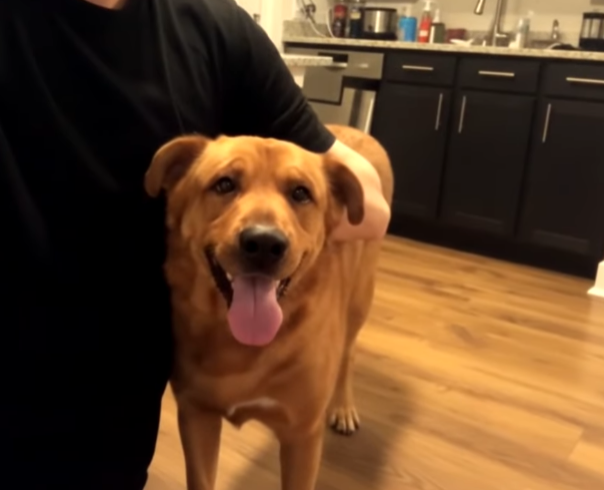
The sad dog who once hid from people learned to trust again—not because he was forced to, but because someone took the time to speak to him with kindness.
Looking at him now, lying peacefully in the sunlight, it’s hard to believe he once turned his back on the world. His eyes are bright. His body is strong. His tail wags freely. But most of all, he listens.
Because one day, when he had turned away from everyone, he heard a voice that changed everything.
A voice that didn’t demand.
A voice that didn’t leave.
A voice that told him, in the gentlest way possible, that he mattered.
And because of that voice, he finally turned back toward life.