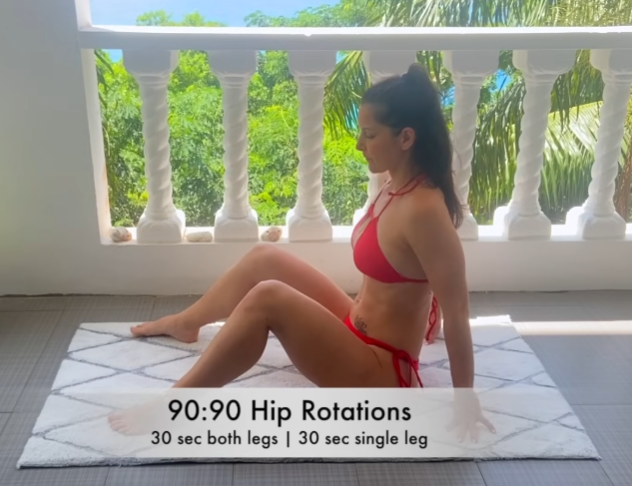
Tight hips are one of the most common problems in modern life. Hours of sitting, lack of varied movement, stress, and poor posture slowly rob the hips of their natural freedom. Over time, this stiffness doesn’t stay isolated—it spreads to the lower back, knees, and even the shoulders. Many people try to stretch harder or push deeper, but the real solution isn’t force. The solution is smart, consistent movement that improves hip mobility while strengthening the core that supports it.
The good news is that you don’t need long workouts or complicated routines. With just 12 minutes a day, you can dramatically improve hip mobility, build core strength, and reduce discomfort. This short daily practice works because it targets the hips as part of a system, not as a single joint.
Why Hip Mobility Matters
The hips are one of the body’s primary centers of movement. They connect the upper and lower body and play a critical role in walking, running, lifting, and even sitting upright. When hip mobility is limited, the body compensates elsewhere—often in the lower back or knees—leading to pain and dysfunction.
Tight hips can cause:
- Lower back stiffness and pain
- Poor posture and limited movement
- Reduced athletic performance
- Knee and ankle stress
- Weak core activation
Improving hip mobility restores balance to the body and allows movement to feel natural again.
The Role of the Core in Hip Mobility

Many people separate “core training” and “hip stretching,” but the two are deeply connected. The core stabilizes the pelvis and spine, allowing the hips to move freely without strain. Without core strength, hip mobility exercises can feel unstable or ineffective.
A 12-minute daily routine that combines hip mobility with core engagement teaches the body to move efficiently and safely. Instead of forcing flexibility, you build strength in the ranges you want to improve.
Why 12 Minutes Is Enough
Consistency matters more than duration. Twelve focused minutes every day is far more effective than one long session per week. Short routines reduce mental resistance, making it easier to stay consistent.
This daily practice is designed to:
- Gently open tight hips
- Strengthen deep core muscles
- Improve joint control and stability
- Reduce tension without fatigue
Because the routine is short, it fits easily into busy schedules—morning, lunchtime, or evening.
Minute 0–2: Gentle Warm-Up
Begin with easy movements to increase blood flow and prepare the joints. Start standing or on the floor with slow hip circles and controlled weight shifts. Keep the movements smooth and relaxed.
Focus on breathing deeply through your nose. The nervous system needs to feel safe before true mobility improvements can occur.
Minute 2–5: Hip Flexor & Front Chain Activation
Tight hip flexors are a major cause of limited mobility, especially for people who sit a lot. Move into gentle lunges or split-stance movements, keeping the pelvis neutral and the core lightly engaged.
Avoid forcing the stretch. Instead, move slowly in and out of the position, teaching the muscles to lengthen while staying strong. This active approach leads to longer-lasting results.
Minute 5–8: Lateral & Rotational Hip Mobility
The hips move in multiple directions, yet many routines only address forward motion. This section focuses on side-to-side and rotational movements, which are essential for real-world mobility.
Controlled squats, lateral shifts, and gentle rotations help restore balance to the hip joint. Keep the chest tall and the core engaged to protect the lower back.
You may feel tight spots—breathe into them and move with patience.
Minute 8–10: Core Strength & Stability

Now the focus shifts more strongly to the core. Exercises here are slow and controlled, emphasizing quality over intensity. Think of the core as a supportive corset, stabilizing the pelvis as the hips move.
Movements such as controlled holds, slow transitions, or gentle plank variations help reinforce the connection between hips and core. This section builds strength without exhausting the body.
Minute 10–12: Integration & Reset
The final two minutes bring everything together. Flow through movements that integrate hip mobility and core stability, allowing the body to move as one unit.
Finish with slow breathing and relaxed movement, letting the hips settle into their new range of motion. Notice how your body feels—lighter, more open, more stable.
What Results Can You Expect?
With consistent daily practice, many people notice improvements within just one to two weeks:
- Increased hip range of motion
- Reduced stiffness in the lower back
- Better posture and balance
- Stronger, more responsive core
- Easier movement during daily activities
Over time, these small daily gains accumulate into lasting change.
Who Is This Routine For?

This 12-minute hip mobility and core strength routine is ideal for:
- Desk workers with tight hips
- Athletes looking to improve performance
- Beginners who want safe, effective movement
- Anyone dealing with stiffness or discomfort
No special equipment is required, and the movements can be modified to suit all levels.
Common Mistakes to Avoid
- Forcing stretches: Mobility improves through control, not pain
- Holding your breath: Breathing is essential for relaxation and movement
- Skipping consistency: Daily practice is key
- Ignoring core engagement: A weak core limits hip progress
Stay patient and focus on quality movement.
The Bigger Solution
Tight hips aren’t a life sentence. They’re often a signal that the body needs better movement habits, not more intensity. By dedicating just 12 minutes a day to improving hip mobility and building core strength, you give your body exactly what it needs to move freely and confidently.
This routine isn’t just a workout—it’s a solution. A simple, sustainable way to feel better in your body every single day.
Twelve minutes. One consistent habit. A powerful change.