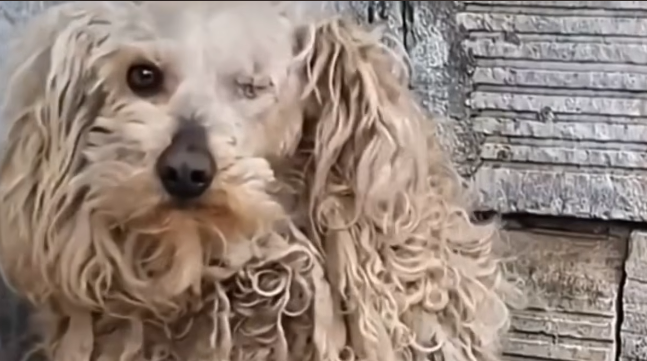
The call came just before sunset, when the sky was painted in soft orange and purple hues and the day was winding down. A passerby had reported a small dog hiding behind an abandoned warehouse near the edge of town—thin, shaking, and crying in a way that sounded less like barking and more like a plea.
By the time we arrived, the evening air carried a quiet stillness, broken only by the distant hum of traffic and the rustle of dry leaves along the cracked pavement.
“There,” someone whispered, pointing toward a dark corner behind a stack of broken wooden pallets.
At first, it was hard to see him.
Then, slowly, a pair of wide, glistening eyes emerged from the shadows.
He was curled tightly against the wall, his body trembling so violently it seemed as though the cold itself lived inside him. His fur was matted with dirt, clinging to his thin frame, and every breath came out in soft, shaky whimpers.
When he noticed us, he flinched.
His ears flattened. His body pressed further into the corner as if he wished he could disappear into the concrete.
“It’s okay,” I said softly, crouching down several feet away. “We’re here to help.”
But he didn’t understand.
To him, we were strangers—figures looming in the fading light, approaching the fragile boundary he had built to protect himself from a world that had not been kind.
He let out a small cry, a sound so raw it tightened something deep in my chest.
“Easy,” my colleague murmured. “He’s terrified.”
We sat quietly, giving him space, letting him watch us without pressure. Sometimes, the first step in rescue isn’t action—it’s patience.
The wind carried the scent of rain, and somewhere nearby, a loose piece of metal clanged softly.
He flinched again.
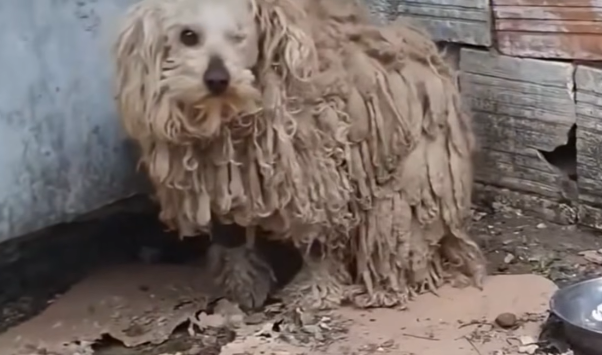
I placed a small bowl of food on the ground and slowly slid it toward him, then backed away.
For several minutes, he didn’t move.
His eyes flicked between us and the bowl, suspicion battling hunger. His ribs were visible beneath his fur, each breath revealing just how long it had likely been since he’d eaten properly.
Finally, he stretched his neck forward slightly, sniffing the air.
Another step.
Then another.
But the moment I shifted my weight, he recoiled, retreating into his corner with a frightened yelp.
“It’s okay,” I whispered again, keeping my voice low and steady.
We waited.
Time seemed to slow, measured only by his cautious movements and the deepening shadows around us.
Eventually, hunger won.
He crept forward, each step hesitant, ready to flee at the slightest change. He reached the bowl and began to eat quickly, as though afraid it might vanish.
Watching him, I felt a mix of relief and heartbreak.
Who had left him here? How long had he survived alone, learning to fear every sound, every movement?
After he finished, he looked up at us again, uncertainty still clouding his eyes.
I gently extended my hand, palm down.
He froze.
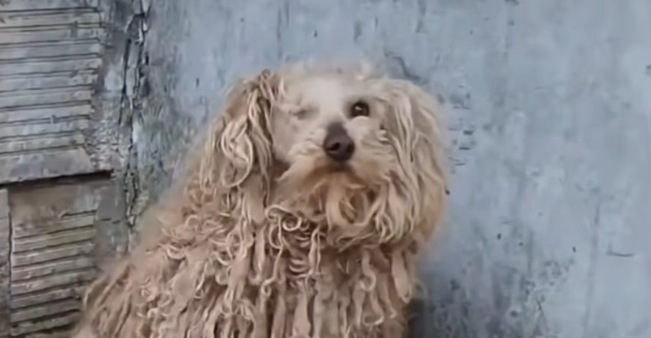
A soft whine escaped him, and he backed away, trembling.
“He doesn’t trust people,” my colleague said quietly. “Not yet.”
We decided not to rush.
Instead, we spoke softly, letting him grow accustomed to our presence. The sky darkened, and the first drops of rain began to fall, tapping lightly against the pavement.
He shivered harder.
“Let’s set up the crate,” I said.
We placed a soft blanket inside and left the door open, positioning it nearby with another small portion of food.
Rain fell more steadily now, turning the air cool and damp.
He watched from his corner, unsure.
Minutes passed.
Then, slowly, he approached the crate, sniffing cautiously. He stepped inside halfway, grabbed a bite of food, and darted back.
We waited.
Eventually, he stepped fully inside.
In one gentle motion, we quietly closed the door.
He panicked.
His body shook, and he let out frightened cries, pressing against the sides as though searching for escape.
“It’s okay,” I murmured, kneeling beside the crate. “You’re safe now. I promise.”
Though he couldn’t understand the words, I hoped he might feel the intention behind them.
We covered part of the crate with a towel to create a sense of security and carried him carefully to the vehicle.
During the drive, his soft whimpers continued, each one a reminder of how deeply fear had taken root.
At the shelter, we moved slowly, placing the crate in a quiet room away from noise and activity.
When we opened the door, he didn’t rush out.
Instead, he remained curled inside, eyes wide, watching.
I sat on the floor nearby, giving him time.
After a while, he stepped out cautiously, sniffing the room, then retreating back into the crate.
“It’s his safe space now,” someone said gently.
Over the next few days, progress came in small, meaningful moments.
He began eating regularly.
He slept longer, his trembling gradually easing.
Still, he kept his distance, wary of sudden movements.
One morning, as I entered the room, I noticed something different.
His tail moved slightly—a hesitant wag.
“Good morning,” I said softly.
He watched me, head tilted, as if trying to understand.
I sat down and extended my hand again.
This time, he didn’t retreat.
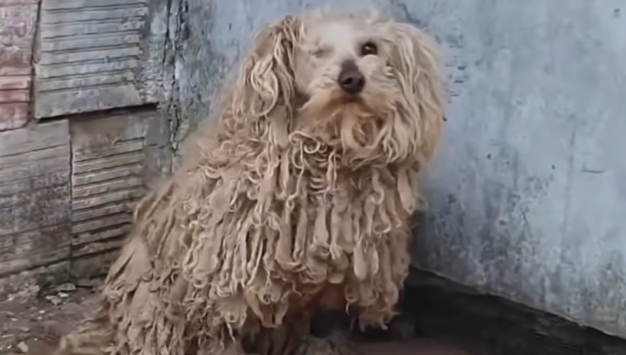
Slowly, cautiously, he stepped forward and sniffed my fingers.
His nose was cold, his breath warm.
Then, almost imperceptibly, he leaned in.
That tiny gesture felt like a victory.
“See?” I whispered. “We’re friends.”
Days turned into weeks.
He began to explore more, his curiosity returning alongside his confidence. He learned the routine of feeding times, the comfort of soft bedding, the gentle rhythm of voices that meant no harm.
The trembling grew less frequent.
One afternoon, while sitting beside him, I felt a soft weight against my leg.
He had leaned into me.
Carefully, I reached out and stroked his back.
He froze for a moment—then relaxed.
A quiet sigh escaped him, as though releasing a burden he had carried for far too long.
From that day on, trust blossomed.
He started greeting us at the door, tail wagging more freely. He discovered toys, cautiously at first, then with playful enthusiasm.
The dog who once cried in fear now began to bark with excitement.
But the most touching moment came when a family visited the shelter.
They sat quietly, allowing him to approach at his own pace. The young daughter spoke softly, her voice gentle and patient.
He watched them for a long time.
Then, slowly, he walked forward and rested his head on her knee.
The room fell silent.
“He chose us,” she whispered.
Paperwork was completed, and soon he was leaving the shelter—not as an abandoned soul, but as a beloved companion.
As they walked out, he glanced back once, eyes soft and calm.
I smiled.
“Take care,” I said.
Weeks later, we received a photo.
He lay sprawled on a cozy couch, eyes bright, surrounded by toys. A caption read: He sleeps peacefully now. He loves belly rubs and follows us everywhere.
Looking at that image, I thought back to the trembling dog in the shadows, crying because he couldn’t understand that help had finally arrived.
Rescue isn’t just about saving a life.
It’s about rebuilding trust, one gentle moment at a time.
Because sometimes, the ones who fear us the most are simply waiting for proof that kindness still exists.
And when they finally believe it, their transformation is nothing short of extraordinary.