The forest was unusually quiet that morning, the kind of stillness that makes every sound feel amplified. Leaves crunched under my boots as I followed a faint trail along the edge of the clearing, scanning the ground for any sign of movement. A call had come in just after dawn—someone hiking nearby had heard frantic barking deep in the woods, followed by a sudden yelp.
When I first heard the message, I felt that familiar knot in my stomach. Years of rescue work had taught me that silence after a cry often meant trouble.
About half a mile in, I heard it.
A low, strained whine carried through the trees, barely audible over the rustle of wind. I slowed, listening carefully, then followed the sound until I reached a small hollow near a fallen log.
That’s when I saw her.
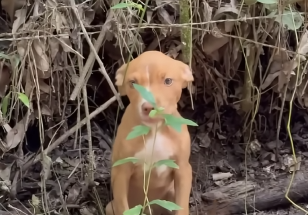
A brown and white dog lay partially hidden among dry leaves, her body tense, eyes wide with pain and fear. One of her front legs was caught in a rusted hunting trap, the metal jaws clamped tightly around her limb. The chain was anchored to a thick root, giving her only a few feet of movement.
She tried to stand when she noticed me, but the trap held fast, forcing her back down with a soft cry.
“Hey… it’s okay,” I said quietly, crouching at a distance. “I’m here to help.”
Her ears flicked back. She watched every move I made, torn between desperation and instinct. Her sides rose and fell rapidly, and I noticed patches of mud and scratches along her body—signs she had been struggling for some time.
Then I saw something that made my heart sink even further.
Her belly was swollen, and the fur around her underside was matted.
She was nursing.
“Where are your puppies?” I murmured.
As if understanding, she lifted her head and let out a weak, searching bark, glancing toward the trees behind her. It was not a warning—it was a call.
She wasn’t just trapped.
She was trying to find her missing puppies.
I spoke softly as I approached, offering a piece of food to gain her trust. Hunger overcame hesitation, and she carefully took it, eyes never leaving mine. Slowly, inch by inch, I moved closer until I was within reach.
“Good girl,” I whispered.
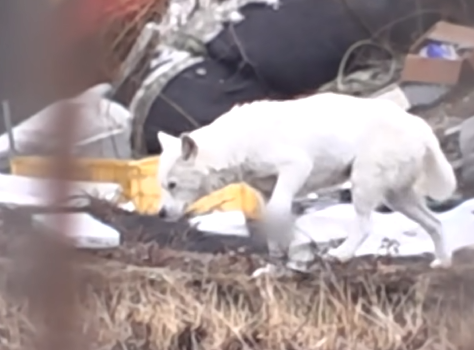
The trap was old but strong. I slipped on protective gloves and carefully positioned the release tool between the metal jaws. The dog tensed, letting out a soft whimper.
“I know… just a moment.”
With steady pressure, the jaws loosened.
The instant her leg was free, she tried to pull away but collapsed instead, exhausted. I gently examined the injury—swollen, bruised, but thankfully not broken.
Before I could say anything else, she struggled to her feet and limped a few steps away, turning back to look at me, then toward the woods again.
It was clear what she wanted.
She needed to find her puppies.
“Okay,” I said softly. “Show me.”
She moved slowly, stopping often to sniff the ground, then continuing with determination that defied her injury. I followed closely, carrying supplies and staying ready in case she faltered.
After several minutes, we reached a cluster of dense bushes near a shallow ditch. She let out a soft bark and pushed her nose into the undergrowth.
A faint squeak answered.
My breath caught.
Carefully parting the branches, I found them—four tiny puppies huddled together in a makeshift nest of leaves. Their eyes were barely open, their small bodies trembling.
The mother crawled in beside them, licking each one urgently, checking, counting.
“They’re here,” I said with relief.
The puppies whimpered softly, nuzzling against her for warmth and comfort. Despite her pain, she lay still, letting them nurse.
It was a moment that felt sacred—raw instinct, fierce love, and quiet resilience.
But we couldn’t stay.
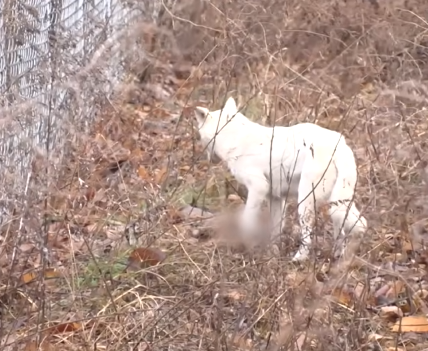
The forest held too many dangers, and her injury needed treatment. I gently prepared a crate lined with blankets and slowly guided her and the puppies inside. She hesitated only briefly before stepping in, unwilling to be separated from them.
Back at the rescue center, the veterinary team sprang into action. They cleaned her wound, administered antibiotics, and ensured the puppies were healthy.
“She’s lucky,” the vet said. “Another day in that trap could have been devastating.”
Over the next few days, the mother—whom we named Willow—remained constantly attentive to her puppies. Even while resting, her eyes followed their movements, ears twitching at every sound.
Visitors often paused outside her enclosure, touched by the quiet devotion she displayed.
“She never stops watching them,” one volunteer remarked.
As Willow’s leg began to heal, her personality emerged. She was gentle but alert, greeting familiar faces with soft tail wags while staying close to her little family.
The puppies grew quickly, their playful energy filling the room with life. They tumbled over one another, exploring their surroundings under Willow’s watchful gaze.
One afternoon, I sat nearby, observing as Willow carefully nudged a curious puppy away from the edge of the bedding.
“You went through so much to keep them safe,” I said softly.
She looked up, meeting my eyes, as if understanding.
Weeks passed, and Willow’s strength returned. She began taking short walks in the yard, always checking back toward the kennel where her puppies rested.
The bond between them was undeniable.
When the puppies were old enough, we started the process of finding them loving homes. Each adoption day was bittersweet—joy for their new beginnings, mixed with the tenderness of saying goodbye.
Willow watched quietly as each puppy left, her calm demeanor reflecting a trust that they would be cared for.
Finally, only Willow remained.
She seemed quieter without the constant bustle, but she adapted, enjoying gentle walks and moments of affection. Her resilience shone through in small ways—leaning into a scratch behind the ears, resting peacefully in the sun.
One morning, a family visited the center. They had heard Willow’s story and wanted to meet her.
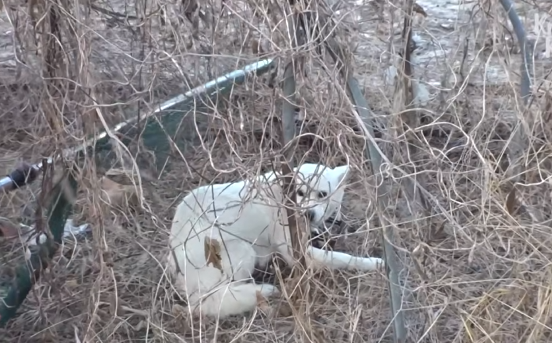
She approached them cautiously, then relaxed as they knelt and spoke softly. The youngest child extended a hand, and Willow gently placed her nose against it.
It was clear.
“She’s perfect,” the mother said, smiling.
The day Willow went home was filled with quiet emotion. As she walked beside her new family, tail wagging slowly, I felt a deep sense of gratitude.
From a cold metal trap in the forest to a warm home filled with care—her journey was nothing short of remarkable.
Months later, I received a photo.
Willow lay in a sunny backyard, looking healthy and content, a soft toy resting between her paws. Her eyes, once clouded with fear, now held peace.
Her family wrote: “She’s doing wonderfully. She still watches over us like she watched her puppies.”
Reading their message, I thought back to that morning in the forest—the desperate whine, the determined search, the unwavering love of a mother refusing to give up.
Willow had faced pain and uncertainty, yet her focus never wavered from what mattered most.
Her story is a reminder that even in moments of crisis, compassion can change the course of a life. And sometimes, the strongest courage is found not in grand gestures, but in the quiet determination to keep going—for those who depend on you.
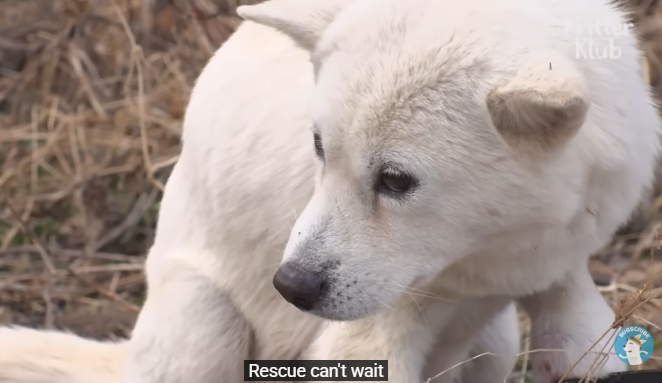
Dog caught by a hunting trap, looking for her missing puppies.
But what truly defined Willow was not the trap that held her—it was the love that guided her, step by painful step, until she found her way to safety.