4
Introduction: Open Your Heart, Strengthen Your Spine
A short backbend flow can be surprisingly powerful. In just four minutes, you can awaken your spine, stretch the front body, improve posture, and release built-up tension from sitting or stress. Backbends are often called “heart openers” because they counteract the forward-folding posture of daily life — shoulders rounding, chest collapsing, and neck leaning forward.
This 4-minute arch backbend yoga flow is designed to be simple enough to do at home, whether you’re a beginner exploring flexibility or someone looking to maintain spinal mobility. You don’t need fancy equipment — just a comfortable mat and a willingness to move slowly and breathe deeply.
Remember: backbends are about length, not forcing depth. Focus on lifting through the chest and engaging your core to support your lower back.
Why Backbend Flows Matter
Before diving into the sequence, it helps to understand the benefits:
- Improves spinal flexibility and mobility
- Opens chest and shoulders for better breathing
- Strengthens back muscles and glutes
- Enhances posture and reduces stiffness
- Boosts energy and mood
- Supports healthy movement patterns
Even a few minutes daily can create noticeable changes over time.
The 4-Minute Flow Overview
This mini flow includes:
- Gentle spinal warm-up
- Low backbend activation
- Deeper arch stretch
- Relaxed release
Move slowly and sync movement with breath.
Minute 1: Gentle Warm-Up — Cat & Cow Flow


4
Start on hands and knees.
How to do it:
- Inhale — drop the belly, lift chest and tailbone (Cow Pose).
- Exhale — round the spine, draw belly in (Cat Pose).
Move slowly for about one minute.
Focus cues:
- Spread fingers wide.
- Move vertebra by vertebra.
- Let breath guide the rhythm.
This warms the spine and prepares it for deeper extension.
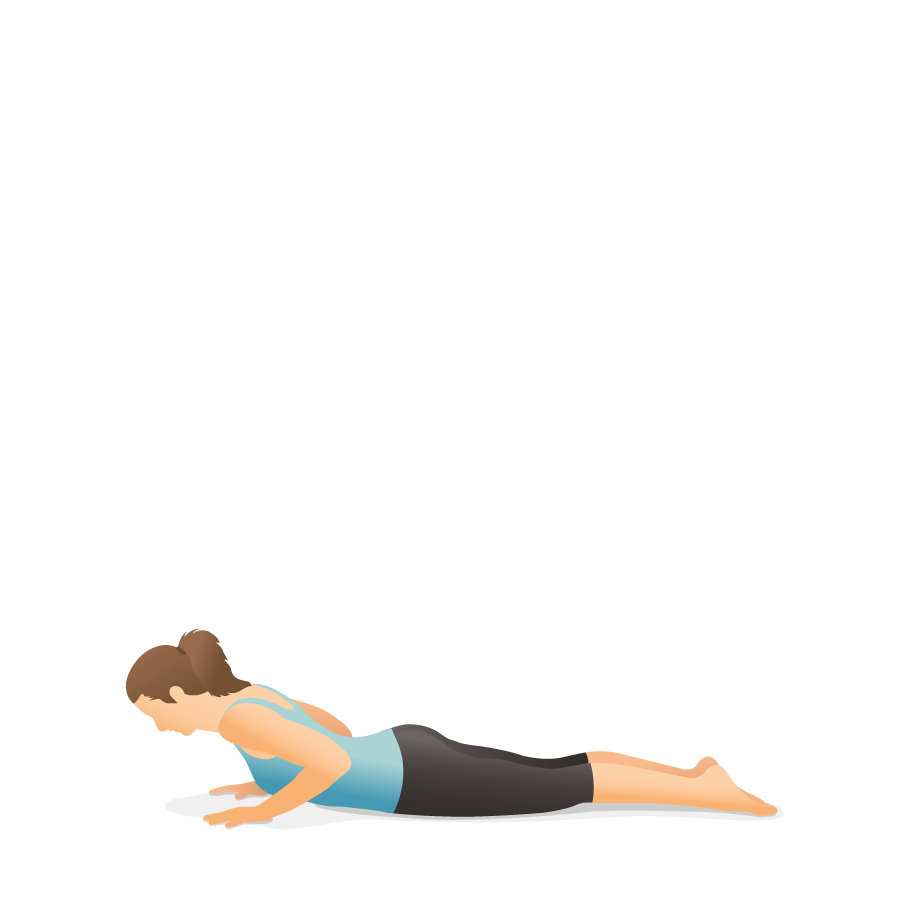
Minute 2: Low Cobra — Awakening the Back Body
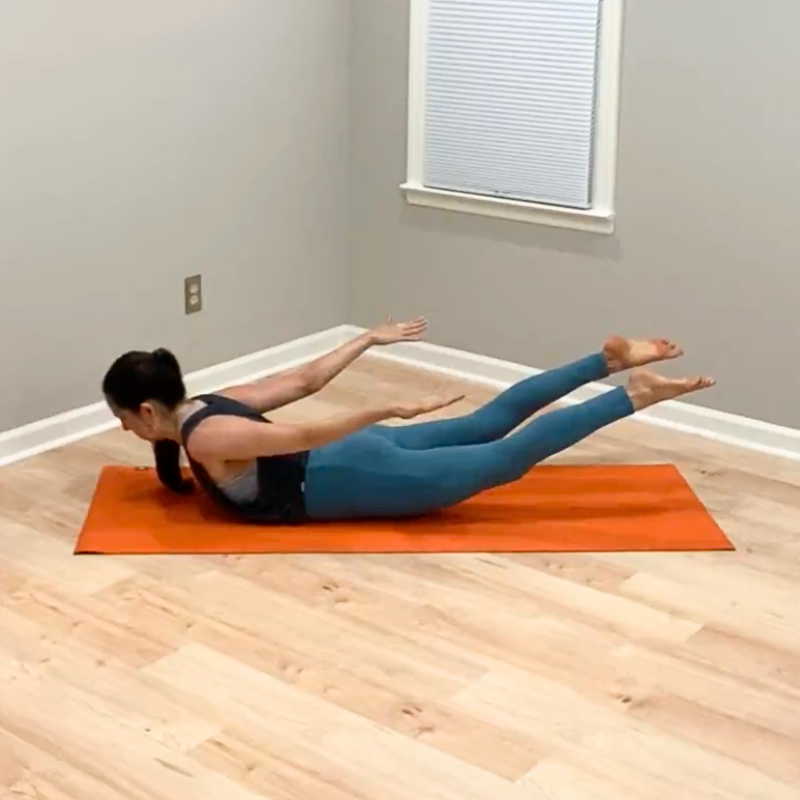
4
Lie on your belly with hands under shoulders.
Steps:
- Press lightly into hands.
- Lift chest slightly while keeping pelvis grounded.
- Roll shoulders back and broaden collarbones.
Hold for a few breaths, lower down, then repeat.
Key tip: Use back muscles more than arms. Imagine your chest reaching forward rather than pushing up.
This builds strength and introduces a safe arch.
Minute 3: Sphinx or Baby Upward Dog — Deepening the Stretch


4
From your belly, come onto forearms (Sphinx Pose).
Instructions:
- Elbows under shoulders.
- Press forearms into mat.
- Lift through sternum.
- Relax glutes slightly while keeping gentle engagement.
Breathe slowly.
You should feel a comfortable stretch across the abdomen and chest without compression in the lower back.
If you want more intensity, straighten arms slightly into a gentle upward dog variation.
Minute 4: Supported Bridge — Full Arch Experience


4
Roll onto your back, knees bent, feet hip-width apart.
Steps:
- Press into feet.
- Lift hips.
- Interlace fingers under back or place hands beside hips.
- Lift chest toward chin.
Hold for several breaths, then slowly lower down.
For support, place a cushion or block under your sacrum.
This pose completes the flow by opening the front body and strengthening the posterior chain.
Breathing Guide: The Secret to Deeper Flexibility
Backbends become safer and more effective when paired with conscious breathing.
Try this pattern:
- Inhale — expand chest.
- Exhale — soften tension.
Slow breathing signals the nervous system to relax, allowing muscles to lengthen naturally.
Never hold your breath — it creates unnecessary tension.
Alignment Tips for Safe Arching
Keep these principles in mind:
- Lengthen spine before bending.
- Engage core lightly to protect lower back.
- Lift through chest rather than collapsing into lumbar.
- Keep neck long — avoid crunching.
- Move gradually into deeper ranges.
Think of your spine as a smooth arc rather than a hinge.
Common Mistakes to Avoid
❌ Forcing into deep backbends too quickly
❌ Dumping weight into lower back
❌ Locking elbows aggressively
❌ Ignoring discomfort signals
❌ Skipping warm-up
Backbends should feel energizing — not painful.
How This Flow Improves Flexibility Over Time
When practiced consistently, even a short daily flow:
- Hydrates spinal discs through movement
- Improves fascia elasticity
- Builds muscular support
- Encourages better posture habits
Flexibility isn’t about pushing — it’s about repetition and gentle progression.
After a few weeks, you may notice:
- Easier chest opening
- Less stiffness in mornings
- Deeper natural arches
- Improved body awareness
Who Can Benefit From This Flow?
This sequence is helpful for:
- Desk workers with tight shoulders
- Beginners building mobility
- Dancers and gymnasts maintaining flexibility
- Anyone wanting a quick energy boost
- People easing into backbend practice
It’s short enough to fit into busy schedules yet effective enough to create change.
Optional Add-Ons (If You Have Extra Time)
If you’d like to extend beyond four minutes:
- Add Child’s Pose for release
- Try gentle shoulder stretches
- Include supine twists
- Practice a longer Bridge hold
These additions deepen recovery and balance the spine.
The Emotional Side of Heart Openers
Many practitioners report feeling lighter or more uplifted after backbends. Opening the chest can feel symbolic — releasing tension, inviting openness, and improving confidence.
You might notice:
- A sense of spacious breathing
- Improved mood
- Reduced stress
- Greater mental clarity
Yoga connects physical movement with emotional awareness.
Safety Reminder
If you have back injuries, disc issues, or chronic pain, move gently or consult a professional before starting. Modify poses as needed and avoid pushing into discomfort.
Always listen to your body — it’s your best guide.
Closing Reflection
A four-minute practice may seem small, but small habits build powerful results. Each time you move into an arch, you’re reminding your body that it can stay mobile, strong, and open — even in a world that often pulls us forward.
Roll out your mat, take a few slow breaths, and let your spine move like a wave — fluid, supported, and alive.
With consistency, your back will feel stronger, your posture more natural, and your flexibility will gradually deepen.
Sometimes, transformation begins with just a few mindful minutes.