Have you ever stopped for a moment and wondered what the life of a monkey is really like? Not the short clips you see online, not the funny faces or playful tricks that make people laugh—but the full life, lived day after day in forests, mountains, or sometimes near human homes. The life of a monkey is a story of intelligence, struggle, family, and survival, woven quietly into the rhythm of nature.
A monkey’s life begins with closeness.
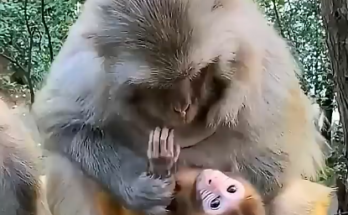
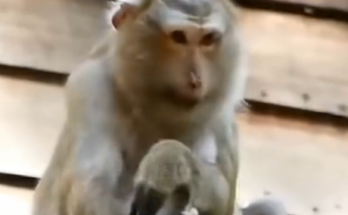
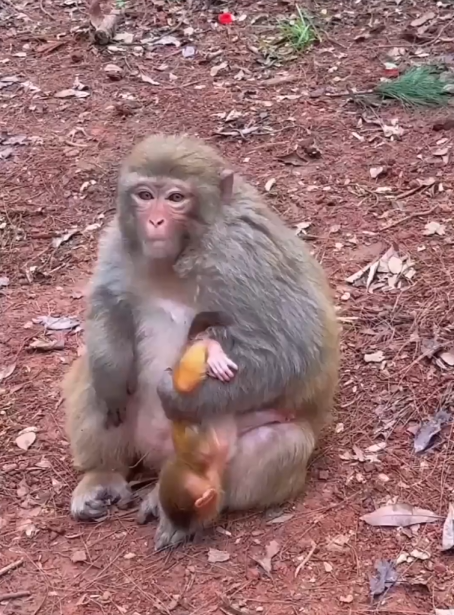
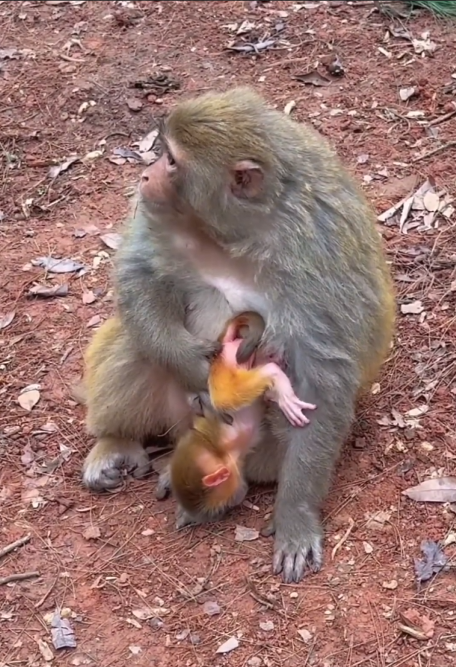
From the very first moments, a baby monkey clings tightly to its mother. Her heartbeat becomes its first sound of comfort. Her warmth is its first shelter. For months, sometimes even years, the baby rarely leaves her side. The mother teaches without words—how to hold branches, how to recognize danger, how to read the sounds of the forest. In this early stage, life is small and safe, wrapped in fur and trust.
But safety never lasts forever.
As the monkey grows, curiosity awakens. The forest becomes a classroom filled with lessons. Young monkeys play constantly, chasing each other through the trees, wrestling, falling, and climbing again. These games are not meaningless fun. They teach balance, strength, social rules, and limits. A monkey learns who is stronger, who is gentler, who should be respected.
Every mistake has a consequence.
Food is never guaranteed. Some days, fruit is abundant, sweet, and easy to find. Other days, the trees are bare, and monkeys must travel farther, search longer, and compete harder. They learn to remember seasons, locations, and tastes. Intelligence becomes survival. The smartest monkeys are not always the strongest, but the most observant.
Family shapes everything.
Monkeys live in groups, and life within a troop is complex. There are friendships, rivalries, alliances, and conflicts. Mothers protect fiercely. Elders guide with experience. Young males test boundaries, often clashing to find their place. Every movement, sound, and expression carries meaning. A raised eyebrow, a flick of the tail, a short cry—these are languages of survival.
Danger is constant.
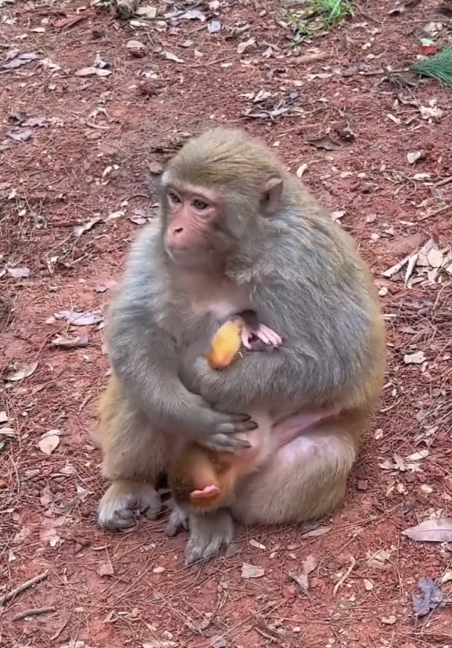
Predators watch from shadows. Snakes hide in branches. Birds of prey circle above. Even humans, sometimes unknowingly, become threats. Monkeys must always be alert. A second of distraction can mean injury or death. When danger appears, the troop reacts as one—warning calls echo, bodies scatter, mothers clutch their young.
Yet, despite this tension, monkeys still find time for joy.
They groom each other, carefully picking through fur, not just for cleanliness but for bonding. Grooming calms the heart, strengthens trust, and reduces conflict. In those quiet moments, the forest feels less dangerous. Touch becomes language. Presence becomes peace.
As monkeys grow older, their roles change.
Strength fades, but knowledge deepens. Older monkeys may no longer leap as high or fight as fiercely, but they remember. They know where water hides in dry seasons, which paths are safest, which fruits ripen first. Their value is not in speed, but in wisdom. A troop that ignores its elders often suffers.
The life of a monkey is also shaped by loss.
Friends disappear. Infants do not always survive. Leaders fall. Monkeys grieve in ways humans are only beginning to understand. They sit quietly near bodies. Mothers may carry lost infants for days. The forest continues, but the pain is real. Life moves forward, carrying scars along with strength.
And then there is the human world.
Some monkeys live close to people, navigating roads, buildings, and noise. They learn quickly—how to open containers, steal food, avoid traps. To humans, they may look clever or troublesome. To themselves, they are simply adapting. Survival does not judge. It responds.
Unfortunately, not all interactions are kind.
Some monkeys are captured, chained, or forced to perform. Their intelligence becomes a tool for entertainment. Their natural lives are replaced with fear and confusion. The forest is replaced by cages. These monkeys survive—but they do not live fully. Their story is a reminder that intelligence without compassion becomes cruelty.
Still, hope exists.
Around the world, people work to protect monkeys and their habitats. Forests are guarded. Injured monkeys are rescued. Orphans are raised and released. Slowly, balance is restored where it was broken. The life of a monkey, once threatened, continues.
So, have you heard about the life of a monkey?
It is not just playful jumps and funny faces. It is a life of learning, adapting, loving, and surviving. It is a mirror of our own struggles—family, loss, curiosity, conflict, and resilience. Monkeys remind us that we are not as separate from nature as we think.
When you see a monkey next time, pause. Remember that behind those bright eyes is a full life—a story shaped by the forest, the group, and the choices of the world around it.
The life of a monkey is not simple.
But it is meaningful.