Flexibility is often one of the first things people notice when they watch yoga. Long, flowing movements. Deep stretches. Bodies folding, bending, and opening in ways that seem almost impossible. For many, this visual beauty sparks curiosity and inspiration. Yoga Amazing Flexibility! is not just about how far the body can stretch—it is about what happens inside when we give ourselves permission to move with patience, awareness, and respect.
True flexibility is not built overnight. It is the result of consistent practice, mindful breathing, and a gentle relationship with the body. Yoga teaches us that flexibility is not about forcing muscles into shapes, but about allowing them to soften over time. When the body feels safe, it naturally opens. When the mind is calm, the body follows.
This practice celebrates the journey toward flexibility, not just the final pose. Whether you are a beginner who can barely touch your toes or an experienced practitioner flowing effortlessly into deep stretches, yoga meets you exactly where you are. That is its magic.
The foundation of amazing flexibility begins with breath. In yoga, every stretch is guided by inhalation and exhalation. The breath acts as a bridge between the mind and body. As you inhale, you create length and space. As you exhale, you release tension and resistance. This rhythmic pattern tells the nervous system that it is safe to let go.
Before deep stretching begins, the body must be warmed gently. Slow movements, joint rotations, and light flows prepare muscles and connective tissues for deeper work. This preparation is essential. Cold muscles resist stretching, but warm muscles respond with ease. Yoga honors this natural process, reducing the risk of injury while increasing long-term flexibility.
As the practice unfolds, attention often moves to the spine. A flexible spine supports overall mobility and health. Forward folds lengthen the back body, releasing tight hamstrings and lower back tension. Backbends open the chest and shoulders, counteracting the effects of long hours spent sitting. Twists detoxify and re-energize the body, improving spinal mobility and circulation.
Each spinal movement in yoga is an opportunity to explore range of motion without strain. Rather than pushing to the maximum, you are encouraged to move slowly, feel deeply, and stop before pain begins. This mindful approach allows flexibility to develop sustainably and safely.
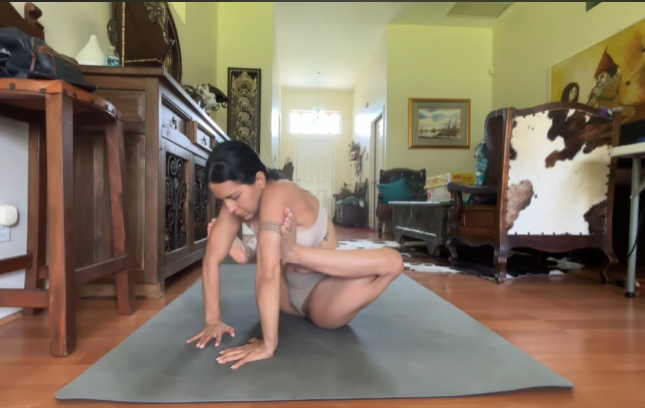
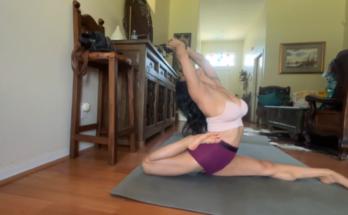
Hip flexibility plays a major role in how free the body feels. The hips store both physical tightness and emotional stress. Through poses such as lunges, pigeon variations, and wide-legged stretches, yoga gradually releases tension in this area. Many practitioners experience emotional responses during hip opening—sighs, tears, or sudden relief. This is a natural part of the process and a reminder that flexibility is not only physical.
Hamstrings are another key area often associated with flexibility. Tight hamstrings can limit forward folds and affect posture. Yoga stretches the hamstrings through gentle lengthening rather than aggressive pulling. Over time, this approach creates lasting flexibility while protecting the lower back and knees.
Shoulders and chest also benefit greatly from yoga. Modern life often pulls the shoulders forward, creating tightness and restriction. Yoga counters this by opening the front of the body and strengthening the back. As the shoulders become more flexible, breathing deepens and posture improves, creating a sense of openness and confidence.
Balance poses, though often overlooked in flexibility discussions, play an important role. They require strength, focus, and subtle flexibility. Standing on one leg, for example, challenges the ankles, hips, and spine to adjust and stabilize. These micro-adjustments increase mobility and body awareness, contributing to overall flexibility.
One of the most powerful aspects of yoga flexibility is its accessibility. You do not need extreme flexibility to begin. Props such as blocks, straps, and bolsters make poses available to every body. Using support is not a sign of weakness—it is a sign of intelligence and self-respect. Props allow you to experience the essence of a pose without strain, making flexibility progress more comfortable and enjoyable.

Consistency matters more than intensity. Practicing yoga regularly, even for short sessions, creates better results than occasional intense stretching. The body adapts gradually, responding to repeated signals of safety and care. Over time, stiffness fades, range of motion increases, and movements feel smoother and more natural.
Mental flexibility is closely connected to physical flexibility. When the mind is rigid—full of expectations, judgments, and impatience—the body often mirrors that tension. Yoga encourages curiosity instead of judgment. Some days your body opens easily; other days it resists. Both experiences are valuable. Learning to accept these fluctuations builds patience and resilience.
Amazing flexibility also brings practical benefits beyond the mat. Improved mobility reduces the risk of injury, enhances athletic performance, and supports healthy aging. Simple daily movements—bending, reaching, walking—become easier and more comfortable. Chronic stiffness and aches often decrease as the body learns to move freely again.
Rest and recovery are essential parts of flexibility training. Yoga recognizes that growth happens not only in effort, but in rest. Gentle stretching combined with deep relaxation allows muscles and connective tissues to integrate changes. Restorative poses and mindful breathing activate the parasympathetic nervous system, promoting healing and balance.
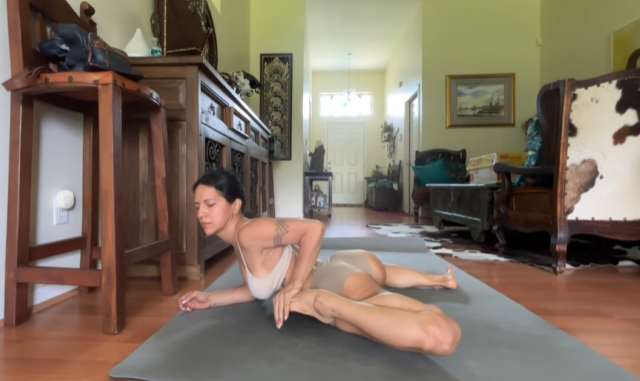
As flexibility increases, many practitioners notice a shift in how they feel emotionally. There is a sense of lightness, freedom, and confidence that comes from moving without restriction. The body feels less like a limitation and more like a partner. This positive relationship encourages consistency and joy in practice.
Yoga reminds us that amazing flexibility looks different on every body. Genetics, lifestyle, age, and past injuries all influence range of motion. Comparison has no place in yoga. The most flexible body is not the one that looks impressive, but the one that moves comfortably and pain-free.
With time, dedication, and mindfulness, yoga transforms stiffness into fluidity. The body opens gradually, the breath deepens, and the mind softens. Flexibility becomes a natural expression of balance rather than a goal to chase.
Yoga Amazing Flexibility! is an invitation to explore your body with curiosity and kindness. To celebrate progress, no matter how small. To understand that flexibility is not about extremes, but about harmony.
On the mat, you learn to bend without breaking, to stretch without forcing, and to move with grace. And as flexibility grows in the body, it quietly expands into life itself—helping you adapt, breathe, and flow through every challenge with greater ease.