In today’s fast-paced world, stress and tension have become almost inevitable. Hours spent sitting at a desk, commuting in traffic, or staring at screens can wreak havoc on our bodies, particularly the upper and lower back. Tension builds, muscles tighten, and discomfort becomes a constant companion. For many, finding a few minutes to unwind can feel impossible—but even a short, focused routine can provide immense relief. That’s where the 3-Minute Yoga Roller Self Massage for Upper & Lower Back comes in—a simple yet powerful practice designed to release tension, improve mobility, and cultivate deep relaxation in just a few minutes.
Why Use a Yoga Roller?
A yoga roller, also known as a foam roller, is an incredibly effective tool for self-myofascial release. By applying pressure to tight areas of the muscles and fascia, it helps break up adhesions, improve circulation, and increase flexibility. Unlike traditional massage, a yoga roller puts you in control, allowing you to target specific areas with precision. It’s gentle enough for beginners, yet versatile enough for advanced practitioners looking to deepen their recovery and relaxation.
The benefits of regular yoga roller practice extend far beyond physical relief. When used mindfully, it also promotes mental relaxation. Focusing on slow, deliberate movements while breathing deeply helps activate the parasympathetic nervous system—the part of your body responsible for calming down and reducing stress. In just three minutes, you can feel a noticeable difference in both tension and mood.
Preparing for the Practice
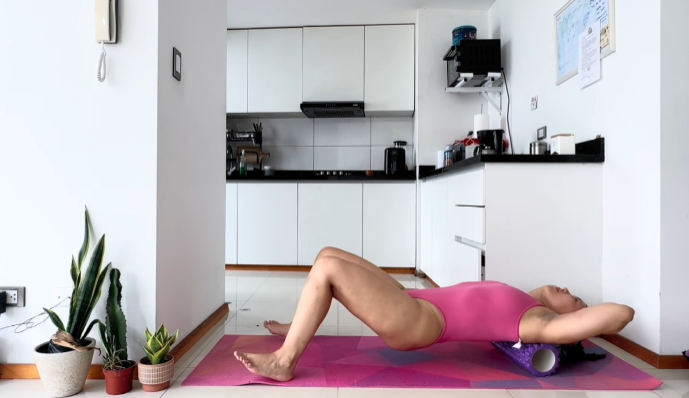
Before starting, ensure you have a yoga roller and a comfortable space to lie down. A yoga mat or soft surface will protect your spine and make the session more enjoyable. Wear comfortable clothing that allows full range of motion. It’s important to approach this practice with patience—never rush the movements. The goal is not speed but mindfulness, awareness, and deep release.
Start by taking a few deep breaths. Close your eyes if it feels comfortable and bring attention to your spine. Notice where tension may already be present—perhaps in the shoulders, between the shoulder blades, or along the lower back. Acknowledging areas of discomfort allows you to focus your attention there during the self-massage.
Step 1: Upper Back Release
Begin by sitting on the floor with your knees bent and feet flat. Place the yoga roller behind you at the base of your shoulder blades. Lean back gently, supporting your head with your hands if needed. Slowly roll the roller up toward your upper back and down toward the middle back, pausing on areas that feel particularly tight.
As you roll, focus on your breathing. Inhale deeply, expanding the chest, and exhale slowly, allowing the muscles to soften. If you encounter a tender spot, pause for a few breaths, letting the pressure of the roller release the tension gradually. Avoid rolling directly on your neck—focus instead on the muscles surrounding the spine.
Perform this motion for about 60 seconds, moving slowly and mindfully. The gentle pressure helps loosen tight muscles, improves posture, and reduces stiffness in the upper back. Many practitioners notice an immediate release of tension in the shoulders and neck, as tight upper back muscles often pull on these areas.
Step 2: Mid-Back Focus
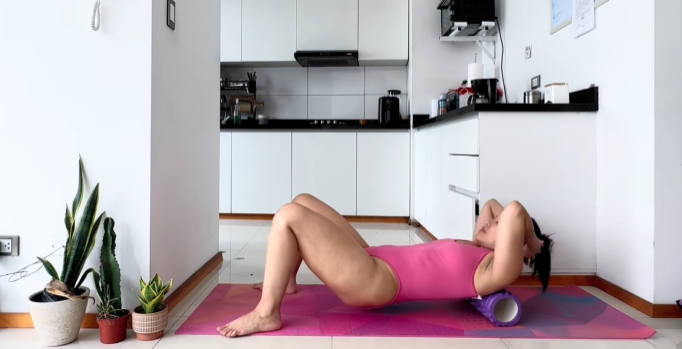
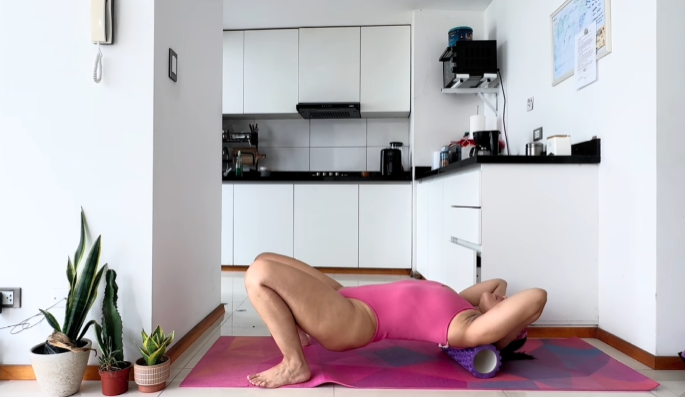
After the initial release, shift your attention slightly lower to the middle back. Position the roller beneath the shoulder blades and slowly roll down toward the mid-spine, maintaining steady breathing. This section of the back often holds tension from prolonged sitting or poor posture.
To enhance the effect, lift your hips slightly off the floor and roll back and forth, letting the roller massage the muscles along the spine. If a particularly tight spot arises, pause and apply gentle pressure for a few breaths. Visualize the tension melting away with each exhale.
The mid-back release not only improves flexibility but also opens the chest, allowing better lung expansion and improved breathing. This can help reduce stress further, as tight muscles often limit natural breathing patterns, contributing to feelings of tension and anxiety.
Step 3: Lower Back Release
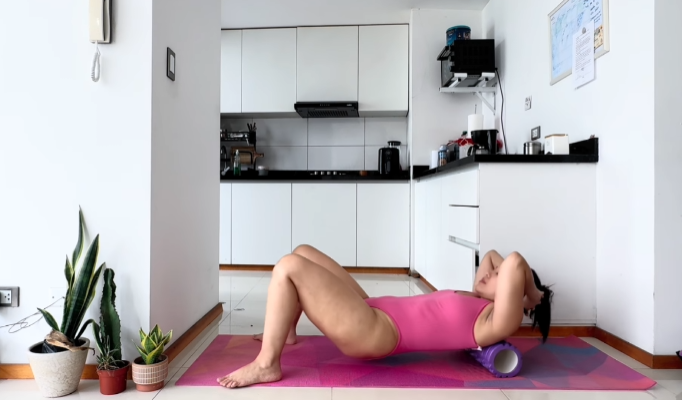
Many people carry stress in the lower back, which can lead to chronic stiffness and discomfort. To address this area, position the yoga roller under the lumbar region, just above the hips. Lie back slowly, supporting your weight with your feet and arms.
Use slow, controlled movements to roll from the lower back up toward the mid-back. Focus on breathing deeply into any tight spots, allowing your muscles to gradually release. If rolling directly on the spine feels uncomfortable, angle your body slightly to target the muscles on either side instead.
For additional release, try gentle side-to-side movements, creating a subtle sway that massages the muscles along the lower back. This technique can help alleviate tension from long periods of sitting or standing and improves blood flow to fatigued muscles.
Step 4: Shoulder and Lat Stretch
The yoga roller can also target the latissimus dorsi (lats) and shoulders, which often become tight from repetitive movements or desk work. Lie on your side with the roller placed under your armpit area, extending slightly down the side of the ribcage. Slowly roll from the armpit down toward the waist, pausing on tender spots.
This motion helps release tension in the lats, shoulders, and upper back simultaneously. Many practitioners notice improved mobility in the arms and shoulders immediately after this stretch. Deep breaths during this step enhance the relaxation effect, signaling your body to release stored tension.
Step 5: Full Back Stretch
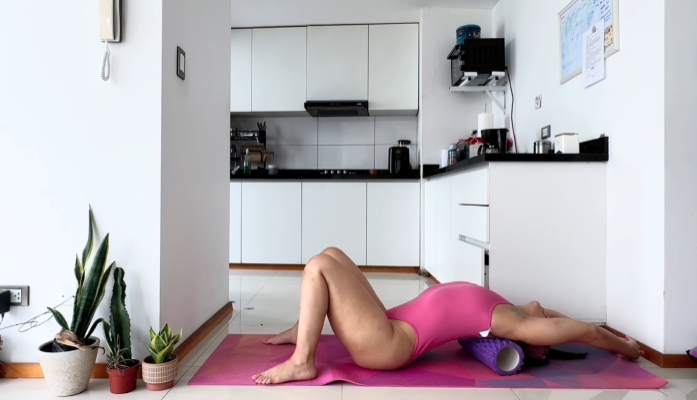
For a final release, lie with the roller positioned along the spine from the neck to the lower back. Extend your arms out to the sides, palms facing up, and let your body drape gently over the roller. Close your eyes and focus on deep, even breaths.
As you settle, imagine your spine elongating, muscles softening, and tension melting away. This full-back stretch allows your back to decompress, promotes spinal alignment, and provides a soothing sense of relief. Even three minutes of this practice can significantly reduce stiffness, leaving the body feeling lighter and more relaxed.
Integrating Mindfulness
While the physical benefits of yoga roller self-massage are clear, the mental and emotional benefits are equally powerful. Approaching the practice mindfully transforms it from a simple massage into a meditative experience. Focus on your breath, observe how your muscles respond, and stay present with each sensation.
Visualize stress and tension leaving your body with every exhale. Imagine warmth and relaxation flowing into tight areas with every inhale. Even a few minutes of mindful attention can dramatically reduce anxiety and promote a sense of well-being.
Tips for Maximum Benefit
- Consistency is key: Practicing this 3-minute routine daily can provide cumulative benefits, reducing tension and improving mobility over time.
- Go slow: Avoid rushing through the movements. Slow, deliberate rolling enhances muscle release and relaxation.
- Listen to your body: Never roll to the point of pain. Mild discomfort is normal, but sharp pain indicates that you need to adjust your position or avoid the area.
- Focus on breathing: Deep, even breaths amplify the release of tension and promote mental relaxation.
- Hydrate: Drinking water after rolling helps flush out toxins released from the muscles.
Why 3 Minutes Is Enough
You might wonder if three minutes is enough to make a real difference. Surprisingly, short sessions can be incredibly effective. The key is focus and mindfulness. By concentrating on specific areas of tension and using deep, controlled movements, even a brief session can release knots, improve circulation, and reduce stress significantly.
For people with busy schedules, this 3-minute yoga roller self-massage is ideal. It can be done in the morning to prepare the body for the day, during a break to release accumulated tension, or in the evening to unwind and relax before sleep.
Long-Term Benefits
Regularly using a yoga roller for upper and lower back release not only reduces immediate tension but also promotes long-term health. Benefits include:
- Improved posture: Releasing tight back muscles allows the spine to align naturally.
- Enhanced flexibility: Rolling regularly increases the elasticity of muscles and fascia.
- Reduced pain: Targeted self-massage can alleviate chronic back pain caused by tension and poor posture.
- Mental relaxation: Focusing on breath and body awareness reduces stress and promotes a calm mind.
- Increased circulation: Rolling stimulates blood flow, promoting recovery and reducing stiffness.
Ending the Practice
Finish the session by lying comfortably on your back or sitting in a cross-legged position. Take a few moments to notice how your back feels compared to before. Often, there is a sense of lightness, improved mobility, and a reduction in stress.
You can even combine this routine with gentle stretches for the spine, such as cat-cow movements or seated twists, to further enhance the effects. The combination of rolling and stretching provides both immediate relief and lasting benefits.
Conclusion
The 3-Minute Yoga Roller Self Massage for Upper & Lower Back is a simple, accessible, and effective practice for anyone seeking relief from tension and stress. In just a few minutes, you can release tight muscles, improve circulation, and cultivate deep relaxation. The key is consistency, mindfulness, and attention to your body’s needs.
Whether you are a busy professional, a student, or someone who simply wants to care for your body, this quick routine is an excellent tool. It proves that even a short, focused self-care practice can create a noticeable difference in both physical comfort and mental clarity.
Remember, your back carries the weight of your daily life—treat it with care. By incorporating this 3-minute yoga roller self-massage into your routine, you can reduce tension, relieve stress, and bring balance to your body and mind. Even a few minutes of intentional, mindful release can transform your day, leaving you feeling refreshed, relaxed, and ready to face whatever comes next.