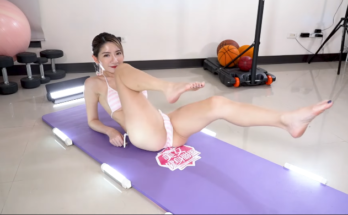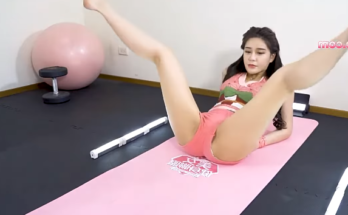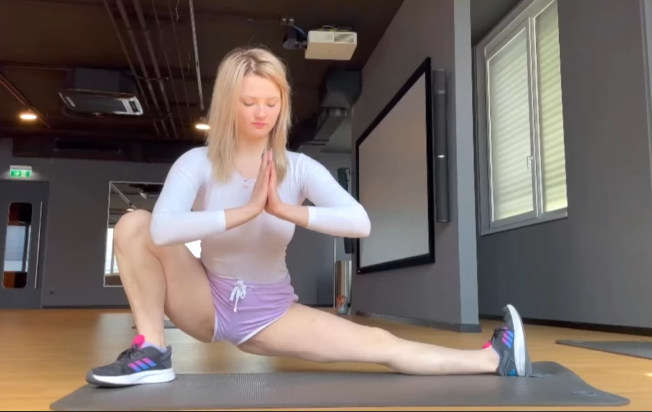
The leg-behind-head position is one of the most iconic expressions of flexibility in yoga, contortion, and gymnastics. It symbolizes extreme openness of the hips, deep spinal awareness, and a refined balance between strength and surrender. While visually striking, this posture is not about showing off flexibility—it is the result of patient training, intelligent stretching, and deep respect for the body’s structure and limits.
Whether approached through yoga, contortion training, or gymnastics conditioning, bringing the leg behind the head is a long-term journey. It requires not only flexible muscles, but calm nerves, strong stabilizers, and mindful progression. When trained correctly, it builds body awareness, emotional resilience, and trust in one’s own movement.
Understanding the Leg-Behind-Head Position
The leg-behind-head posture demands a rare combination of mobility:
- Deep external rotation of the hip
- Extreme hamstring and glute flexibility
- Open hip flexors and adductors
- A supple but supported spine
- Strong core and back muscles
- Relaxed neck and shoulders
Contrary to popular belief, this pose is not created by forcing the leg upward. It is created by opening the hips outward and upward while keeping the spine long and protected. True leg-behind-head flexibility feels spacious, not compressed.
Some bodies may never achieve a full leg-behind-head due to hip socket structure—and that is completely natural. Training should always honor anatomy, not fight it.
The Importance of Proper Warm-Up
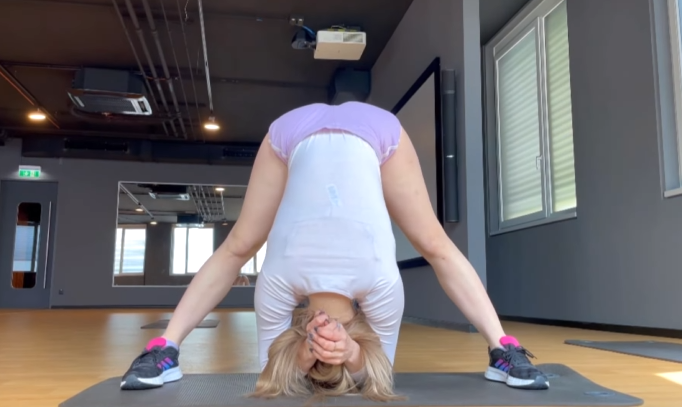
A full-body warm-up is essential before attempting leg-behind-head training. Cold muscles and joints resist opening and increase injury risk.
Begin with 10–15 minutes of light cardiovascular movement such as jogging, skipping, cycling, or dynamic flow yoga. Follow with:
- Hip circles and figure-eight movements
- Dynamic lunges and leg swings
- Gentle spinal waves and twists
- Shoulder rolls and neck mobility
Your body should feel warm, alert, and responsive before moving into deeper stretches.
Foundational Flexibility Before Leg Behind Head
Before attempting this advanced position, the following foundations should already be comfortable:
- Front splits with square hips
- Deep pigeon pose or hip external rotation
- Comfortable seated forward folds
- Side splits or wide straddle flexibility
- Strong core engagement
Without these prerequisites, leg-behind-head training becomes unsafe and counterproductive.
yoga-Based Preparation
Yoga offers a slow, mindful approach that prepares the nervous system as much as the muscles.
Pigeon Pose (Eka Pada Rajakapotasana)
This is one of the most important preparatory poses. Keep the front shin comfortable (not forced parallel). Focus on lifting the chest and breathing into the hips rather than collapsing forward.
Fire Log Pose (Agnistambhasana)
Excellent for external hip rotation. Sit tall and avoid forcing the knees downward.
Lizard Pose with External Rotation
From a deep lunge, drop the forearms down and allow the front knee to open outward gently.
Happy Baby Pose
Encourages hip openness while keeping the spine supported.
Hold these poses with slow breathing, allowing tension to dissolve naturally.
Gymnastics and Contortion Stretching Progressions
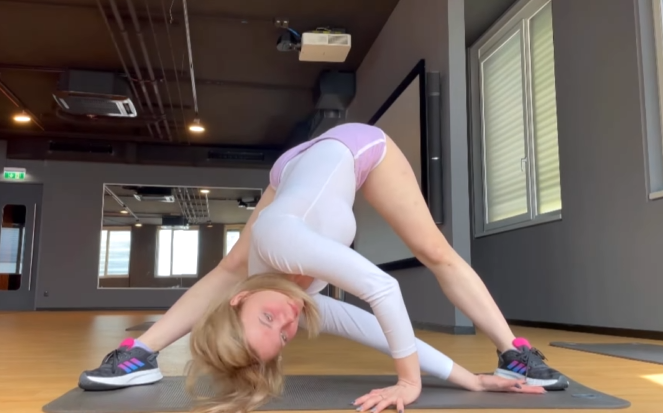
In contortion and gymnastics training, flexibility is trained actively as well as passively.
Standing Leg Lifts (External Rotation)
Lift one leg outward and upward while standing tall. This builds strength in the open range of motion.
Seated One-Leg Fold with External Rotation
Sit with one leg extended and the other bent outward. Fold over the straight leg while maintaining upright posture.
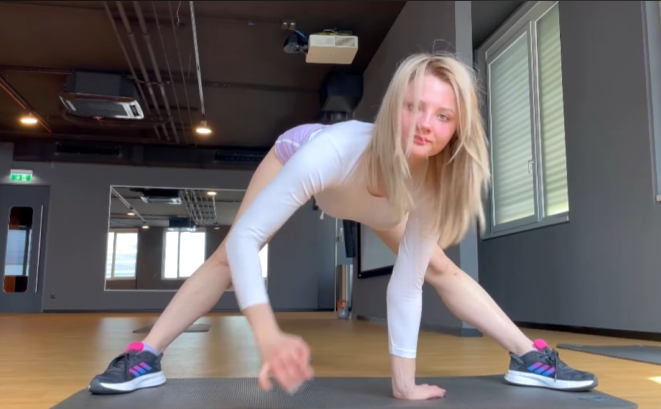
Straddle Pancake Stretch
From a wide straddle, hinge forward with a flat spine. This opens the hips deeply while strengthening control.
Elevated Hamstring Stretches
Place one leg on a raised surface and fold forward with squared hips. This prepares the leg for upward mobility.
Consistency is more important than intensity. Gentle daily work yields better results than aggressive stretching.
Assisted Leg-Behind-Head Entry (Training Stage)
Once foundational flexibility is developed, you may begin assisted versions.
Sit tall with one leg extended. Bend the other knee deeply and externally rotate the hip. Using your hands, guide the shin toward the shoulder—not the neck.
Pause frequently. Never force the leg behind the head. Instead, allow gravity, breath, and relaxation to do the work.
If the leg reaches the shoulder comfortably, gently guide it higher while keeping the spine long. The neck should remain relaxed and neutral—never cranked forward.
Support the posture with your hands at all times during early training.
Active Control and Safety
Active flexibility is critical. Without it, the leg-behind-head position becomes passive and dangerous.
Engage:
- The core to support the spine
- The back muscles to maintain posture
- The quadriceps to protect the knee
- The glutes to stabilize the hip
If any sharp pain, numbness, or joint pressure occurs, stop immediately.
This pose should feel intense but spacious—not compressed or painful.
Breathing and Nervous System Regulation
The nervous system plays a huge role in deep flexibility. Fear and tension limit range of motion.
Use slow nasal breathing:
- Inhale for 4–5 seconds
- Exhale for 6–8 seconds
Long exhalations signal safety to the body, allowing muscles to release naturally.
Never hold your breath in deep stretches. Breath is your primary safety tool.
Common Mistakes to Avoid
- Forcing the leg using arm strength
- Pulling on the neck or compressing the spine
- Ignoring hip rotation and compensating with spinal strain
- Training without proper warm-up
- Chasing flexibility without strength
Progress should feel controlled, not rushed.
Emotional and Mental Aspects of Training
Leg-behind-head training often brings emotional release. The hips store tension related to stress, fear, and control. As they open, emotions may surface.
Approach training with patience and self-compassion. Progress is not linear. Some days the body opens easily; other days it resists.
This is not failure—it is communication.
Frequency and Recovery
Train deep flexibility 3–5 times per week, allowing rest days for recovery. On rest days, use gentle mobility and relaxation rather than intense stretching.
Support recovery with:
- Hydration
- Adequate sleep
- Gentle walking or swimming
- Light massage or foam rolling
Flexibility grows during recovery, not during force.
Integrating the Pose into Practice
In yoga, leg-behind-head postures often appear as seated poses or transitions. In contortion and gymnastics, they may appear in performance, balances, or transitions.
Practice entering and exiting the pose slowly and with control. Never “drop” into or out of the position.
True mastery is shown not by how far you go—but by how safely and gracefully you move.
Final Thoughts
Training the leg-behind-head position through yoga, stretching, contortion, and gymnastics is a journey of patience, intelligence, and respect for the body. It is not a shortcut skill, and it is not meant for everyone—and that is okay.
What matters is not the final shape, but the awareness, strength, and calm developed along the way.
Move slowly. Breathe deeply. Listen carefully.
In that space, flexibility becomes freedom—not force.