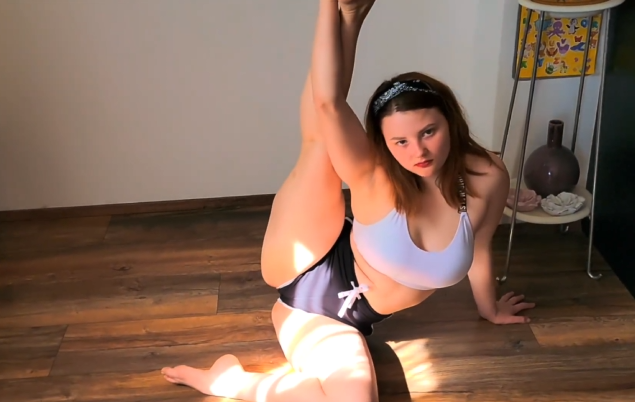
Leg flexibility is one of the most recognizable and essential foundations of contortion and gymnastics. Clean lines, powerful extensions, elegant leaps, and fluid transitions all rely on the ability of the legs to open fully and safely. Among the many flexibility skills trained in these disciplines, splits and oversplits stand at the core. While they may look simple or purely aesthetic, they demand patience, discipline, correct technique, and deep body awareness.
True leg flexibility is not about forcing the body into extreme positions. It is about creating space, strength, and control so the body can move freely without pain or injury. When trained properly, splits and oversplits enhance performance, protect joints, and build confidence in movement.
Understanding Leg Flexibility in Contortion and Gymnastics
Leg flexibility involves multiple muscle groups working together: hamstrings, quadriceps, hip flexors, glutes, adductors, calves, and the muscles surrounding the pelvis. In contortion and gymnastics, flexibility must be functional, meaning the athlete can actively control the range of motion rather than collapsing into it.
Splits and oversplits train this functional range by opening the hips and lengthening the legs while teaching the body to remain aligned and stable. This balance between mobility and strength is what separates safe flexibility training from dangerous overstretching.
The Importance of a Proper Warm-Up
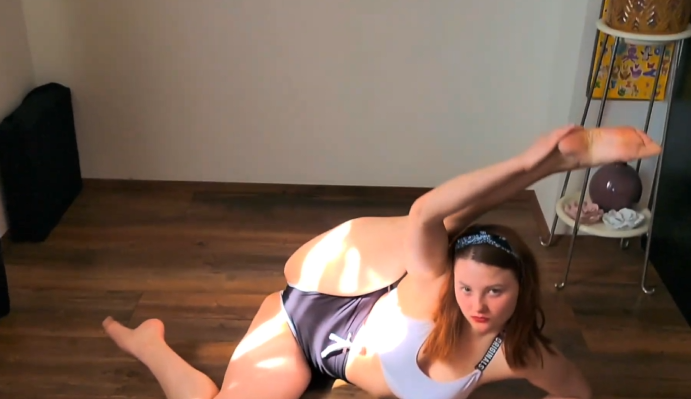
Before practicing splits or oversplits, warming up is non-negotiable. Cold muscles resist stretching and are far more prone to injury.
Begin with 10–15 minutes of light cardiovascular movement such as jogging, skipping, dancing, or dynamic yoga flow. This increases blood circulation and raises muscle temperature.
Follow with dynamic leg movements:
- Front and side leg swings
- Lunges and deep squats
- Hip circles and rotations
- Gentle hamstring and quad stretches
Your body should feel warm, responsive, and awake—not fatigued—before moving into deeper flexibility work.
Types of Splits in Training
There are two main types of splits commonly trained in contortion and gymnastics:
Front Splits
One leg extends forward while the other extends backward. This stretch targets:
- Hamstrings of the front leg
- Hip flexors and quadriceps of the back leg
- Hip stability and pelvic control
Middle Splits (Side Splits)
Both legs open sideways, stretching:
- Inner thighs (adductors)
- Hip joints
- Pelvic floor muscles
Balanced training includes both types to prevent muscle imbalances.
Front Splits: Alignment and Technique
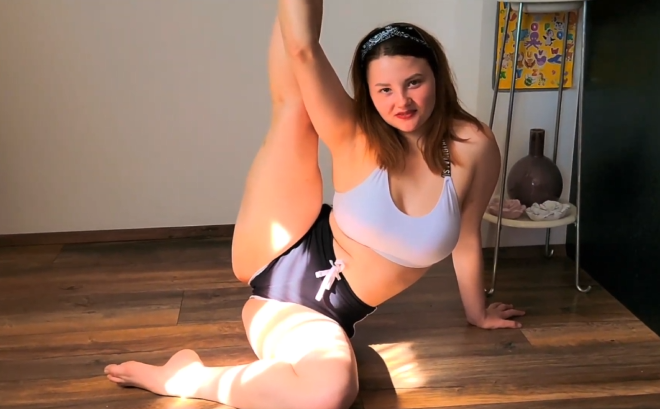
Start in a low lunge position. Gradually slide the front heel forward and the back knee backward while maintaining control.
Key alignment points:
- Keep the hips square and facing forward
- Engage the core to support the pelvis
- Keep the spine long and upright
- Avoid collapsing forward or twisting the hips
Using yoga blocks or hands on the floor provides stability and helps prevent excessive strain. Hold the position for 20–60 seconds with slow, controlled breathing.
Front splits should feel intense but stable. Sharp pain or joint discomfort is a signal to stop.
Middle Splits: Building Patience and Control
Middle splits often take longer to develop than front splits because the inner thighs can be resistant.
Begin in a wide straddle stance. Slowly lower the hips toward the floor, keeping the torso upright and the spine neutral. The toes may point forward or slightly outward, depending on hip anatomy.
Important cues:
- Engage the quadriceps to protect the knees
- Avoid tipping the pelvis backward
- Use hands or forearms for support
- Lower only as far as control allows
Progress may be slow, but consistent practice leads to lasting results.
Introducing Oversplits Safely
Oversplits take flexibility beyond 180 degrees and are considered an advanced training tool. They are commonly used in contortion and high-level gymnastics to make standard splits feel easier and more controlled.
Oversplits should only be practiced once clean, pain-free splits are comfortable on the floor.
Front Oversplits
To practice front oversplits, place the front heel on an elevated surface such as a yoga block, cushion, or low platform. Slowly slide into a split, keeping the hips square and the core engaged.
Key safety points:
- Never drop suddenly into the stretch
- Use blocks under the hands for control
- Keep the spine lifted and supported
- Hold for short durations (15–30 seconds)
Oversplits should feel intense but stable, not painful or uncontrolled.
Middle Oversplits
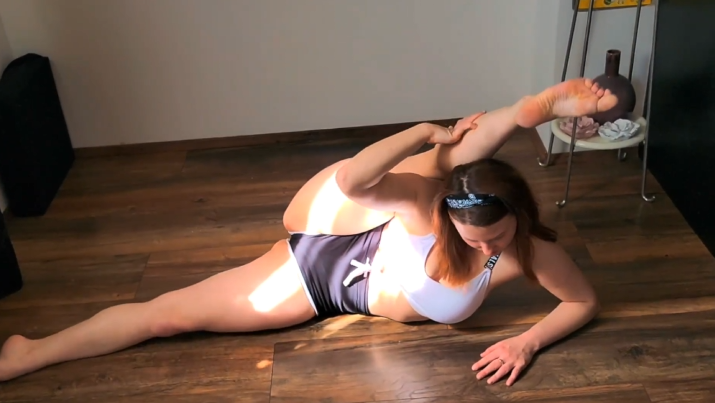
Middle oversplits are more demanding and should be approached with extra caution.
They may be performed by placing one foot or both feet on elevated surfaces. This dramatically increases the stretch on the inner thighs and hips.
Maintain:
- Upright posture
- Active engagement in the legs
- Slow, steady breathing
Never force the hips downward. Control is more important than depth.
Active Flexibility: The Missing Key
Passive flexibility alone is not enough. Active flexibility—the ability to lift and control the legs in an open position—is what makes splits usable in gymnastics and contortion.
After holding a split, practice:
- Engaging the legs to lift slightly
- Pulling yourself deeper using muscle control
- Holding the position without collapsing
This strengthens muscles in their lengthened state and protects joints from injury.
Breathing and Nervous System Awareness
Flexibility is influenced by the nervous system as much as the muscles. When the body senses danger, it tightens to protect itself.
Slow breathing helps signal safety:
- Inhale through the nose
- Exhale slowly through the mouth
- Relax the jaw, shoulders, and hips
Never bounce or force during splits or oversplits. Smooth, calm movement encourages deeper release.
Common Mistakes to Avoid
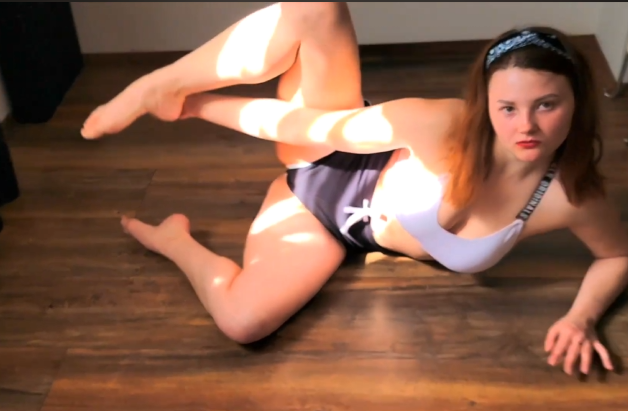
- Pushing into pain instead of sensation
- Twisting the hips to gain depth
- Collapsing the spine forward
- Locking the knees aggressively
- Training oversplits too early
Flexibility training should feel challenging but controlled.
Frequency and Recovery
Splits and oversplits can be practiced 3–6 times per week depending on intensity and experience level.
Beginners should focus on shorter holds and gradual progress. Advanced practitioners must still respect recovery needs.
Support recovery with:
- Gentle stretching on rest days
- Adequate hydration
- Quality sleep
- Light massage or foam rolling
Rest is part of progress, not a setback.
The Mental Aspect of Flexibility Training
Flexibility training requires patience and emotional resilience. Progress is not linear. Some days feel open and effortless; others feel tight and frustrating.
Avoid comparison. Every body has a unique structure and timeline. Success in contortion and gymnastics comes from consistency, not rushing.
Approach each session with curiosity rather than expectation. Small improvements matter.
Integrating Splits into Performance
In gymnastics and contortion routines, splits are not static poses. They are dynamic shapes integrated into movement, transitions, jumps, and balances.
Practice entering and exiting splits with control. Train transitions smoothly and evenly. Flexibility becomes truly useful when it supports movement, not interrupts it.
Final Thoughts
Splits and oversplits are powerful tools for building leg flexibility in contortion and gymnastics. When trained with proper warm-up, alignment, active engagement, and patience, they create strong, graceful, and resilient movement.
True flexibility is not about how far you can go—it is about how safely and confidently you can move within your range.
Train intelligently. Breathe deeply. Respect your body.
Flexibility will grow where patience leads.