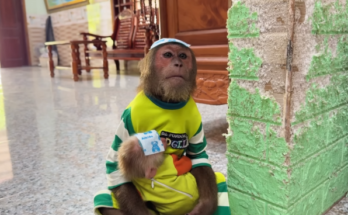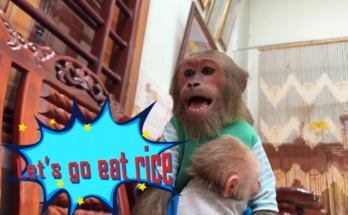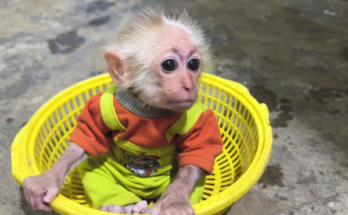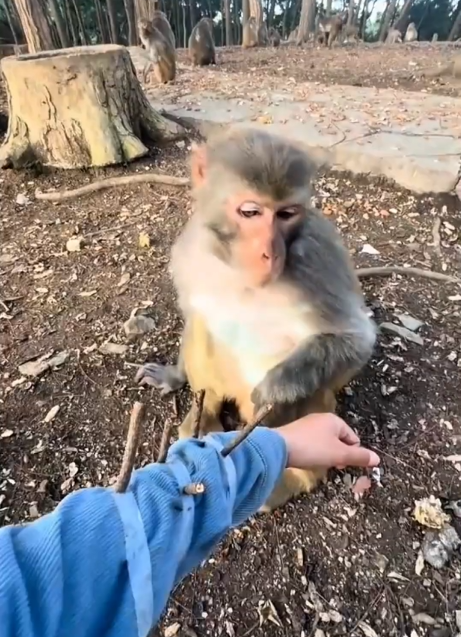
In the heart of a lush, green forest, a small troop of monkeys lived among the towering trees. Life in the forest was full of challenges and surprises. Food was often scarce, dangers lurked in every shadow, and only those who were clever, quick, and resourceful thrived. Among the troop, one little monkey stood out—not for its size, strength, or speed, but for its extraordinary intelligence. This was a monkey who could solve problems, think ahead, and even trick its fellow monkeys in ways that made the observers marvel.
The monkey, whom the troop affectionately called Cutis, was young but remarkably sharp. From the moment Cutis could walk and climb, it displayed an uncanny ability to understand its surroundings. While other young monkeys struggled to reach ripe fruits or avoid sudden drops, Cutis seemed to anticipate every obstacle. It learned the safest paths through the trees, remembered which branches held the juiciest fruits, and even noticed subtle changes in the forest—like the approach of predators or humans passing nearby.
What made Cutis truly extraordinary, however, was its problem-solving skills. While most monkeys followed instinct and trial-and-error learning, Cutis often observed first, analyzed the situation, and acted with precision. One day, the troop discovered a human settlement near the edge of the forest. The humans had left baskets of food outside, filled with fruits, vegetables, and even sweet treats. Most monkeys hesitated, unsure whether it was safe to approach. But not Cutis.
Carefully, Cutis watched from a high branch. It noted the humans’ routines, how they left the baskets unattended at certain times, and how they approached the area with caution. After several observations, Cutis made its move. It leapt from tree to tree, landing silently near the basket. With nimble hands and careful timing, it grabbed a piece of fruit and returned to its hiding spot without alerting the humans. The troop watched in awe. Cutis didn’t just steal food—it planned, timed, and executed the operation like a master strategist.
But Cutis’s intelligence was not limited to acquiring food. It also displayed emotional intelligence and social awareness. The monkey knew how to interact with others to get what it wanted while maintaining friendships and alliances within the troop. For instance, when a larger monkey tried to dominate the food it had found, Cutis would often offer a small portion as a gesture of goodwill. In return, the larger monkey allowed Cutis access to better branches, safer perches, and occasionally even extra food. This gave Cutis not just survival skills, but social leverage.
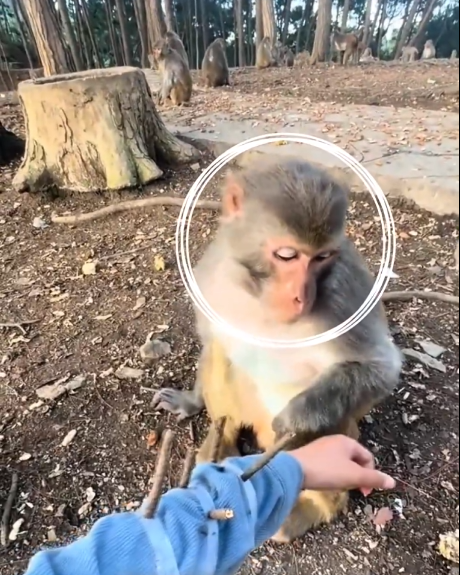
One particularly remarkable instance of Cutis’s intelligence occurred during a sudden storm. Heavy rain fell, and the troop scrambled to find shelter. Many monkeys were trapped on slippery branches or struggling to reach safe spots. Cutis, however, seemed to anticipate the danger. It led a small group of young monkeys to a cluster of thick, low-hanging branches that provided natural shelter. It guided them carefully, showing patience and awareness beyond its years. By the time the storm subsided, the troop realized that Cutis had not only ensured its own safety but had helped protect others as well.
Cutis also showed ingenuity in play and exploration. One day, the monkey discovered a large, hollow log near the forest floor. Curious, it investigated the log, noticing how sounds echoed and how objects could be moved inside. Over time, Cutis began using the log as a tool. It would place small fruits inside and roll them to reach otherwise inaccessible spots, or even hide treats for others, observing how they reacted. This playful intelligence demonstrated an ability to experiment, learn from results, and innovate—skills that set Cutis apart from its peers.
Observers who came to study the troop were often surprised by Cutis’s behavior. Scientists noted how the monkey could solve complex puzzles, remember sequences of actions, and even learn from watching humans. In one study, a simple maze was set up with a reward at the end. While other monkeys approached randomly, Cutis paused, observed the maze’s layout, and then moved with calculated precision, reaching the reward in record time. Its learning was not purely instinctual—it involved reasoning, foresight, and adaptation.
Cutis’s intelligence was also evident in communication. Monkeys rely heavily on vocalizations, gestures, and facial expressions to convey information. Cutis seemed to understand this deeply. It would alert others to danger, communicate playfulness, or even deceive temporarily to protect resources. For instance, it might make a warning call about a predator while carefully ensuring it itself had safe access to food. Such behavior showed not just cleverness, but an understanding of social dynamics and cause-and-effect relationships within the troop.
The little monkey’s cleverness extended to problem-solving in unexpected ways. One day, a large branch with ripe fruits hung just out of reach of the troop. Most monkeys jumped and fell short, giving up after repeated attempts. Cutis, however, observed a fallen branch nearby. It dragged the branch underneath the hanging fruits, climbed on top, and used it as a makeshift ladder to reach the prize. Not only did it succeed where others failed, but it also demonstrated the ability to use tools—a remarkable sign of intelligence in primates.
Despite its cleverness, Cutis was not reckless. The monkey balanced curiosity with caution, understanding danger and taking calculated risks. It avoided confrontations with aggressive males when possible, retreated when humans approached, and knew which parts of the forest were safe at different times of the day. This blend of intelligence, observation, and cautious strategy allowed Cutis to thrive, even in challenging conditions.
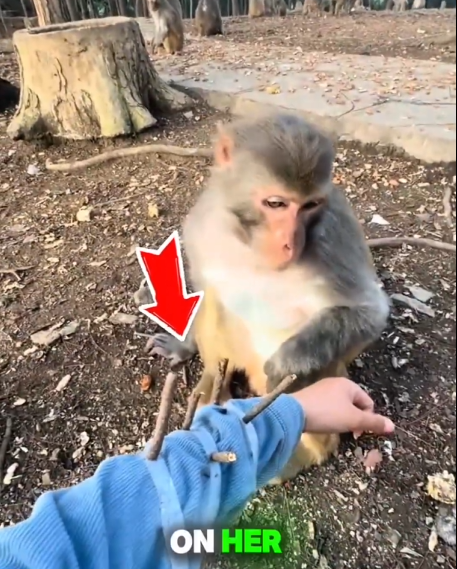
Cutis’s reputation in the troop grew over time. Other monkeys began to follow its lead during foraging or exploration. Younger monkeys looked to Cutis as a model, copying its movements and mimicking its problem-solving strategies. Adults respected its cleverness, recognizing that while it was small, its contributions to the group’s safety and efficiency were valuable.
Perhaps the most surprising aspect of Cutis was its creativity. The monkey displayed behaviors that went beyond mere survival—playful experimentation, imaginative use of objects, and even displays of empathy toward other monkeys. For instance, Cutis was observed helping younger monkeys reach fruits they could not climb to or warning older monkeys of approaching predators even when it gained nothing directly. Such acts showed a complexity of thought and social awareness that was extraordinary.
Cutis’s story reminds us that intelligence in animals is multifaceted. It is not only about strength or speed, but about observation, problem-solving, communication, and social awareness. Cutis survived—and thrived—because it combined all these traits. The monkey’s cleverness allowed it to navigate a complex forest environment, maintain social bonds, and demonstrate creativity and foresight that surprised everyone who observed it.
In the forest, Cutis remains a legend—not because it is the largest, fastest, or strongest, but because it uses its mind to overcome challenges, innovate, and adapt. Its actions inspire curiosity and respect, reminding both humans and fellow monkeys that intelligence is not measured by size alone but by the ability to think, learn, and apply knowledge in the real world.
Life in the forest is unpredictable, filled with danger, challenges, and opportunities. Cutis thrives because it is not just reactive but proactive, not just instinctive but thoughtful. Its strategies, foresight, and clever solutions to everyday problems ensure survival and success in a world where the clever often outperform the strong.
In the end, the story of Cutis—the smart little monkey—surprises not only because of its feats but because it challenges our assumptions about animal intelligence. In every leap, every calculated decision, and every playful experiment, Cutis demonstrates that intelligence comes in many forms, often hidden in the unlikeliest of creatures. It teaches us that creativity, problem-solving, and social awareness are vital skills, not just for humans but for all creatures navigating the challenges of life.
And so, Cutis continues to swing through the trees, exploring, learning, and surprising everyone in the troop. Each day brings a new challenge, a new puzzle, and a new opportunity to showcase intelligence in action. For those who observe patiently, the message is clear: in the life of monkeys, cleverness can turn the ordinary into the extraordinary—and sometimes, a single smart monkey can change the course of the day for the entire troop.