In the quiet hours of early morning, when the forest is still wrapped in soft mist and the sun has not yet warmed the leaves, a mother monkey cradles her newborn close to her chest. The baby is tiny, no bigger than her forearm, with pink fingers that curl instinctively around her fur. Every breath the little one takes seems like a miracle, and the mother feels it—deep in her heart and in every careful movement she makes. From the very first moment, her world has narrowed to one purpose: to protect, comfort, and love her newborn baby more than anything else.
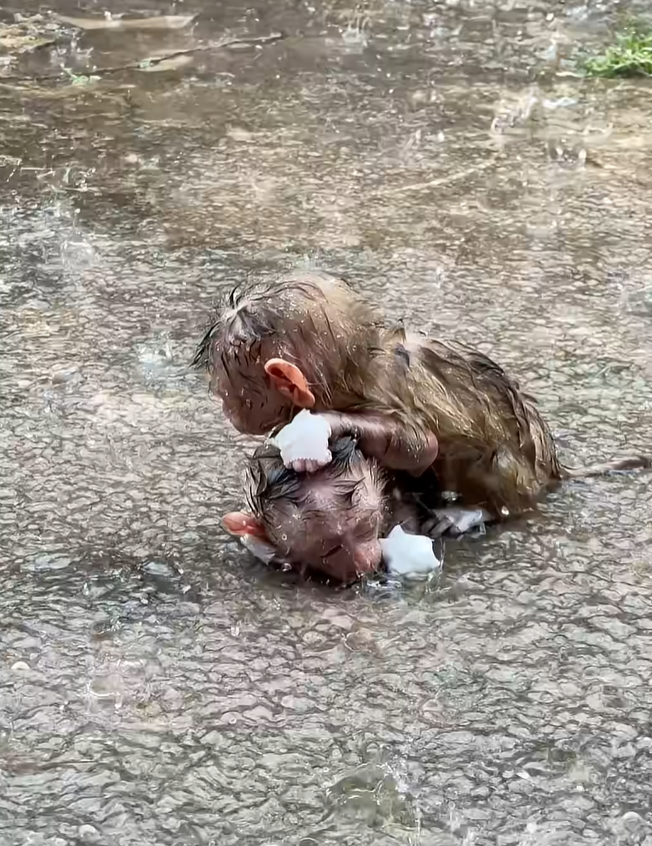
The newborn monkey is fragile and new to everything. Its eyes open only briefly, blinking at the light before closing again. The sounds of the forest—chirping birds, rustling leaves, distant calls—are overwhelming. Whenever the baby squirms or whimpers, the mother responds instantly. She pulls the baby closer, adjusting her grip so the little body is supported and warm. Her arms form a safe circle, and her steady heartbeat becomes a lullaby that calms the baby’s fears.
A mother monkey’s care begins with warmth. Newborns cannot control their body temperature well, so she keeps the baby pressed against her chest, sharing her heat. Even when she needs to move, she never lets go. If she climbs, she does so slowly, testing each branch before shifting her weight. Her tail helps her balance, but her arms never loosen their hold. Every step is measured, every leap carefully planned, because the baby’s safety comes before everything else.
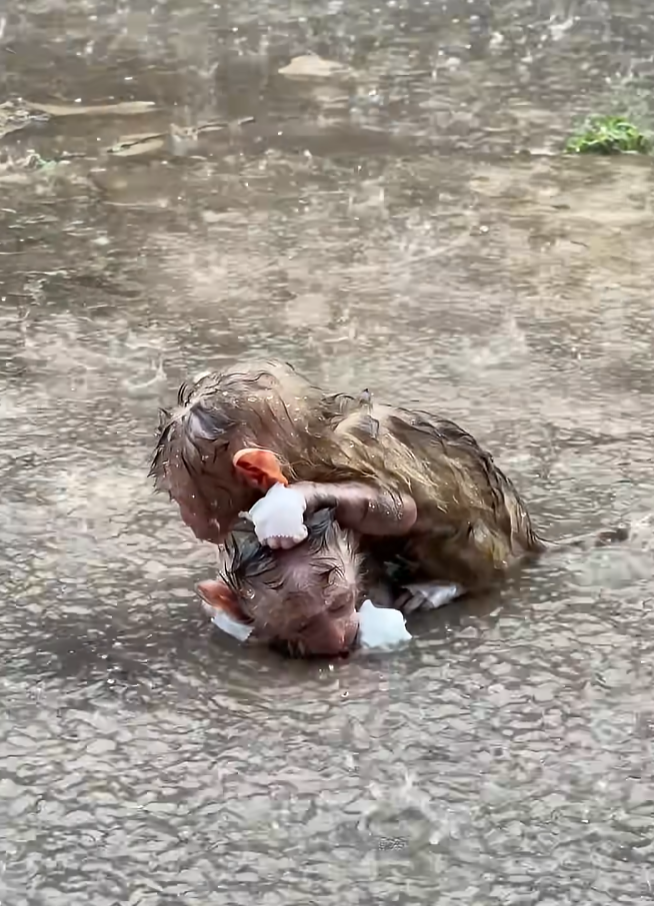
Feeding time is another moment of deep connection. The newborn instinctively searches for milk, guided by scent and touch. The mother positions herself patiently, allowing the baby to feed comfortably. She watches closely, making sure the baby is latched and drinking well. If the baby struggles, she gently adjusts her posture. There is no rush, no distraction—only focused care. The soft sounds of feeding blend with the forest’s quiet rhythm, creating a peaceful scene of trust and nourishment.
Cleaning and grooming are also acts of love. With delicate fingers, the mother gently licks and picks at the baby’s fur, removing dirt and keeping the skin healthy. This grooming is not only about cleanliness; it strengthens their bond. The baby relaxes under her touch, learning that comfort and safety come from its mother. Through these small, repeated actions, the baby begins to understand the world as a place where needs are met and fears are eased.
As the days pass, the mother remains constantly alert. The forest is beautiful, but it can also be dangerous. She listens carefully for unfamiliar sounds and watches for movement that does not belong. If another animal comes too close, she shifts her position, placing herself between the baby and any potential threat. Sometimes she gives a warning call, a clear message that her baby is not to be approached. Her courage grows from love, turning a gentle caregiver into a fierce protector when needed.
Sleep is light and broken, but she accepts it without complaint. Even while resting, she keeps one arm wrapped around her newborn. If the baby stirs in the night, she wakes instantly, rocking gently until the tiny body relaxes again. The forest may sleep, but a mother’s care never truly pauses. Her instincts remain sharp, tuned to the smallest change in her baby’s breathing or movement.
Slowly, the newborn begins to change. The eyes stay open longer, curiosity replacing confusion. The fingers grip more strongly, and the baby starts to lift its head, testing new muscles. The mother encourages this growth while still providing support. She allows the baby to explore a little—holding on as it reaches out to touch leaves or her own fur. Each small achievement is met with patience and pride, though she never pushes too fast. She knows that growing strong takes time.
Other monkeys in the group may come near, curious about the new arrival. The mother allows gentle interactions, but she remains watchful. If the baby shows signs of discomfort, she pulls it back to her chest. Trust is built slowly, and she decides who is allowed close. Her careful judgment ensures that the baby experiences social bonds without feeling overwhelmed.
As weeks turn into months, the baby becomes more active. It begins to climb short distances, always within reach. The mother stays nearby, ready to catch or guide. When the baby slips, she is there in an instant, preventing fear from turning into harm. Each stumble is a lesson, and each rescue is a reminder that love provides a safety net for learning.
The bond between mother and baby monkey is powerful and unmistakable. It is shown in every gentle touch, every watchful glance, every moment of shared warmth. This care is not loud or dramatic; it is steady, patient, and constant. It teaches the baby how to survive, how to trust, and how to belong.
In the end, a mother monkey’s care is a beautiful example of love in its purest form. Without words, she shows what it means to be devoted. Her newborn grows not only because it is fed and protected, but because it is deeply loved. In the heart of the forest, wrapped in fur and warmth, a small life begins its journey—strong, confident, and secure—because mommy cares so much.