The message came late at night, the kind of message you almost don’t open because you already know it’s going to hurt. A friend from a small rescue group sent it with no introduction—just a photo and a single line of text: “Can you help? No one will take him.”
I stared at the picture for a long time.
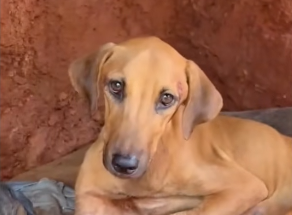
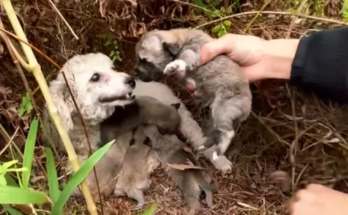
The puppy was huddled in the corner of a concrete room, his body unnaturally stiff, his eyes wide with fear. His fur was patchy and dirty, his ribs visible beneath his skin. One of his front paws looked swollen, twisted at an angle that made my stomach turn. He didn’t look like a puppy who had known kindness. He looked like a puppy who had learned early that the world was not safe.
I typed back without thinking: What happened to him?
The reply came quickly. He had been found near a construction site, crying. Workers said he snapped when they tried to pick him up. He was labeled “aggressive.” The local shelter refused intake because they didn’t have the resources for a fearful, injured puppy. Foster homes had already said no. People were afraid he would bite. Afraid he was “too much.”
No one wanted to touch him.
I closed my laptop and leaned back, trying to be practical. The rescue was far—hours away. I already had responsibilities, limited space, limited time. And puppies with trauma aren’t easy. They require patience, money, and emotional energy. I listed every reason not to go.
But the image of him stayed burned in my mind.
A puppy doesn’t come into this world aggressive. Fear is learned. Pain teaches it. And the idea of him spending another night alone, injured and terrified, was something I couldn’t shake.
By morning, my decision was made.
I packed my car with blankets, towels, water, and a small crate. As I started the engine, a voice in my head asked, What if he bites you? What if you can’t help him? I answered it out loud: “Then at least he won’t be alone.”
The drive felt endless. Highway after highway stretched ahead, the sun rising and setting as my thoughts raced. I imagined the worst—him too injured to survive, too afraid to ever trust. I imagined the best—him healing, playing, becoming a normal, happy dog. I told myself not to get attached. I told myself this was just a rescue, not a promise.
When I finally arrived, the building was quiet and dim. The caretaker led me to a back room and warned me again. “He growls,” she said. “He snaps. We can’t touch him.”
She opened the door carefully.
He was smaller than I expected.
Curled tightly against the wall, he trembled as soon as he saw me. His growl was weak, more a plea than a threat. His body shook so hard I could see it from across the room. When I took a step closer, he bared his tiny teeth, eyes filled with panic.
I didn’t move.
I sat down on the floor, turned my body slightly away from him, and spoke softly. I told him my name. I told him he was safe, even though I knew he had no reason to believe me. I told him I was sorry for everything he’d been through, even though he couldn’t understand the words.
Minutes passed. Then more minutes.
His growling slowed. His body stopped shaking quite as violently. When I slid a treat across the floor, he didn’t touch it. When I pushed it a little closer, he sniffed, then grabbed it and retreated back to his corner.
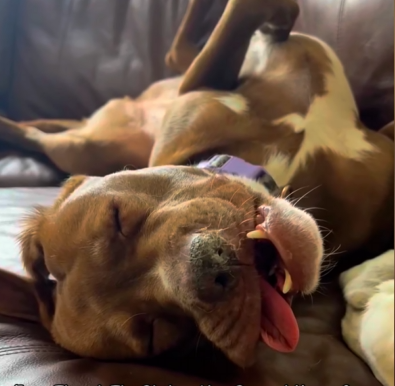
That was enough.
We loaded him into the crate using a towel, moving slowly to avoid hurting his injured paw. He cried softly the entire time, not from anger but from fear. I closed the crate door gently and promised him I wouldn’t let anyone hurt him again.
The drive back felt even longer.
Every sound made him whimper. I talked to him the whole way, my voice steady even when my heart was breaking. I stopped often to check on him, to make sure he was breathing normally, to offer water. He never tried to bite. He never lunged. He just watched me, eyes full of questions.
At home, I set up a quiet room just for him. I opened the crate and stepped back. He didn’t come out for a long time. When he finally did, he crawled, belly low to the ground, every movement careful and painful.
The first night was rough. He cried in his sleep. He startled awake at the smallest noises. I slept on the floor nearby, not touching him, just being there. By morning, he had eaten a little and even wagged his tail once, quickly, like he was afraid he’d get in trouble for it.
The vet visit confirmed what we feared: a fractured paw that had never been treated, infection, and signs of long-term neglect. The vet looked at me and asked gently, “Are you prepared for a long recovery?”
I nodded. I didn’t hesitate.
Days turned into weeks. Healing was slow. Some days he took steps forward. Other days fear dragged him back. He flinched when hands moved too fast. He froze when strangers came near. But he learned. He learned that food came without conditions. That pain would be treated, not ignored. That hands could be gentle.
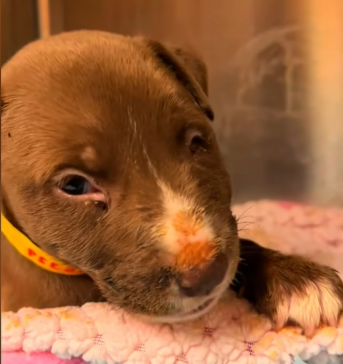
The first time he fell asleep with his head on my foot, I cried quietly so I wouldn’t wake him.
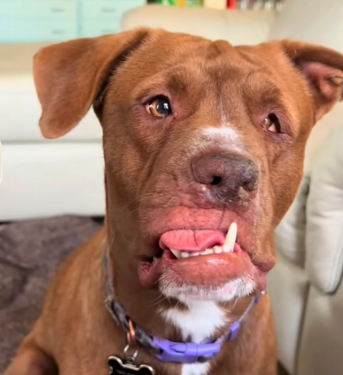
The puppy no one would touch began to seek contact—soft nudges, cautious licks, small acts of trust that felt enormous. His paw healed. His fur grew back. His eyes changed. Where there had once been only fear, there was curiosity. Then joy.
He learned how to play. He learned how to run. He learned how to be a puppy.
People who meet him now can’t believe his past. They see a happy dog, tail wagging, eager for affection. They don’t see the hours on the road, the fear, the pain. They don’t see the nights I questioned whether I’d done the right thing.
But I see it every day.
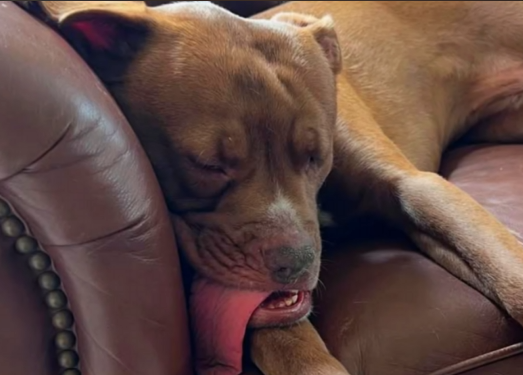
I see it when he chooses to sit beside me instead of hiding. I see it when he trusts my hands completely. I see it when he sleeps deeply, without fear.
I drove for hours to save a puppy no one else would touch.
And in return, he taught me something I’ll never forget: sometimes the ones who are hardest to reach are the ones who need us the most. And sometimes, all it takes to change a life is one person willing to show up—no matter how far the drive.