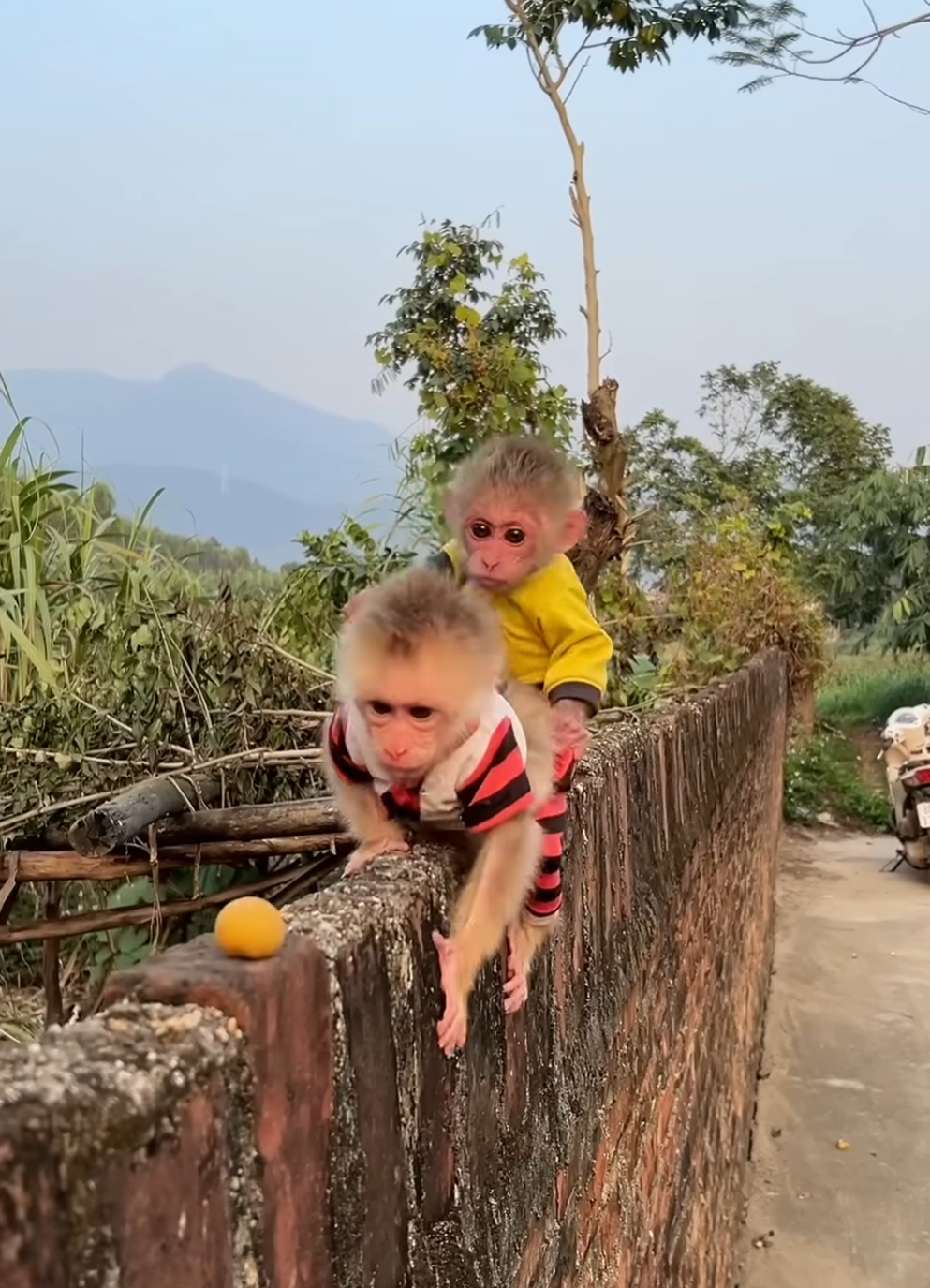
In the heart of a lively jungle, where the sunlight filtered through the leaves and the sounds of chirping birds and rustling branches filled the air, a little monkey named MiMi lived with her family. MiMi was known among the group for her gentle nature and her sense of fairness, especially when it came to food. She was not the biggest or strongest, but her kindness and thoughtfulness set her apart.
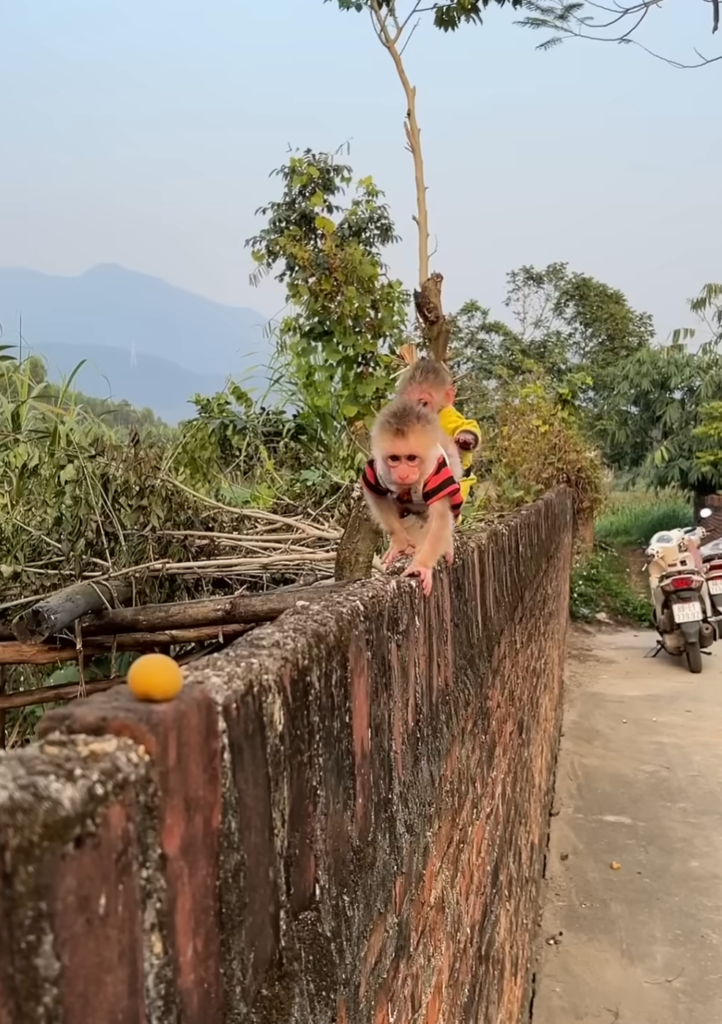
One sunny afternoon, the group of monkeys had discovered a small stash of delicious fruit. Bright bananas, juicy berries, and small nuts were scattered across the forest floor. The monkeys squealed with excitement, quickly rushing to grab their share. But MiMi noticed something—one of the younger monkeys, just a little one named Kiko, was standing a bit behind the others, hesitating. His small hands trembled slightly, and his eyes darted nervously between the pile of food and the bigger monkeys who had already claimed their portions.
MiMi had seen Kiko struggle before. He was timid and smaller than most, often overlooked or pushed aside by the more assertive monkeys. And she knew that while food was plentiful today, the experience of being left out or feeling afraid could leave a lasting impact on Kiko. Her heart stirred with empathy. Without a second thought, MiMi stepped back from the pile. She moved away, leaving space for Kiko to approach the food freely.
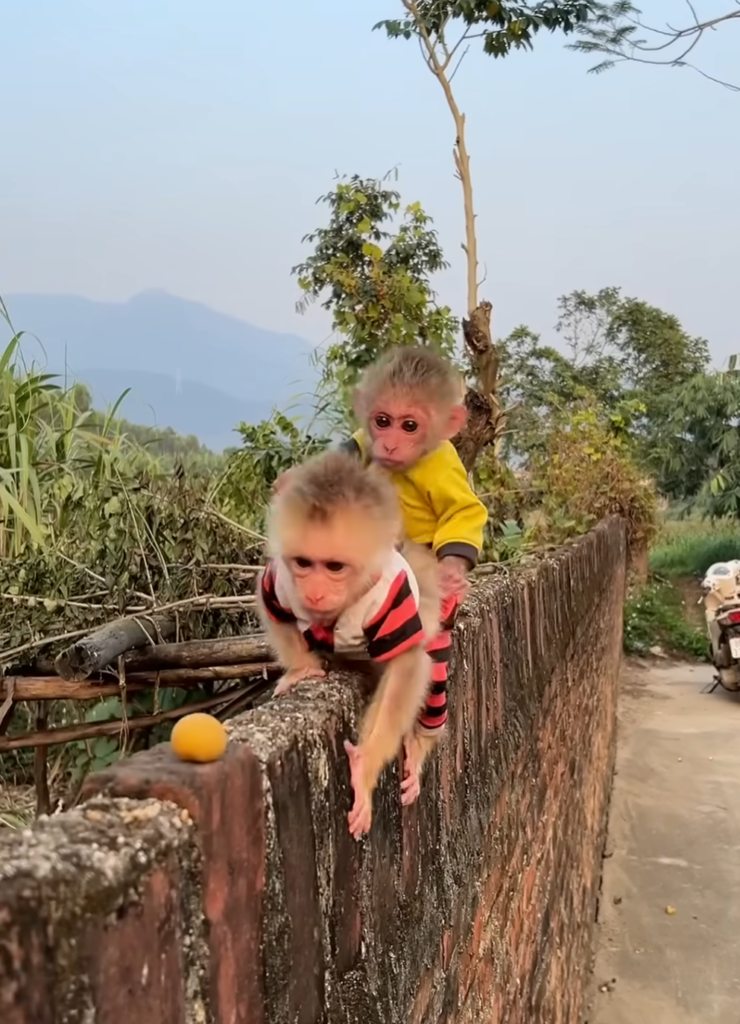
At first, Kiko seemed unsure. He glanced at MiMi, noticing the deliberate space she had made for him. He blinked, almost in disbelief, and then slowly took a step forward. MiMi made gentle, encouraging gestures, patting the ground beside her with a soft murmur that said, without words, “It’s okay, you can take it.”
Kiko’s eyes lit up. He moved closer, reaching for the small banana that had been just within his reach. He held it carefully, savoring the moment. MiMi watched quietly, her heart swelling with pride and happiness. She knew that kindness often required humility—the ability to put someone else’s needs above your own, even when you wanted something too.
As Kiko began to eat, MiMi noticed something remarkable. Other monkeys who had been rushing and competing for food paused. They saw the gentle act MiMi had performed and the joy it brought to Kiko. A sense of calm spread through the group. Competition slowed, replaced by small gestures of sharing and cooperation. MiMi’s kindness had inspired others to consider not only themselves but also those around them.
MiMi herself did not take any of the food immediately. She remained patient, letting Kiko enjoy his meal first. Her eyes followed him, making sure he had enough and that he felt comfortable. The trust between them grew stronger. Kiko felt safe and cared for, understanding that MiMi had stepped back not out of weakness but out of thoughtfulness.
After Kiko had taken a few bites, MiMi finally approached the pile again. She took her share gently, smiling at Kiko and giving him a nod that said, “Now it’s okay for me to enjoy too.” The small act of sharing and patience had transformed the atmosphere entirely. What could have been a chaotic scramble became a moment of harmony and cooperation.
As the day continued, MiMi and Kiko moved through the trees together. Kiko was more confident now, exploring without fear. MiMi stayed nearby, offering gentle guidance and support. When he reached a branch that looked unstable, MiMi called softly, warning him and helping him find a safe path. Every small action reinforced the lesson that kindness is not just about giving things; it is about care, protection, and attention to the needs of others.
Other monkeys began to follow the example set by MiMi. When a new batch of fruit appeared the next day, MiMi again stepped back to allow the smaller monkeys their first share. Kiko, now growing in confidence, also began to mimic her actions, gently nudging others to ensure everyone had a fair portion. The small act of generosity had created ripples of kindness throughout the group.
MiMi’s mother watched her with pride. She had always known that her daughter possessed a gentle spirit, but she had never seen such thoughtful leadership emerge so naturally. The mother monkey understood that kindness is a form of strength—sometimes stronger than physical power, because it can build trust, cooperation, and lasting bonds.
One afternoon, MiMi and Kiko were playing near a stream. The water shimmered in the sunlight, and the reflections of leaves danced on the surface. They found a small group of berries floating on a branch. Kiko rushed forward to grab them, but MiMi paused. She noticed that a very tiny monkey, just a few weeks old, was nearby, watching nervously. Without hesitation, MiMi took a small step back, making space for the youngest monkey to enjoy the berries first.
Kiko noticed MiMi’s action and mirrored it, letting the baby monkey have the first taste. Both older monkeys watched with gentle smiles as the little one cautiously reached out and tasted the berries. The baby squealed softly in delight. MiMi’s kindness had once again created a moment of joy and teaching, showing that generosity is not just about food—it’s about making space, offering patience, and noticing who might need help the most.
By evening, the monkeys gathered together, resting after a long day of exploration and play. MiMi sat near Kiko and the other small monkeys, sharing stories with her eyes—gentle gestures, soft murmurs, and playful touches that communicated safety and trust. Everyone felt a sense of connection, a bond strengthened not by strength or dominance, but by thoughtfulness and consideration.
MiMi’s actions became legendary in the little monkey community. Stories of her generosity were passed along through gestures and chirps, teaching younger monkeys the importance of looking out for one another. Kiko, inspired by MiMi, began showing his own acts of kindness. Together, they set the tone for a more harmonious and caring environment.
Through her simple act of stepping back and giving someone else the food, MiMi had demonstrated one of the greatest lessons of all: that love and kindness are not only about grand gestures but also about the small, everyday choices we make. Choosing to put someone else first, noticing their needs, and acting with patience and empathy can transform relationships, build trust, and create joy in ways that last far longer than a moment of food or play.
The jungle continued to hum with life, filled with the sounds of chirping birds, rustling leaves, and playful monkeys. But in that busy, lively world, MiMi’s quiet acts of kindness stood out. Every time she stepped back to give another monkey their chance, she was shaping the future of her community, teaching lessons that would echo through generations.
And for Kiko and the other small monkeys, the memory of MiMi’s generosity stayed with them. They learned that sharing is not just about survival—it is about love, patience, and building bonds that strengthen the entire group. They learned that true strength is not measured by who grabs the most food but by who cares enough to step aside for someone else.
As the sun set, painting the sky with golden and pink hues, MiMi and Kiko rested together on a branch. The warmth of the day, the satisfaction of fair sharing, and the joy of friendship wrapped around them like a soft blanket. MiMi had not only given food—she had given trust, care, and a living example of kindness.
In the heart of the jungle, surrounded by life and movement, one small monkey had shown the greatest strength of all: the power to be gentle, thoughtful, and kind. And in doing so, she had made her world a little brighter, a little safer, and filled with love.
🐒💖